
Spring humidity secretly ruins your wood projects because increased moisture makes the wood absorb water, causing it to expand and warp over time. If you don’t control the environment or properly store your work, this expansion can lead to cracks, joint separation, or bending. Sudden changes in moisture levels also cause the wood to contract and crack when it dries. To protect your projects from these sneaky issues, discover effective strategies that can save your work.

Get business pricing on tools and workshop supplies
- Business-only prices and quantity discounts
- Tax-exempt purchasing
- Multiple users, one account, clear invoices
Key Takeaways
- Spring humidity causes wood to absorb moisture, leading to expansion and potential warping or cracking.
- Projects built during dry months may still suffer damage when exposed to increased spring moisture.
- Uneven moisture absorption results in joint loosening, surface cracking, or panel bowing over time.
- Monitoring moisture content is essential to prevent long-term damage from seasonal humidity changes.
- Proper storage and environmental control help protect wood from moisture-related distortions during spring.
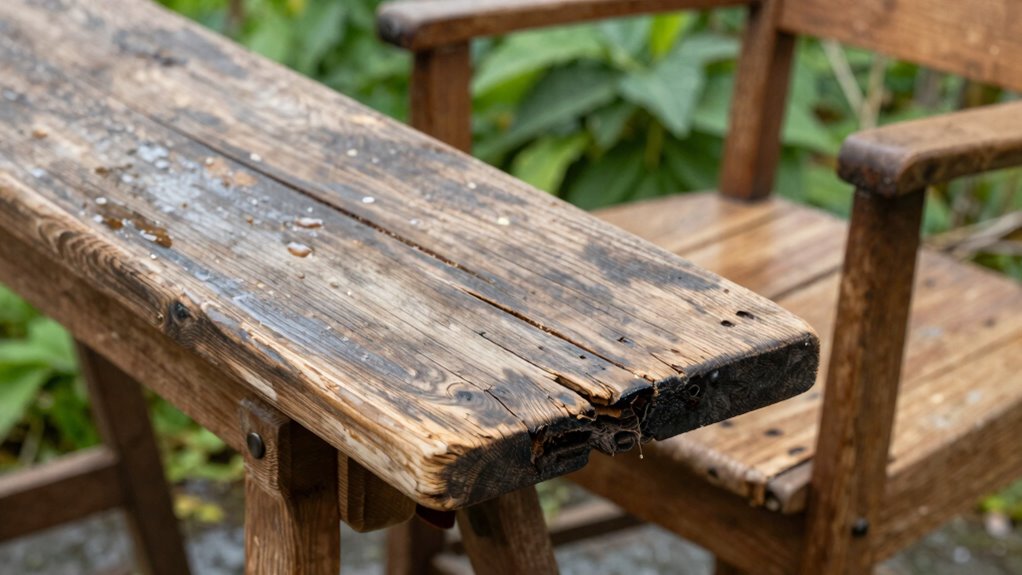
Spring’s rising humidity can unexpectedly ruin your wood projects if you’re not careful. As the air gets more humid, your carefully crafted pieces become vulnerable to changes caused by moisture absorption. Wood is a natural material that responds to its environment, and during spring, that environment becomes more unpredictable. The increased moisture in the air causes wood to expand, which can lead to warping, cracking, or joint separation if you don’t take proper precautions.
Spring humidity can cause wood to expand, warping or cracking if not properly managed.
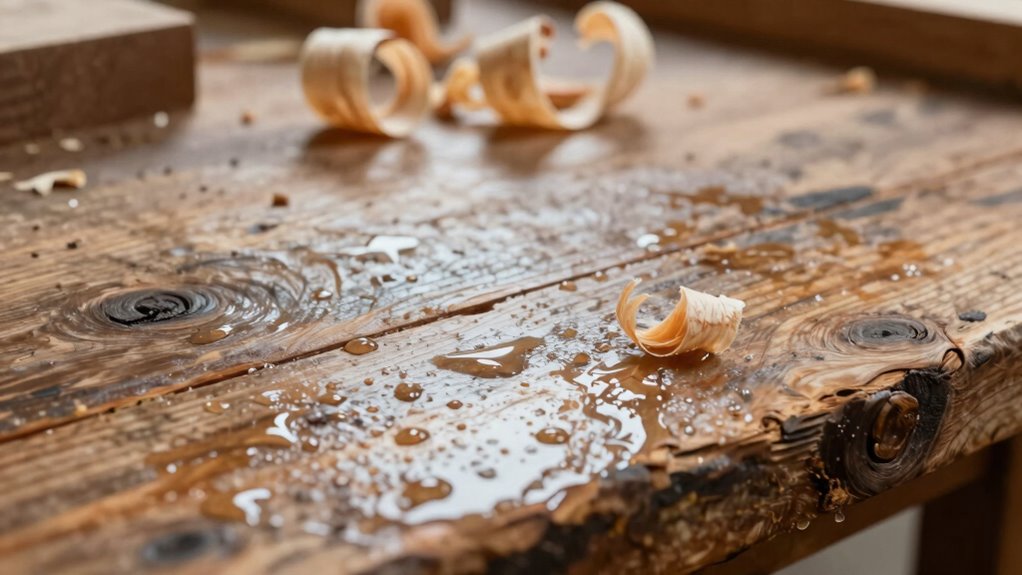
When moisture levels rise, wood absorbs water from the air, leading to wood expansion. This isn’t just a minor swelling; it can alter the dimensions of your project considerably. For example, if you build a table or cabinet during dry months and then leave it exposed to spring humidity, the wood may swell unevenly. This uneven expansion can cause panels to bow, joints to loosen, or surfaces to crack. If you’re not aware of how moisture absorption affects your wood, you might find yourself making repairs or even having to start over.
The key to preventing damage is understanding that moisture absorption isn’t a one-time event. It happens gradually, and the more sensitive your project is to dimensional changes, the more important it becomes to control the environment. During spring, you’ll often notice that the wood feels softer or more pliable, and that’s a sign it’s taking in moisture. If you leave these pieces in a humid space, they’ll continue to expand. When the air eventually dries out, the wood will contract again, sometimes more than it expanded, which can lead to cracking or splitting. Recognizing wood’s natural response to environmental changes can help you better anticipate and mitigate these issues. Additionally, understanding moisture content is crucial for maintaining the stability of your woodworking projects over time.
Being aware of wood’s natural response to environmental changes can help you better protect your work from the effects of spring humidity. You can also monitor wood’s moisture levels with simple tools to make more informed decisions about storage and finishing.
In essence, spring’s humidity can be your project’s worst enemy if you don’t account for how moisture absorption influences wood expansion. Being aware of these natural reactions and controlling environmental factors safeguards your work from unexpected damage. With a few simple steps, you can enjoy the beauty and durability of your wood projects long after spring’s humidity has passed.
As an affiliate, we earn on qualifying purchases.
Frequently Asked Questions
How Does Humidity Affect Different Types of Wood?
Humidity causes different woods to react uniquely. You might notice some woods, like oak, expand considerably as they absorb moisture, leading to warping or cracking. Others, like cedar, are more resistant but still absorb moisture, causing slight expansion. Knowing how wood expansion varies helps you anticipate changes during spring. By understanding moisture absorption, you can better protect your projects and guarantee they stay stable despite fluctuating humidity levels.
Can Humidity Damage Painted or Finished Wood?
Yes, humidity can damage painted or finished wood. As humidity rises, wood expands, which puts stress on the finish. This expansion can cause the finish to peel or crack over time. If you don’t control the environment, the ongoing cycle of moisture changes makes your painted or finished wood vulnerable, leading to deterioration and a less attractive appearance. Always guarantee proper sealing and humidity control to protect your projects.
What’s the Best Way to Measure Spring Humidity?
To measure spring humidity effectively, use a reliable hygrometer, especially considering temperature fluctuations indoors and outdoors. Place it in areas where your wood projects are stored or worked on, ensuring it’s away from direct sunlight or heat sources. Regularly check the readings, noting differences between indoor and outdoor humidity levels. This helps you manage your projects better, preventing warping or damage caused by unseen moisture changes during spring.
How Quickly Can Humidity Damage Occur?
Humidity can cause damage to your wood projects in just a few days or weeks. When moisture absorption increases due to high humidity, wood expands, leading to warping, cracking, or swelling. You might notice these issues quickly if your wood isn’t properly sealed or acclimated. To prevent damage, monitor humidity levels closely, and control moisture exposure, especially during rapid humidity changes in spring.
Are Certain Woodworking Tools More Vulnerable to Humidity?
Yes, certain woodworking tools are more vulnerable to humidity. Tools made of steel, like chisels and saw blades, are prone to tool corrosion because moisture absorption accelerates rust formation. Additionally, wooden handles can absorb moisture, weakening them over time. To protect your tools, keep them dry and store them in a humidity-controlled environment. Regular maintenance, like oiling metal parts, helps prevent corrosion and prolongs their lifespan.
Conclusion
Don’t let spring humidity sabotage your woodworking efforts. Did you know that wood can absorb up to 30% of its weight in moisture during humid months? This sudden increase causes warping, cracking, and other issues that can ruin your projects. Stay proactive by sealing your wood and storing materials properly. With just a little extra care, you’ll keep your projects looking perfect all season long and avoid costly mistakes. Stay dry, stay sharp!
Fall Picks
fall essentials
As an affiliate, we earn on qualifying purchases.