
You’ll notice that fresh lumber and finished furniture behave quite differently because of their surface properties, moisture levels, and how they react to environmental changes. Fresh wood is unsealed, making it sensitive to humidity, causing it to expand, contract, or crack over time. Finished furniture, on the other hand, has a surface coating that stabilizes it and resists wear, but this also affects how each material responds to shifts in temperature or humidity. Keep exploring to understand these differences more deeply.

Get business pricing on tools and workshop supplies
- Business-only prices and quantity discounts
- Tax-exempt purchasing
- Multiple users, one account, clear invoices
Key Takeaways
- Fresh lumber is unsealed, more susceptible to moisture, and prone to swelling, warping, or cracking with environmental changes.
- Finished furniture has a surface coating that stabilizes dimensions and reduces moisture exchange with the environment.
- The natural grain in fresh lumber is visible and influences texture, while finishes can obscure or enhance this appearance.
- Unfinished lumber is more vulnerable to damage, dirt, and stains, making it harder to repair than sealed, finished surfaces.
- Surface treatments in finished furniture provide durability, wear resistance, and easier repair compared to raw, unsealed lumber.

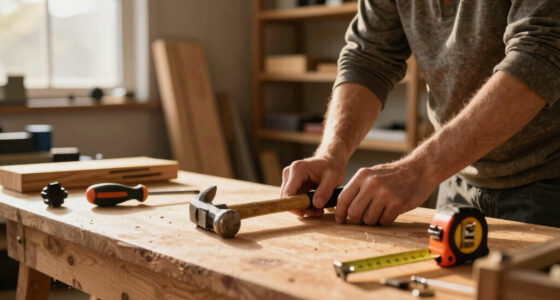
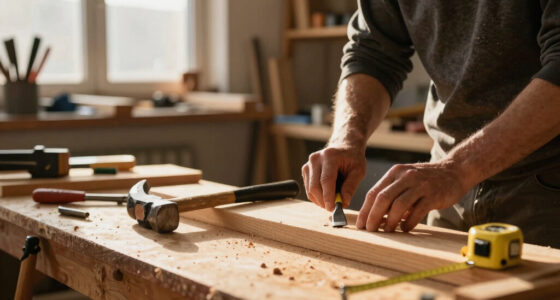
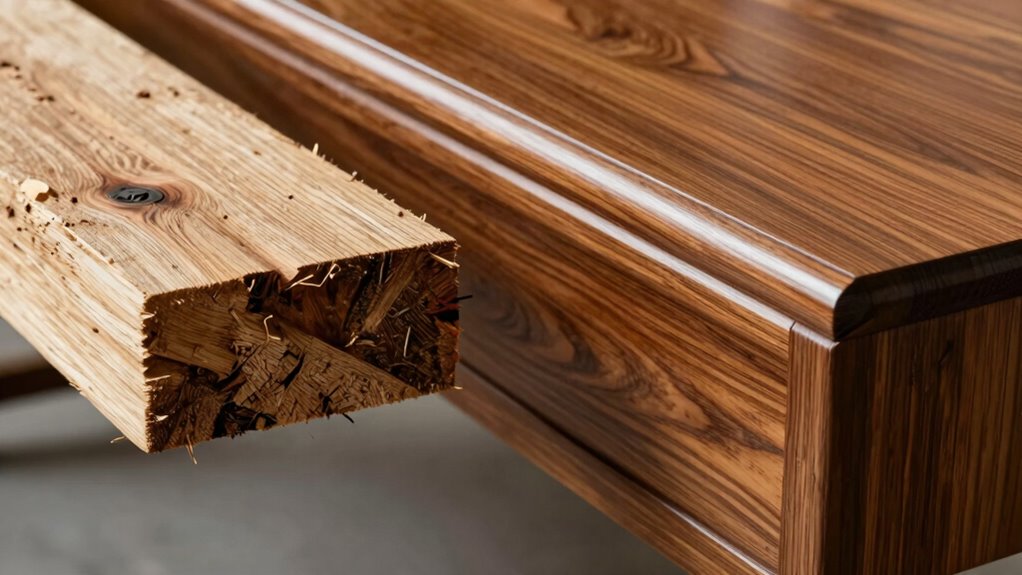
When choosing between fresh lumber and finished furniture, understanding the differences can help you make better decisions for your projects or home. At first glance, they might seem similar—both are made of wood, after all—but they behave quite differently due to their unique characteristics. Fresh lumber is raw, unprocessed wood that still contains moisture, which impacts how it responds to its environment. The wood grain in fresh lumber is visible and often prominent, revealing the natural patterns and textures that make each piece unique. In contrast, finished furniture has a surface finish applied—like paint, stain, or varnish—that alters its appearance and feel. This surface finish affects how wood grain is perceived, often softening or accentuating certain patterns, depending on the stain or coating used.
Fresh lumber is raw, moisture-rich wood with visible grain, while finished furniture is coated, altering appearance and feel.
Fresh lumber is highly sensitive to changes in humidity and temperature because of its moisture content. As it dries or absorbs moisture from the air, it expands or contracts. These movements can cause warping, cracking, or splitting, especially if the wood isn’t properly seasoned or stored. Proper wood seasoning is essential in preparing fresh lumber for use, as it reduces moisture content and minimizes future warping or splitting. Properly stored and seasoned lumber can significantly reduce the risk of dimensional instability, ensuring better performance in your projects. Finished furniture, however, tends to be more stable in its dimensions because the surface finish acts as a protective barrier, sealing the wood and limiting moisture exchange. This makes it behave more like a finished product designed for durability and long-term stability. The surface finish also influences how the wood grain appears; a clear varnish might highlight the natural patterns, while paint can completely obscure them.
The differences extend to how each material responds to wear and tear. Fresh lumber, being raw, is more susceptible to damage, staining, and absorbing dirt. Its surface isn’t yet sealed, so scratches or dents can be more noticeable and harder to repair. Additionally, the grain in fresh lumber can be affected by environmental conditions, causing it to shift or develop defects over time. The moisture content in fresh lumber can also lead to expansion and contraction, which may influence how it interacts with other materials during construction or furniture making. Proper storage of fresh lumber is crucial to prevent excessive moisture absorption and environmental damage, ensuring the wood remains stable until used. Finished furniture, by contrast, is coated with a protective layer that can often be buffed out or touched up, helping it maintain its appearance over time. The surface finish also determines the tactile feel—smooth, glossy, matte, or textured—affecting your interaction with the piece.
As an affiliate, we earn on qualifying purchases.
Frequently Asked Questions
How Does Humidity Affect Fresh Lumber Compared to Finished Furniture?
Humidity impacts fresh lumber more considerably than finished furniture because it causes wood expansion through moisture absorption. As humidity rises, fresh lumber absorbs moisture, leading to swelling and dimensional changes. Finished furniture, with protective finishes, resists moisture penetration, so it remains more stable. You’ll notice that fresh lumber reacts quickly to humidity fluctuations, while finished furniture stays relatively unaffected, maintaining its shape and size better in varying environments.
Can Finished Furniture Be Refinished Like Raw Lumber?
Yes, finished furniture can be refinished like raw lumber. About 80% of furniture pieces are restorable through furniture refinishing, which involves stripping, sanding, and applying new finishes. During furniture refinishing, you preserve the wood’s integrity while restoring its appearance. Proper techniques guarantee you won’t damage the wood, making it possible to enjoy your furniture for years to come. This process effectively combines furniture refinishing with lumber preservation.
What Are the Main Cost Differences Between Fresh Lumber and Finished Furniture?
The main cost differences between fresh lumber and finished furniture stem from their manufacturing processes and environmental impact. Fresh lumber costs less because it requires minimal processing initially, but it involves ongoing costs for drying and treatment. Finished furniture incurs higher costs due to labor, craftsmanship, and finishing materials. Additionally, the environmental impact of manufacturing influences costs—more sustainable processes may add expenses but reduce ecological footprints.
How Long Does Each Material Typically Last?
Imagine your granddad’s wooden chest—it’s still sturdy after decades. Fresh lumber typically lasts 10-15 years without treatment, but with proper wood treatment and moisture resistance, it can endure 30-50 years or more. Finished furniture, thanks to protective coatings, often lasts 20-40 years, sometimes longer with proper care. Your furniture’s longevity depends on the quality of treatment and how well you maintain it over time.
Are There Specific Environments Best Suited for Each Material?
You should keep fresh lumber in a dry, well-ventilated space with stable humidity to prevent warping of the wood grain. Finished furniture, on the other hand, thrives in environments with moderate humidity and consistent temperature, where surface treatments like varnish or paint can protect against moisture and wear. Both materials benefit from avoiding extreme conditions that can damage their surface treatments or alter the wood grain appearance.
Conclusion
So, next time you see fresh lumber and finished furniture side by side, remember they’re fundamentally the same material in different states. The theory that their differing behaviors come from the finishing process isn’t entirely false, but it’s more about how finishes alter moisture and surface properties. You now know that finishing doesn’t just beautify—it fundamentally changes how wood reacts to its environment. It’s a fascinating reminder of the magic behind what makes furniture stand the test of time.
Fall yard work Picks
leaf blowers
As an affiliate, we earn on qualifying purchases.