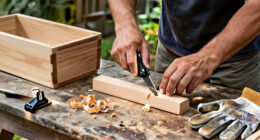
Before using tools, carefully inspect your board by checking the grain flow, ensuring it runs along the length for strength and appearance. Look for defects like knots, splits, or warping that might weaken or ruin your project. Examine the surface for rough patches or irregularities that could affect finishing. Recognizing these details helps you select the right face and plan cuts efficiently. If you keep exploring, you’ll discover even more tips for preparing your wood perfectly.

Get business pricing on tools and workshop supplies
- Business-only prices and quantity discounts
- Tax-exempt purchasing
- Multiple users, one account, clear invoices
Key Takeaways
- Examine the grain pattern to ensure it runs parallel to the length for strength and aesthetic appeal.
- Check for defects like knots, splits, or warping that could weaken or affect appearance.
- Hold the board up to light or lay it flat to identify irregularities or internal flaws.
- Assess the surface for smoothness, rough patches, or signs of previous finishing issues.
- Determine the best face and edge for visible or structural purposes based on grain flow and defects.
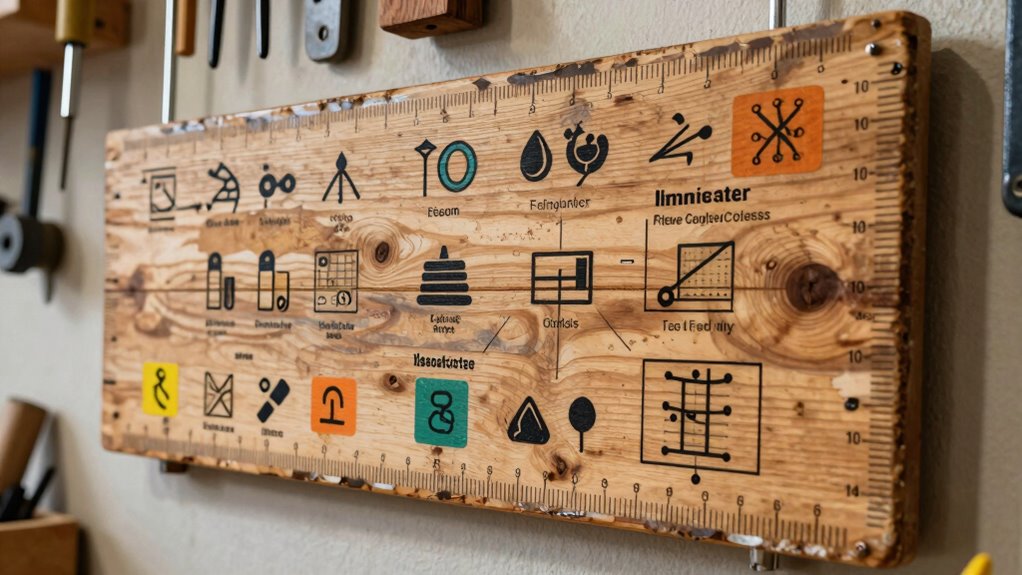
Before you pick up a tool, learning how to read a board is essential for a successful project. The way a board is oriented and the defects it has can considerably impact the quality and durability of your finished piece. When inspecting a board, start by examining the grain orientation. Grain runs along the length of the board, and understanding its direction helps you plan cuts that maximize strength and appearance. A board’s grain should run parallel to its length, so check for consistent patterns. If the grain is crooked or swirled, it can lead to warping or splitting over time, especially if the board is subjected to moisture changes. Recognizing the grain’s flow guides you in selecting the best face for visible surfaces or structural elements. This insight guarantees your project looks professional and holds up well.
Next, look for board defects that could compromise integrity or aesthetics. Common defects include knots, splits, checks, and warping. Knots are dark, circular spots where branches once grew; tight, small knots are usually fine, but large or loose knots can weaken the board. Splits and checks are cracks that can run deep, and these weaken the structure. Warping, such as bowing or cupping, indicates the board has uneven moisture content or improper storage. These defects aren’t always visible at first glance, so hold the board up to the light or lay it flat to spot irregularities. Understanding wood properties can help you make better choices based on the intended use of your project. Additionally, knowing how different defects affect board strength can assist you in selecting the right material for your specific needs.
As you scrutinize the board, also take note of its overall appearance and surface condition. Look for smoothness, signs of sanding, or rough patches that may require additional work. Consider how the defects and grain orientation will influence your finish and assembly. For example, boards with irregular grain patterns might need extra planning to prevent splitting during cutting or fastening. By understanding these factors before touching your tools, you reduce waste, save time, and increase the quality of your project. Reading a board carefully also means you’re more prepared for potential challenges, like needing to cut around defects or selecting the best face for the final product. Developing this eye for detail ensures your woodworking efforts are precise, efficient, and produce a professional result every time.
woodworking inspection magnifying glass
As an affiliate, we earn on qualifying purchases.
As an affiliate, we earn on qualifying purchases.
Frequently Asked Questions
What Safety Equipment Should I Wear When Reading a Board?
When reading a board, you should wear personal protective gear, including safety glasses for eye safety, to shield your eyes from dust, splinters, or debris. Consider wearing gloves if handling rough or splintered wood, and a dust mask if you’re sensitive to dust particles. Proper safety equipment minimizes risks and keeps you safe during your task, ensuring you’re protected while inspecting and analyzing the board carefully.
How Do I Identify the Different Types of Wood?
Think of wood types as nature’s fingerprint, each with unique grain patterns that tell a story. To identify them, look closely at the grain’s flow, color, and texture. Watch for wood defects like knots or splits, which reveal its character. Light and angle matter—shine a light and tilt the board to see how the grain dances. Over time, you’ll recognize different woods by their personality and flaws.
Can I Read a Board in Poor Lighting Conditions?
Yes, you can read a board in poor lighting conditions, but it’s challenging. To improve visual clarity, try using a flashlight or portable light source to illuminate the board evenly. Adjust your position to minimize shadows and make details clearer. If possible, increase ambient lighting or work in an area with better lighting conditions. Clear visibility helps you accurately assess grain, color, and defects before you start working.
How Do I Determine the Quality of a Board?
You determine a board’s quality by inspecting its grain pattern and moisture content. Look for consistent, tight grain patterns—loose or irregular grains can weaken the wood. Check for warping, knots, or cracks, which signal lower quality. Feel the moisture content; a well-seasoned board should have a moderate moisture level, around 6-8%. Use a moisture meter if needed. These steps guarantee you select a durable, high-quality board for your project.
Are There Specific Tools for Measuring Boards Accurately?
You’ll want tools like a reliable tape measure, calipers, or a ruler for measuring boards accurately. Don’t worry—calibration techniques guarantee measurement accuracy, keeping your tools precise over time. Though digital options exist, manual tools work perfectly if calibrated regularly. Just make sure you zero out your calipers or tape measure before measuring, and you’ll get consistent, trustworthy readings every time, making your project easier and more reliable.
Conclusion
By learning to read a board before touching a tool, you set the foundation for success and safety. Think of it as reading the map before starting the journey—knowing your path prevents unnecessary detours. When you understand the grain, knots, and flaws, you’re not just preparing to work; you’re preparing to create with confidence. So, embrace this skill, and let it be the compass that guides your craftsmanship—turning raw wood into art with intention and insight.
Fall Picks
fall essentials
As an affiliate, we earn on qualifying purchases.