
When thinking about dust collection for your table saw in a small shop, position the saw close to your dust collection system to minimize airflow distance. Invest in a quality dust hood designed for ideal suction, and use compact models to save space. Keep your workspace organized to enhance efficiency. Regular maintenance, like cleaning filters and emptying bags, is essential. By setting up your workspace thoughtfully, you can create a cleaner, healthier environment—stick around to discover more tips!

Get business pricing on tools and workshop supplies
- Business-only prices and quantity discounts
- Tax-exempt purchasing
- Multiple users, one account, clear invoices
Key Takeaways
- Position the table saw close to the dust collection system to minimize dust travel and enhance efficiency.
- Invest in a quality dust hood designed for optimal suction to significantly reduce airborne particles.
- Use compact dust collection models to maximize space in small shops while maintaining effective dust management.
- Regularly maintain your dust collection system by cleaning filters and emptying bags to ensure consistent performance.
- Organize tools and materials strategically to streamline workflow and keep the dust collection system easily accessible.
When you’re working in a small shop, effective dust collection for your table saw isn’t just a luxury—it’s crucial for your health and the longevity of your tools. Dust can accumulate quickly, creating not only a mess but also potential respiratory issues. With limited space, you need to maximize dust collection efficiency while guaranteeing your shop remains functional and organized.
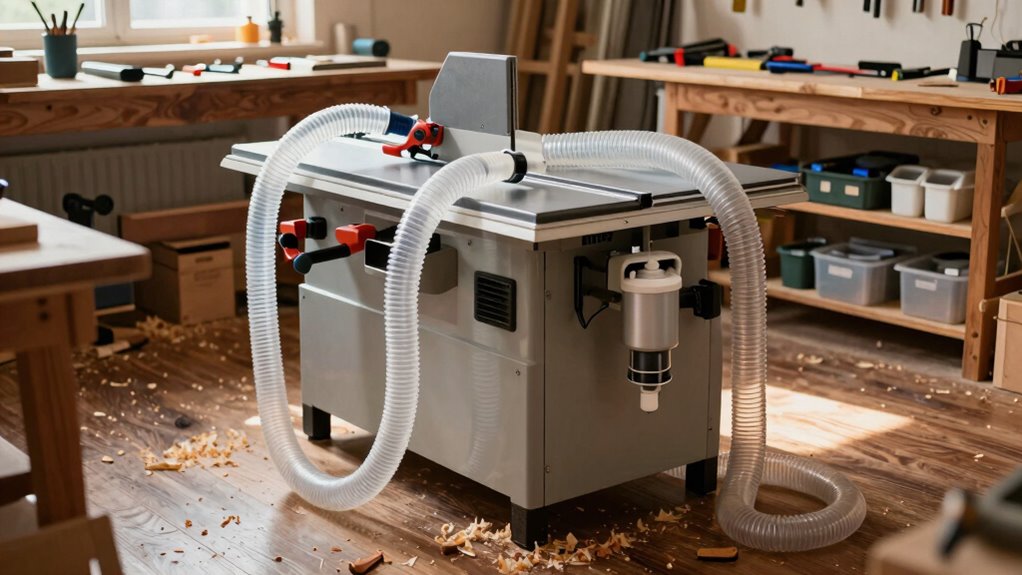
First off, consider the layout of your small shop setups. Position your table saw near your dust collection system to minimize the distance dust must travel. This simple adjustment can greatly improve your dust collection efficiency. If possible, choose a dust collection system that fits snugly within your shop’s dimensions. Compact models are available that provide sufficient suction without hogging precious space.
Consider the layout of your shop: position your table saw near your dust collection system to enhance efficiency and save space.
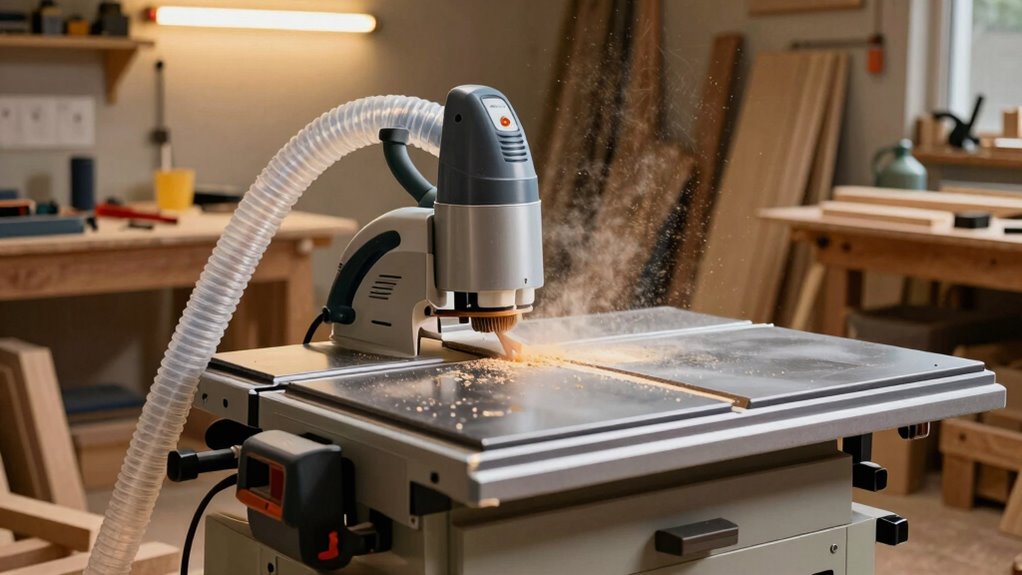
Next, remember that not all dust collection is created equal. Invest in a quality dust hood or guard that fits your table saw. These devices help capture dust right at the source, preventing it from scattering throughout your shop. Look for hoods specifically designed to connect to your dust collector, guaranteeing you get the most suction possible. When you set this up correctly, you’ll notice a dramatic reduction in airborne particles and floor dust. Proper dust extraction techniques can also enhance overall dust control. Additionally, choosing the right dust collection system can make a significant difference in your shop’s air quality and cleanliness. Properly integrating your dust collection setup ensures optimal dust removal efficiency, which is essential in small spaces.
You might also want to think about the type of dust collection system you’re using. If you’re using a shop vac, consider adding a cyclone separator. This will enhance your dust collection efficiency by separating larger particles before they reach your vacuum. On the other hand, if you have a more robust dust collector, confirm that your hose diameter matches the collector’s specifications. A mismatch can lead to reduced airflow and less effective dust removal.
Don’t overlook the importance of regular maintenance. Clean your filters and empty your collection bags frequently. Clogged filters can choke your system, causing it to underperform and leading to more dust in the air. In a small shop, this is particularly critical, as confined spaces can magnify air quality issues. Additionally, understanding the dust collection system’s capacity can help you plan maintenance schedules more effectively.
Lastly, think about your workflow. Organize your materials and tools in a way that minimizes the distance you need to move around. This not only enhances efficiency but also allows you to keep your dust collection system in close reach. By integrating these practices into your small shop setups, you’ll create a cleaner, healthier environment that enhances both your productivity and the lifespan of your equipment.
As an affiliate, we earn on qualifying purchases.
Frequently Asked Questions
Can I Use a Shop Vacuum Instead of a Dust Collector?
Yes, you can use a shop vacuum instead of a dust collector, but it might not be as efficient. Shop vacuum efficiency varies, and while they can handle smaller tasks, they struggle with larger debris and fine dust. Make sure your vacuum has good dust collection compatibility with your table saw. You might need an adapter to connect the two effectively. Overall, it’s a practical option for smaller shops if you’re mindful of limitations.
How Often Should I Clean My Dust Collection System?
You should clean your dust collection system regularly, ideally every few weeks, depending on your usage. Keeping a consistent cleaning frequency helps maintain peak airflow and performance. Don’t wait until it’s clogged; regular system maintenance guarantees you’re getting the best results. Inspect filters and hoses for dust buildup, and empty the collection bag or bin to prevent overflow. Staying on top of this will keep your shop cleaner and safer.
What Are the Best Filters for Dust Collection?
The best filters for dust collection focus on high filter efficiency and suit your shop’s needs. HEPA filters capture 99.97% of particles, making them ideal for fine dust. Bag filters are another option, with varying micron ratings depending on your projects. When choosing, consider filter types that balance airflow and filtration. Regularly check and replace your filters to maintain peak performance, ensuring a cleaner workspace and better overall air quality.
Is It Necessary to Wear a Mask While Using a Table Saw?
Yes, wearing a mask while using a table saw is a smart choice. Think of it as a cozy shield against pesky particles! With various mask types available, you can easily find one that fits comfortably. Ignoring this precaution can lead to health risks like respiratory issues or allergies. So, don’t skip that mask; it’s your best buddy in the workshop, ensuring you breathe easy while you create!
How Can I Reduce Noise From My Dust Collection System?
You can reduce noise from your dust collection system by considering muffler installation and soundproofing techniques. Start by adding a muffler to your system; it can greatly lower the noise output. Additionally, use soundproofing materials around the dust collector, like acoustic panels or insulation, to absorb sound waves. Positioning the unit away from work areas also helps minimize disruption, so you can work more comfortably without the annoying noise.
Conclusion
In a small shop, dust collection isn’t just a detail; it’s a decisive element in your woodworking journey. Effective extraction elevates your experience, ensuring cleanliness and clarity. By embracing efficient systems, you’ll breathe better and boost your craftsmanship. So, don’t let dust deter your dedication—prioritize your shop’s air quality, and watch your passion for woodworking flourish. With the right dust collection, you’ll create a cleaner, safer space that inspires incredible innovations.
Fall yard work Picks
leaf blowers
As an affiliate, we earn on qualifying purchases.