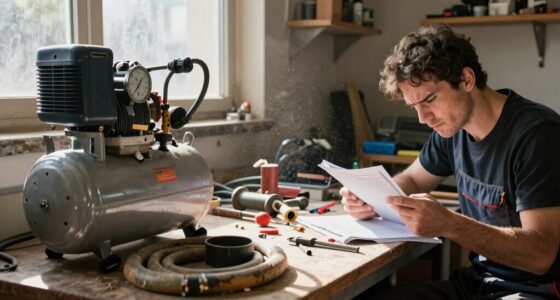
To assess quiet air compressors accurately, look beyond the decibel numbers and check how and where the measurements were taken, such as distance and environment. Be wary of claims based on peak levels or manufacturer jargon, and verify if the ratings follow recognized standards like OSHA or ANSI. Good soundproofing features, like enclosures or mufflers, also matter. Continue exploring, and you’ll discover key tips to identify truly quiet compressors and avoid misleading info.

Get tools and workshop supplies delivered free — and shop member deals
- Fast, free delivery on millions of items
- Access to Prime Big Deal Days deals on October 6–7
- Prime Video, Amazon Music and more included
Key Takeaways
- Check measurement distance and environment details provided by the manufacturer for accurate comparison.
- Verify if noise ratings are based on average levels and conform to recognized standards like OSHA or ANSI.
- Look for information on soundproofing features, such as enclosures or mufflers, that contribute to noise reduction.
- Be cautious of peak decibel levels; focus on continuous or rated noise levels for realistic expectations.
- Compare noise ratings at similar distances (e.g., 3 ft or 10 ft) to make fair and informed assessments.
Quiet air compressors are a game-changer for anyone needing reliable power without the loud noise often associated with traditional models. When you’re shopping for one, understanding noise ratings becomes essential. Manufacturers often tout low decibel levels, but these numbers can be misleading if you’re not familiar with noise level standards and how they’re measured. Noise levels are typically expressed in decibels (dB), but the way these dB ratings are obtained can vary, making it easy to be fooled by seemingly quiet compressors that aren’t as silent as they seem. To truly gauge how loud a compressor is, you need to look beyond the number and consider how the measurement was taken, including the environment and distance from the source. Environmental conditions during testing can significantly influence the reported noise level and should be taken into account.
Understanding noise ratings and measurement environments is key to choosing truly quiet air compressors.
Soundproofing techniques are vital not just in the design of quiet air compressors but also in how you interpret their noise ratings. Manufacturers that employ effective soundproofing techniques often include features like insulated enclosures, rubber mounts, or mufflers that substantially reduce noise output. However, many marketing claims omit details on actual soundproofing methods used. When comparing models, check for specifications that mention soundproofing features or noise reduction technology. These details can give you a clearer picture of how much noise is genuinely reduced in practical settings.
In addition to looking at the dB rating, it’s wise to consider the context in which that number applies. For example, a compressor rated at 60 dB might sound comparable to a normal conversation if it’s measured from a specific distance, like 3 feet. But if the measurement was taken from 10 feet away, the noise level could be much lower in your workspace. Many reputable brands provide information about the measurement distance and environment, which helps you compare models more accurately.
Furthermore, understanding noise level standards helps you avoid being fooled by manufacturers’ claims. Some companies might report the peak decibel level rather than the average, making the compressor sound quieter than it actually is during operation. Always look for the continuous sound level ratings and verify if they conform to recognized standards, such as those outlined by OSHA or ANSI. These standards ensure consistency and give you a reliable basis for comparison.
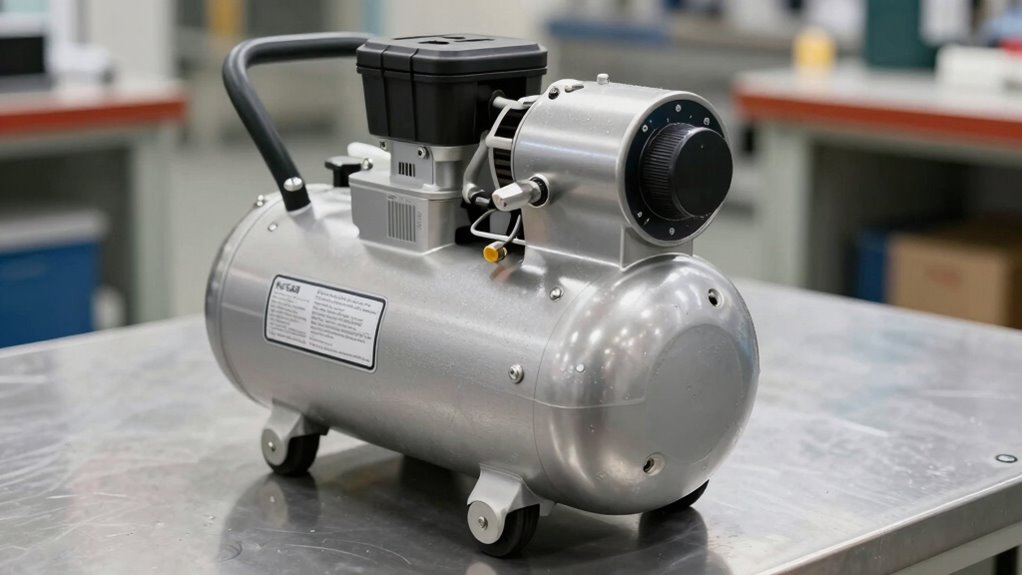
quiet air compressor with soundproof enclosure
As an affiliate, we earn on qualifying purchases.
As an affiliate, we earn on qualifying purchases.
Frequently Asked Questions
How Do Noise Ratings Vary Between Different Compressor Brands?
You’ll find noise ratings vary between compressor brands because of differences in engineering and design. Brands with a strong reputation often provide more accurate ratings, but customer reviews can also reveal real-world noise levels. Don’t rely solely on official specs; check reviews to see if a brand’s noise claims hold up. This way, you can choose a quieter compressor that meets your needs without surprises.
What Features Contribute to a Quieter Air Compressor?
Ever wonder what makes an air compressor quieter? Features like noise mitigation measures, such as sound enclosures and mufflers, play a key role. Vibration control, through rubber feet or balanced motors, reduces noise generated by movement. These elements work together to lower sound levels, making your workspace more comfortable. By choosing compressors with advanced vibration control and noise mitigation features, you guarantee quieter operation and a more pleasant environment.
Are There Industry Standards for Measuring Compressor Noise?
Yes, industry standards exist for measuring compressor noise. You should look for noise measurement techniques that follow recognized sound level units, like decibels (dB). These standards guarantee consistent, accurate readings across models. When comparing compressors, check if they’re tested in controlled environments using these techniques. This way, you avoid being fooled by exaggerated or inconsistent noise ratings, ensuring you pick a truly quieter option.
How Does Compressor Size Affect Noise Levels?
Think of a larger compressor as a loud thunderclap in a quiet room. As your compressor size increases, noise levels tend to rise due to more powerful motors and larger components. But, with dampening technology and smart housing design, you can soften that roar. These features help contain noise, making bigger units quieter. So, size matters, but thoughtful design can make a big difference in maintaining a peaceful workspace.
Can Noise Ratings Accurately Predict Real-World Operation Sound?
Noise ratings can give you a general idea, but they don’t always predict real-world sound levels accurately because of noise measurement inconsistencies and user environment impact. You might find a compressor’s rated noise level differs from what you experience in your workspace, especially if background noise or space acoustics influence sound. To get a clearer picture, consider testing the compressor in your environment or looking for user reviews.
Conclusion
While quiet air compressors might seem peaceful, don’t be fooled by their silence alone. Just like a calm surface can hide strong currents beneath, a low noise rating doesn’t always mean it’s truly quiet in practice. By understanding how to read noise ratings accurately, you’ll avoid the illusion of tranquility and find a compressor that genuinely meets your needs. Silence isn’t just about decibels—it’s about how well you read between the lines.
Halloween Picks
halloween
As an affiliate, we earn on qualifying purchases.