TL;DR

Get business pricing on tools and workshop supplies
- Business-only prices and quantity discounts
- Tax-exempt purchasing
- Multiple users, one account, clear invoices
Hunker reports that two dining table styles rooted in 1950s midcentury design—mid-toned wood and round forms—are seeing renewed interest in 2026. The trend fits a broader preference for warm colors, natural materials and furniture shaped for gathering, though the report does not provide sales data to measure how widespread the revival is.
Mid-toned wood and round dining tables rooted in 1950s midcentury design are gaining renewed attention in 2026, according to a Hunker report on furniture and interiors. The styles fit current interest in warm palettes and organic materials, while offering practical options for dining rooms where appearance, space and conversation all matter.
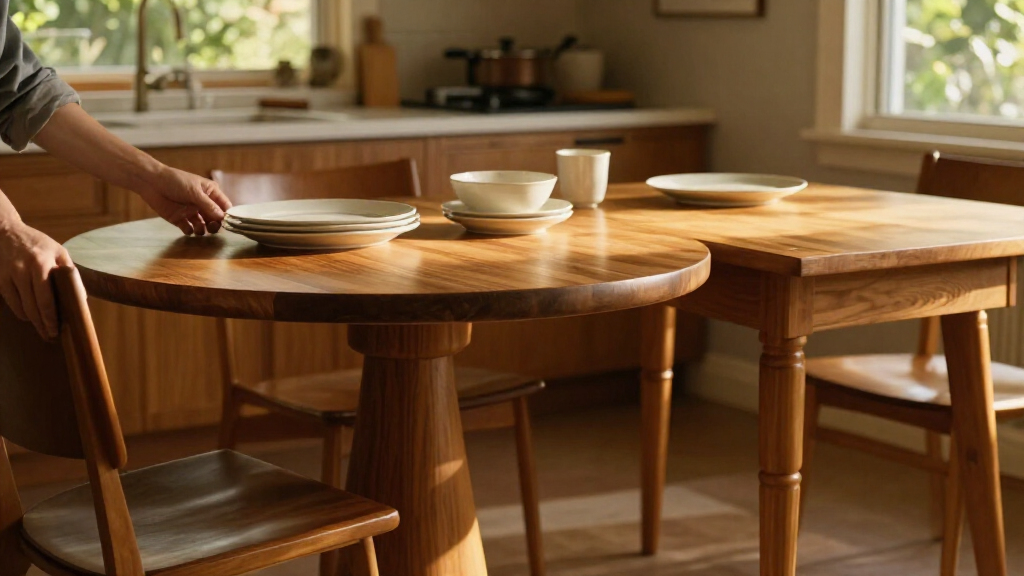
The report focuses on two distinct features: tables made in mid-toned woods, such as teak- and beech-like finishes, and round tables with midcentury-inspired details. Hunker describes these as styles being revisited rather than new designs, noting that midcentury furniture has remained present in homes since its 1950s heyday.
Mid-toned finishes occupy a middle ground between very dark woods and lighter shades associated with some Scandinavian interiors. Hunker says their warmth works with colors including ochre, rust, olive and terracotta. The article points to the Gilda Oval Dining Table from Lulu & Georgia as one example, and the GDFStudio Keiko table at Target as a lower-priced option available when the report was written. Those are examples, not evidence of overall market demand.
Round tables are presented as both a design choice and a practical one. The report connects their popularity in midcentury design to their ability to fit smaller spaces, while tapered legs and pedestal bases can reduce visual bulk and leave room for chairs. Hunker also cites a modern table from Signature Design by Ashley, sold through Esperit Decor, as a contemporary take on Jean Prouvé’s 1949 Guéridon table.
Why These Tables Fit Today’s Homes
For shoppers choosing a substantial piece of furniture, the report’s appeal is the combination of lasting design and current styling. A mid-toned finish can bring warmth to a room without the visual weight of a very dark table; a round top can soften a room dominated by straight edges. These are design considerations, not guarantees that a particular table will suit every space.
The round form also changes how people sit together. Designer Miranda Cullen, speaking to Homes & Gardens, said a round table can act as a centerpiece while affecting how people gather. That is an attributed design view, rather than a measured claim about how households use their dining rooms. For readers, the practical question remains whether a table’s dimensions, seating capacity and base fit their room and routine.
Products Worth Considering

Samsung 65-Inch The Frame Pro Neo QLED 4K TV (2026) Bundle with Modern Brown Bezel, HDMI Cables, and Home Theater Guide

Blueair Blue Pure 511i Max Air Purifier

Bose Smart Ultra Dolby Atmos Soundbar
As an affiliate, we earn on qualifying purchases.
Midcentury Design Meets Warm Interiors
Midcentury modern design is commonly associated with clean lines, simple forms and natural materials. Hunker’s report links the renewed attention to that design heritage with a broader preference for warm interiors, organic textures and earthy color schemes. It describes this as an ongoing aesthetic shift, but does not cite polling or sales figures establishing its scale.
The article also refers to curves as a visible design preference. It cites interior design platform Oblist, which identified curves among trends at the Salone del Mobile design fair in Milan earlier in 2026. That reference supplies design-industry context; it does not show that round dining tables are selling at a specific rate or that every retailer is seeing the same demand.
“These tones pair beautifully with the earthy colours that are also popular: ochre, rust, olive and warm terracotta.”
— Furniture in Fashion blog, as quoted by Hunker
How Broad Is the Revival?
The report does not provide sales totals, survey results or market-share data showing how widespread the renewed interest is. Its description of the styles as popular or having a moment reflects the sources and design examples it cites, not a quantified industry-wide trend. It is also unclear how long the interest will last or whether it is concentrated among particular retailers or design audiences.
Product availability and prices can change. Hunker’s examples reflect what was listed when its report was written, and the article does not establish that every named table remains available at the same price. Readers should check current product details and measurements before buying.
What Buyers Can Check Before Choosing
No specific product launch, sales report or follow-up announcement is identified in the source material. For now, the development is a design report describing styles being revisited in 2026, rather than a formal industry announcement. Readers considering the look can compare finish, dimensions, seating capacity and base design, then confirm current prices and availability with retailers.
Whether the interest continues into 2027 will be clearer through later design coverage and retail information. Until then, the report supports a narrower conclusion: two familiar midcentury forms are being recommended as ways to bring warmth and softer shapes into contemporary dining rooms.
Key Questions
Which two 1950s dining table styles are being revisited?
Hunker identifies mid-toned wood tables and round tables with midcentury-inspired forms.
Why are mid-toned wood finishes attracting attention?
The report says their warmth pairs with earthy colors such as ochre, rust, olive and terracotta. That is a design assessment, not a quantified measure of consumer demand.
What makes round dining tables practical?
They can fit neatly into some smaller spaces, and a round layout can make it easier for diners to talk. Suitability still depends on the table’s size, base and the room’s layout.
Does the report prove these styles are selling more?
No. It describes renewed design interest but gives no sales figures or market data to establish the size of the trend.
Source: hunker.com