To keep your woodshop safe daily, always wear proper protective gear like safety glasses, ear protection, and dust masks. Keep your workspace organized, with tools stored properly and cords out of walkways. Verify safety features on equipment and stay alert during use. Be prepared for emergencies with accessible fire extinguishers and a first aid kit. Maintaining these safety habits helps prevent accidents and health issues—continue exploring how to build a safer shop environment.
Key Takeaways
- Consistent use of appropriate personal protective equipment (PPE) such as safety glasses, ear protection, and dust masks.
- Regular maintenance and verification of safety features on all tools and equipment.
- Organized workspace with proper storage, clear walkways, and effective ventilation.
- Comprehensive safety training and awareness of emergency procedures.
- Accessible safety equipment like fire extinguishers and first aid kits, with routine checks.
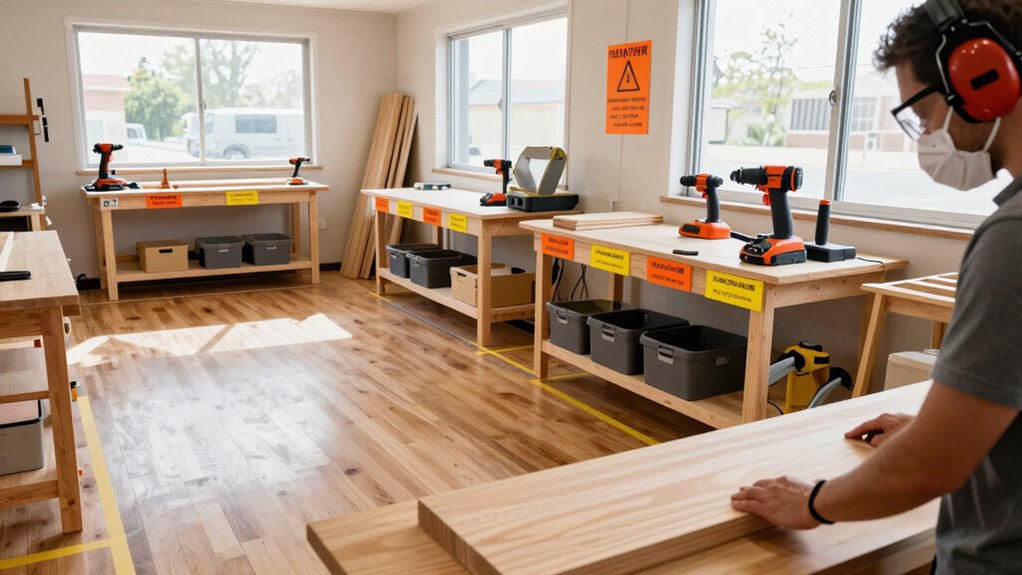
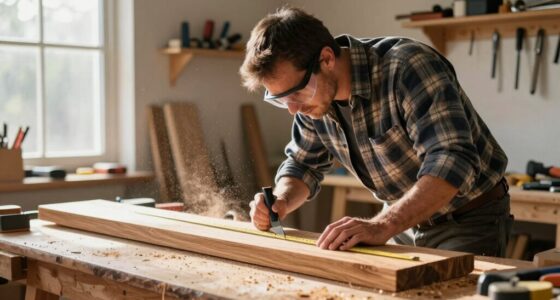
Working safely in a woodshop is essential to prevent accidents and injuries. When you’re handling powerful tools and heavy materials daily, taking the right precautions can make all the difference. Personal protective gear is your first line of defense. Wearing safety glasses or goggles keeps flying debris and wood chips out of your eyes, which is critical given how often wood dust and splinters can cause injury. Hearing protection, like earplugs or earmuffs, shields your ears from loud machinery noise that can cause long-term damage. Gloves might seem helpful, but in some cases, they can get caught in rotating equipment, so use them wisely and only when appropriate. Gloves should be used cautiously and only when they won’t pose a risk of entanglement. Dust masks or respirators are indispensable too, especially when sanding or working with treated woods, to prevent inhaling harmful sawdust or chemical fumes.
Prioritize safety gear like glasses, ear protection, and masks to prevent injuries in the woodshop.
Beyond protective gear, emergency preparedness is a key component of a safe woodshop. You should always know the location of fire extinguishers and verify they are suitable for electrical and wood fires. Regularly check that fire extinguishers are in working order and easily accessible. Keep a first aid kit nearby, stocked with essentials like bandages, antiseptics, and pain relievers, so you can respond swiftly to cuts, splinters, or other minor injuries. It’s also smart to have an emergency plan in place. Know how to shut down equipment quickly in case of malfunction or fire, and keep emergency contact numbers handy. Regularly review safety procedures so you’re prepared for different scenarios, whether it’s a tool malfunction or an accidental injury. Additionally, understanding how each tool operates can significantly reduce the risk of mishaps. Familiarity with proper tool operation techniques is essential for avoiding common mistakes and maintaining a safe working environment. Incorporating safety training into your routine can also help reinforce best practices and keep safety top of mind. Ensuring proper training and education for all users is vital for fostering a safety-conscious culture.
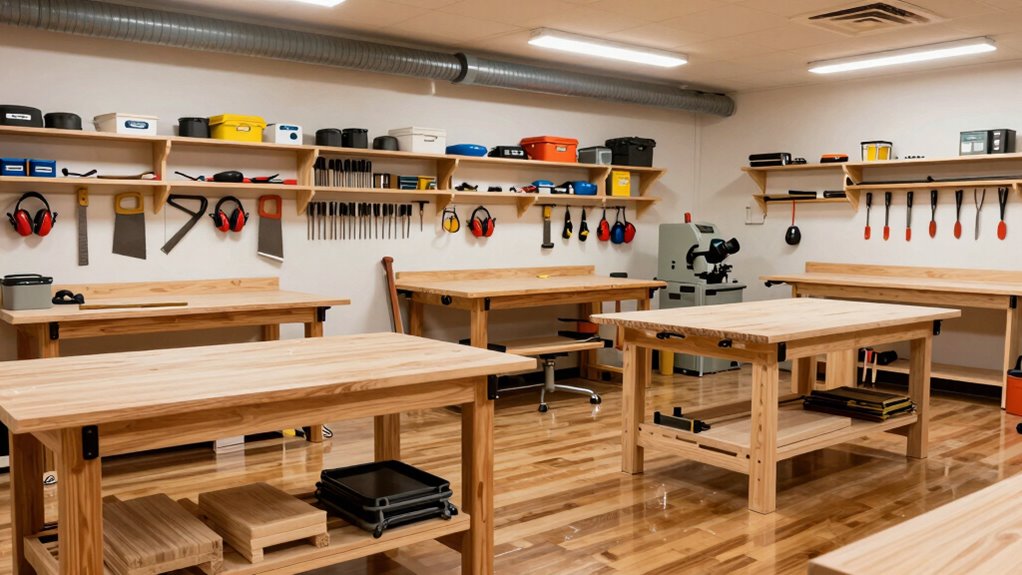
Maintaining a clean and organized workspace is another critical aspect. Cluttered workbenches and misplaced tools increase the risk of trips, falls, or accidental cuts. Keep cords out of walkways, and ensure tools are properly stored after use. Proper ventilation is equally important; a well-ventilated shop reduces dust accumulation and disperses fumes, making the environment safer and healthier. When you work with power tools, always double-check safety features like blade guards and switches before starting. Never bypass safety features—that’s when accidents happen. Creating a safety-conscious environment also involves understanding how each tool works, so you can operate them correctly and avoid mishaps. Staying alert and attentive while working is crucial because fatigue or distraction can lead to mistakes.
As an affiliate, we earn on qualifying purchases.
Frequently Asked Questions
How Often Should Safety Equipment Be Inspected or Replaced?
You should inspect your personal protective gear daily before use and replace any items showing signs of wear or damage immediately. Regularly check emergency preparedness equipment, like fire extinguishers and first aid kits, at least once a month. This routine guarantees your safety gear remains reliable and effective. Consistent inspection and replacement help prevent accidents, keeping your woodshop safe for daily work and emergencies.
Are There Specific Safety Standards for Different Types of Woodworking Tools?
Yes, there are specific safety standards for different woodworking tools. You should always use protective gear like goggles, ear protection, and dust masks suited for each tool. Familiarize yourself with emergency procedures tailored to your equipment, such as shutdown protocols for power tools. This guarantees you handle tools safely, reduces accidents, and maintains a secure workspace daily. Regularly reviewing these standards keeps safety a top priority.
What Should I Do if I Suspect a Safety Hazard in the Workshop?
If you suspect a safety hazard, stop work immediately and put on your personal protective gear, like goggles or gloves. For example, if you notice a frayed power cord, disconnect the tool and alert others. Follow your emergency procedures, such as evacuating if necessary, and report the hazard to a supervisor. Taking quick action helps prevent accidents and keeps your workspace safe for everyone.
How Can I Train Others to Follow Safety Protocols Effectively?
You can train others effectively by demonstrating the importance of personal protective gear and emergency response procedures. Start with hands-on demonstrations, emphasizing proper use of safety equipment, like goggles and ear protection. Reinforce the importance of following protocols consistently. Encourage questions, provide clear instructions, and regularly review safety measures. Creating an environment where safety is prioritized helps your team internalize protocols, reducing accidents and fostering a safer woodshop for everyone.
What Are Common Safety Mistakes Beginners Often Overlook?
Like Icarus flying too close to the sun, beginners often overlook the importance of personal protective gear and emergency procedures, risking safety. They might skip eye protection or neglect to know what to do in emergencies. You must emphasize that safety gear isn’t optional and that understanding emergency procedures can be the difference between a quick fix and a disaster. Never underestimate the power of preparation and vigilance.
Conclusion
By following these safety tips, you’ll keep your woodshop a safe haven rather than a hazardous zone. Stay alert, wear your gear, and maintain your tools — don’t let small issues snowball into big problems. Remember, safety isn’t just about avoiding accidents; it’s about creating a space where craftsmanship flourishes. Keep safety at the forefront, and you’ll find that a well-prepared shop is a joy to work in — a true safe harbor for your woodworking adventures.