
The table saw safety feature that deserves more attention is the riving knife. It prevents wood from pinching the blade, greatly reducing the risk of kickback and enhancing cutting stability. By using a riving knife, you’re prioritizing your safety and improving your woodworking experience. Many people overlook its importance, but understanding how it works can make a big difference. Discovering more about other safety features can help you create an even safer working environment.

Get business pricing on tools and workshop supplies
- Business-only prices and quantity discounts
- Tax-exempt purchasing
- Multiple users, one account, clear invoices
Key Takeaways
- Riving knives significantly reduce kickback by preventing wood from pinching the blade, yet they are often overlooked in safety discussions.
- Properly positioned blade guards act as a crucial barrier, minimizing accidental contact with the blade during operation.
- Safety switches are essential for preventing accidental startups, highlighting the importance of knowing their location and operation.
- Push sticks allow safe guiding of wood through the saw, maintaining a safe distance from the blade during narrow cuts.
- Many beginners underestimate the importance of these safety features, making awareness and training vital for a safer woodworking experience.
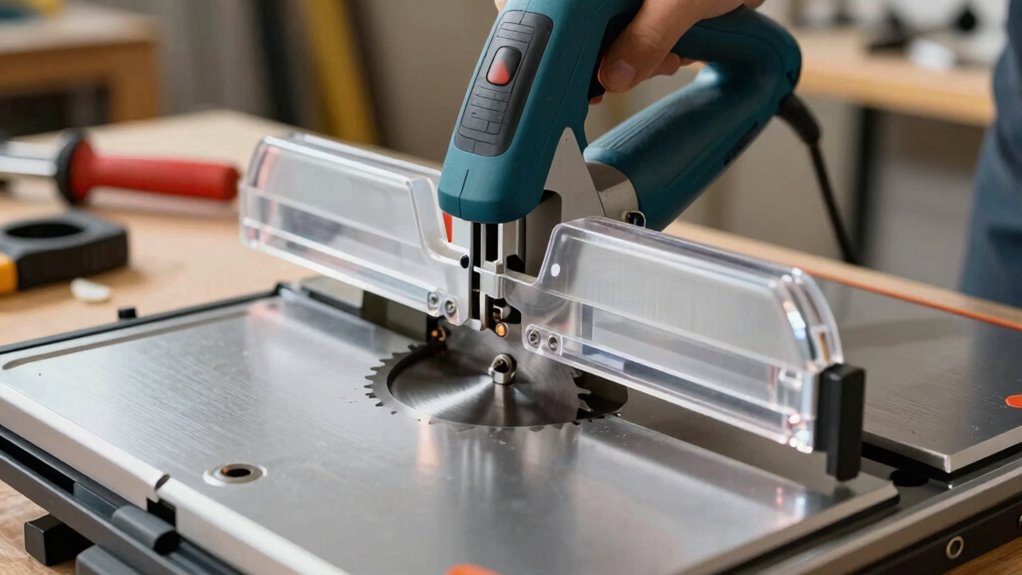
Table saws can be incredibly useful tools in any workshop, but safety should always come first. When you’re working with such powerful machinery, it’s vital to understand the safety features that can protect you. One feature that often doesn’t get enough attention is the use of riving knives. This tool is designed to prevent the wood from pinching the blade during a cut, which can lead to kickback—a serious hazard. By keeping the material stable as you cut, riving knives greatly reduce the risk of accidents.
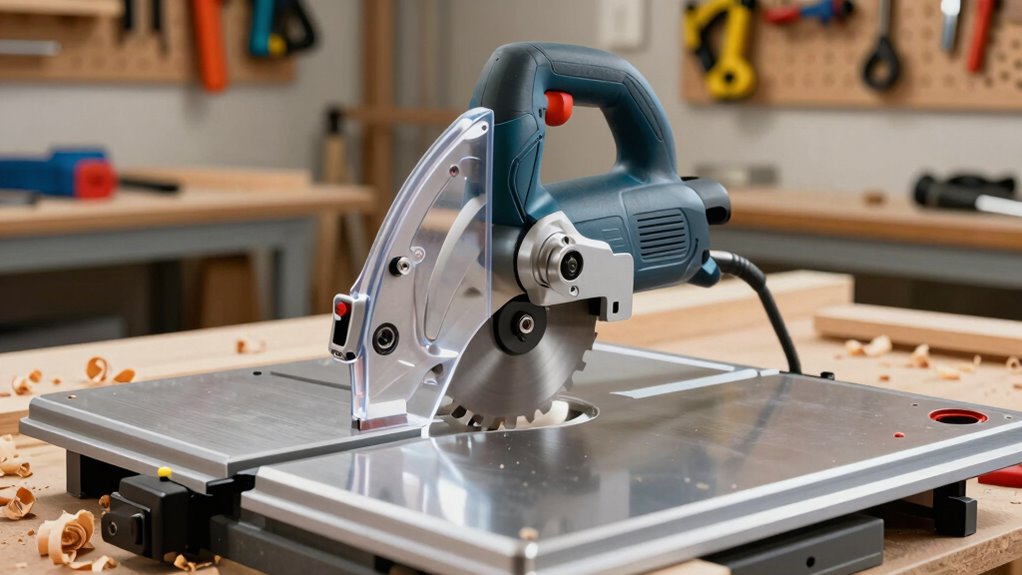
Another critical safety feature you should always use is the blade guard. Many beginners overlook this component, thinking it’s an unnecessary hassle. However, the blade guard serves as a barrier that prevents accidental contact with the spinning blade. It’s designed to automatically lift as you feed the wood but will cover the blade when you’re done. Always verify that the blade guard is properly positioned before you start any cutting task.
Always ensure the blade guard is in place; it protects against accidental contact with the spinning blade while you work.
Safety switches also play an important role in keeping you safe while using a table saw. These switches are designed to prevent accidental startup, which can happen if you accidentally bump the power switch while working. Make sure you familiarize yourself with the location and operation of these switches, and always turn off the saw when you’re done or when you need to step away for any reason. Understanding machine safety is essential for creating a secure working environment.
Using push sticks is another effective way to enhance your safety while working with a table saw. Push sticks help you maintain a safe distance from the blade, allowing you to guide the wood through the saw without putting your hands in danger. When making narrow cuts, don’t hesitate to grab a push stick. It might seem like an extra step, but it could save you from a serious injury.
Incorporating these safety features into your workflow isn’t just a good idea; it’s essential for anyone who wants to use a table saw effectively. By properly utilizing blade guards, riving knives, safety switches, and push sticks, you’ll create a safer working environment. Remember, the goal isn’t just to get the job done; it’s to get it done safely. Prioritizing these features will not only protect you but also make your woodworking experience more enjoyable. So, the next time you fire up that table saw, take a moment to review these safety features and verify you’re using them correctly. Your hands will thank you! And always remember that understanding the safety features of your tools is crucial for preventing accidents and injuries.
As an affiliate, we earn on qualifying purchases.
Frequently Asked Questions
How Often Should I Inspect the Safety Features on My Table Saw?
You should inspect the safety features on your table saw regularly, ideally before each use and at least monthly for thorough checks. This guarantees safety feature effectiveness, helping you catch any issues early. Pay attention to the blade guards, riving knife, and emergency shut-off. If you notice any wear or malfunction, address it immediately. Staying proactive about inspection frequency keeps your workspace safer and enhances your overall woodworking experience.
Can the Safety Feature Be Retrofitted to Older Table Saw Models?
Yes, many safety features can be retrofitted to older table saw models, but retrofitting challenges often arise. For instance, studies show that table saw injuries account for over 30,000 emergency room visits each year in the U.S. With safety technology advancements, you can greatly reduce these risks. However, compatibility and installation can vary, so it’s best to consult the manufacturer or a professional to guarantee proper implementation and safety compliance.
What Maintenance Is Required for the Safety Feature to Function Properly?
To keep the safety feature functioning properly, you need to perform regular safety feature calibration and preventative maintenance. Check the alignment and sensitivity of the sensor frequently, adjusting it if necessary. Clean the components to remove dust and debris that can interfere with operation. Replace any worn parts immediately, and always refer to the manufacturer’s guidelines for specific maintenance schedules. Doing this guarantees your safety feature remains effective and reliable.
Are There Any Specific Brands Known for Superior Table Saw Safety Features?
When you’re working with a table saw, you want peace of mind, like a warm blanket on a chilly night. Brands like SawStop and DeWalt stand out in safety innovations, offering features that can make a real difference. In brand comparisons, SawStop’s blade brake technology is particularly remarkable, instantly halting the blade on contact. With these trusted names, you’ll find yourself more confident, knowing that safety is built right into your tools.
How Do Safety Features Affect the Overall Performance of the Table Saw?
Safety features greatly enhance a table saw’s overall performance by prioritizing user safety. When you invest in high-quality safety features, you’re not just reducing the risk of accidents; you’re also boosting your confidence while operating the saw. Feature effectiveness directly impacts how smoothly you can work, allowing you to focus on precision rather than fear. Ultimately, a well-designed safety feature can transform your woodworking experience for the better.
Conclusion
In the world of woodworking, keeping your fingers intact is no small feat. The table saw’s safety features, like blade guards and riving knives, are your best friends in the shop. By paying attention to these essential tools, you’re not just making cuts; you’re making smart choices that protect you. Remember, a stitch in time saves nine—invest in safety and you’ll reap the rewards for years to come. Stay sharp, and keep your workspace safe!
Fall yard work Picks
leaf blowers
As an affiliate, we earn on qualifying purchases.