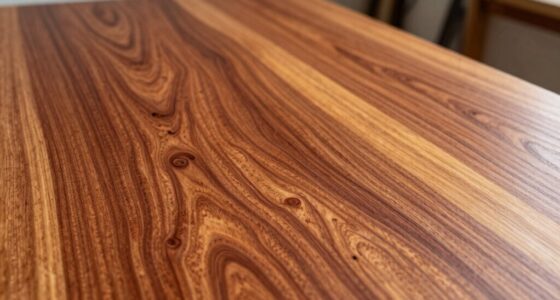
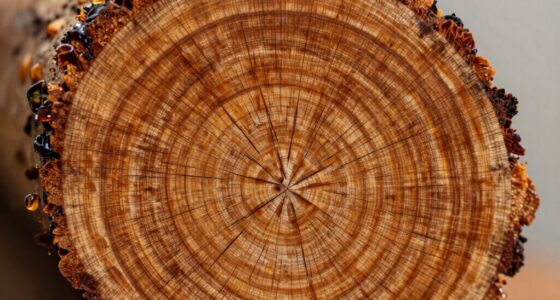
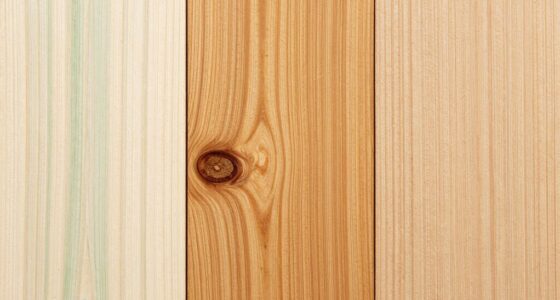
The stability of wood from season to season mainly depends on its moisture content, density, and how it’s dried and stored. Denser, hardwoods like oak and maple resist moisture changes better, staying stable even with fluctuating humidity. Proper drying and storing in controlled environments help prevent warping or cracking. Sealing and finishing also lessen moisture exchange, keeping the wood stable over time. Want to learn more about how to choose and care for stable wood?

Get business pricing on tools and workshop supplies
- Business-only prices and quantity discounts
- Tax-exempt purchasing
- Multiple users, one account, clear invoices
Key Takeaways
- Woods with lower moisture content are less prone to expansion and contraction, maintaining stability across seasons.
- Dense hardwoods, like oak and maple, resist moisture fluctuations better than softer woods.
- Proper drying and storage prevent excess moisture, reducing seasonal movement.
- Controlling environmental humidity minimizes moisture exchange and seasonal wood movement.
- Sealing and finishing treatments help lock in moisture levels, enhancing long-term stability.
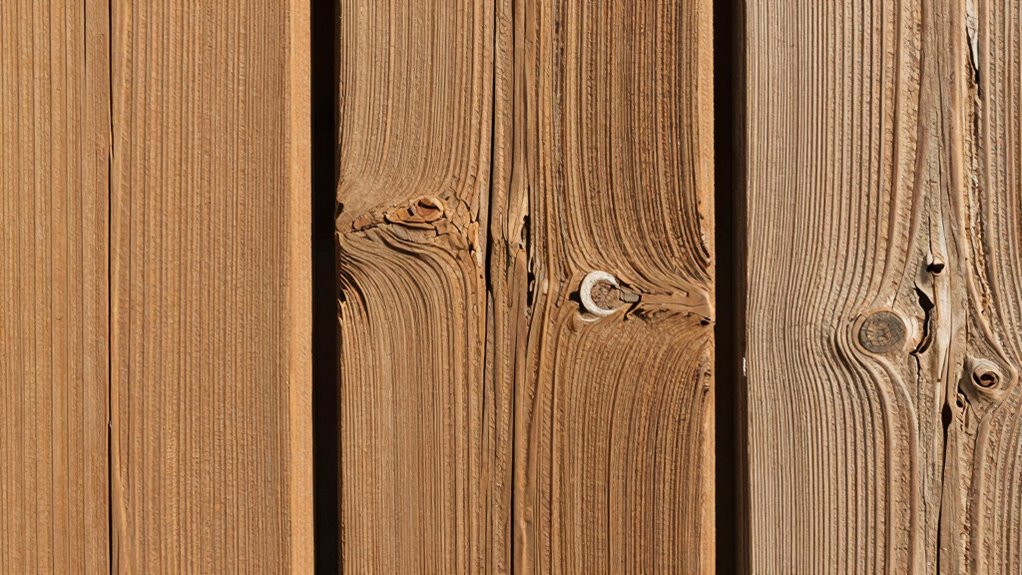
Understanding why some woods feel stable while others warp and move with the seasons starts with knowing about wood stability itself. At the core of this stability is moisture content. Wood naturally contains water, and its amount can vary depending on environmental conditions. When moisture levels fluctuate, the wood expands and contracts, causing movement. If you choose wood with a low and stable moisture content, it’s less likely to react dramatically to seasonal changes. This is why seasoned or kiln-dried wood tends to stay more stable than green or freshly cut timber. Keeping moisture content consistent reduces the chances of warping, splitting, or cracking.
Another critical factor influencing stability is wood density. Dense woods generally have less internal space for water to occupy, which means they tend to resist moisture fluctuations better. Higher-density woods typically have tighter grain structures, making them less prone to absorbing or losing water quickly. As a result, dense woods tend to resist warping and movement more effectively than lighter, less dense varieties. For example, hardwoods like oak or maple are often more stable because of their higher density, whereas softer woods like pine or cedar tend to be more susceptible to seasonal changes. Additionally, understanding the moisture content of the wood before use can greatly improve its stability over time. Properly drying and storing wood in controlled environments can further enhance its stability.
Your choice of wood should consider both moisture content and density. When you purchase wood, ask whether it has been properly dried and stabilized. Well-dried wood, with a moisture content around 6-8% for indoor use, will be less reactive to humidity swings. If you’re working with wood that’s still green or freshly milled, you might notice it moving more during seasonal shifts. Similarly, choosing woods with higher density can provide extra resilience against these changes, making your projects more durable over time. Furthermore, understanding how environmental factors impact wood can help you better predict and manage its behavior in different settings. Recognizing the importance of wood treatment methods can also play a significant role in enhancing stability. Managing climate control in your environment also plays a significant role in maintaining wood stability.
It’s also worth noting that environmental control can influence stability. Keeping indoor humidity levels steady—using humidifiers or dehumidifiers—helps maintain consistent moisture content in the wood, reducing seasonal movement. Proper sealing and finishing can also minimize moisture exchange with the environment, further stabilizing your wood.
kiln-dried hardwood for furniture
As an affiliate, we earn on qualifying purchases.
As an affiliate, we earn on qualifying purchases.
Frequently Asked Questions
How Does Wood Density Affect Stability Over Seasons?
Wood density directly impacts stability during seasonal changes. Higher-density woods resist seasonal expansion and contraction better, making them more stable over time. As wood ages, it becomes denser, which further enhances its ability to withstand temperature and humidity shifts. Conversely, lower-density woods are more prone to seasonal movement, leading to cracking or warping. Choosing dense wood helps guarantee your projects remain stable and durable through fluctuating environmental conditions.
Can Finishing Treatments Improve Wood Stability?
Finishing treatments can improve wood stability by sealing the surface, which helps control moisture exchange. A well-applied finish surface reduces uneven stain absorption and minimizes the wood’s tendency to expand or contract with seasonal changes. By creating a barrier, you prevent moisture fluctuations that cause warping or cracking. So, applying a good finish not only enhances appearance but also greatly boosts the wood’s stability across different seasons.
Does Geographic Origin Influence Wood’s Seasonal Movement?
Think of wood as a traveler whose journey depends on regional variations. Your geographic origin profoundly influences its seasonal movement, because climate adaptation varies by region. For example, woods from humid areas expand more in wet seasons, while those from dry regions remain stable. So, understanding a wood’s regional background helps predict how it’ll behave through seasonal changes, making your project more resilient and reducing surprises.
How Do Moisture Content Levels Impact Wood Stability?
Moisture content levels considerably impact wood stability because they influence moisture absorption and the drying process. When wood has high moisture content, it tends to swell, and as it dries, it shrinks, causing movement and potential warping. Maintaining a stable moisture level during the drying process helps prevent these issues. Properly seasoned wood with controlled moisture content resists seasonal movement, ensuring better stability over time.
Are Certain Wood Species More Prone to Warping?
Yes, certain wood species are more prone to warping due to their natural characteristics. You’ll notice that woods with irregular wood grain or prominent knot patterns tend to warp more because these features create uneven drying and internal stresses. For example, woods with tight, consistent grain like oak are less likely to warp than species with loose or irregular patterns, which react more dramatically to moisture changes, causing warping and movement over time.
Conclusion
So, next time you notice your wood furniture creaking or shifting with the seasons, remember it’s not just bad luck—it’s all about its natural properties and moisture content. Sometimes, it’s funny how the same wood from the same tree can behave so differently, almost like nature’s little coincidence. Paying attention to these details can help you choose the right type for stability, so your furniture stays steady, no matter what the seasons bring.
Halloween Picks
halloween
As an affiliate, we earn on qualifying purchases.