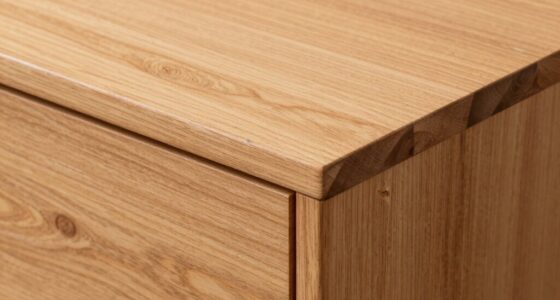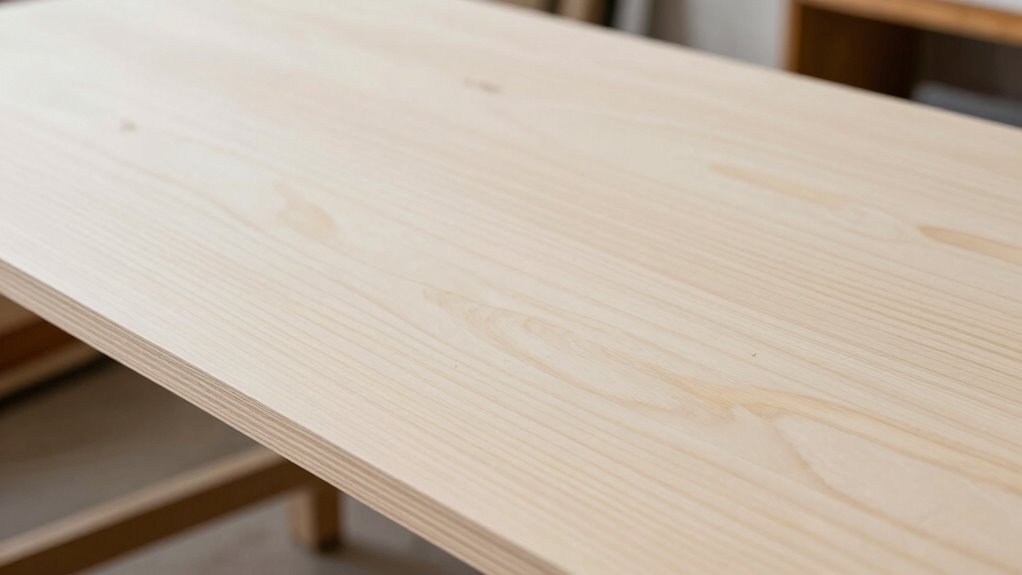

Poplar deserves more respect in paint-grade work because it offers a smooth, even surface that’s perfect for finishing and achieving a high-end look. It’s affordable, easy to machine, and accepts paint and stain well, making it a smart choice for both furniture and cabinetry projects. While not as durable as hardwoods, with proper sealing, it performs beautifully in indoor applications. To discover how to maximize poplar’s potential and why it’s a great budget-friendly option, keep exploring these key points.

Get business pricing on tools and workshop supplies
- Business-only prices and quantity discounts
- Tax-exempt purchasing
- Multiple users, one account, clear invoices
Key Takeaways
- Poplar provides a smooth, paint-ready surface that achieves high-end finishes at a lower cost than many hardwoods.
- Its excellent workability allows for quick, precise fabrication, saving time and labor in projects.
- When properly sealed, poplar’s durability can be enhanced, making it suitable for various indoor applications.
- The affordability of poplar enables budget-conscious projects without sacrificing quality or appearance.
- Its versatility makes it ideal for furniture, cabinetry, and decorative work, deserving recognition beyond its common undervaluation.
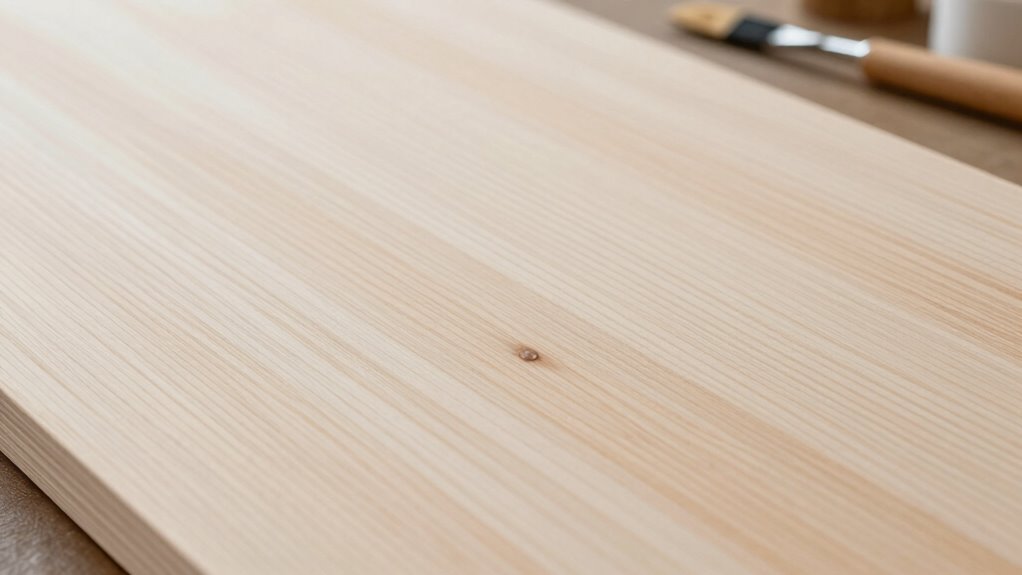
Poplar is a popular choice for paint-grade work because of its smooth surface and affordability. You might overlook this wood when planning projects, but its qualities make it a surprisingly versatile option. While some might hesitate due to concerns about durability, poplar offers a balanced mix of cost-effectiveness and workable properties that can serve many applications well. Its fine, even grain makes it easy to sand and paint, allowing you to achieve a clean, professional finish without spending a fortune. This makes poplar especially attractive for furniture, cabinetry, and decorative pieces where appearance matters more than extreme strength.
Poplar offers a smooth, affordable, and versatile option ideal for paint-grade furniture and decorative projects.
That said, durability concerns are often brought up when discussing poplar. You need to be aware that, compared to hardwoods like oak or maple, poplar isn’t as resistant to impact or moisture over long periods. If your project requires heavy-use surfaces or exposure to moisture, you might need to reinforce or seal the wood thoroughly. But for indoor applications where the wood isn’t subjected to heavy wear, you might consider its moisture resistance, which can be improved with proper finishing techniques. Proper preparation, sealing, and finishing can extend its lifespan and improve its resilience. So, while it’s true that poplar isn’t the toughest option available, it’s not inherently fragile if you work within its strengths. Additionally, understanding its properties can help you make the most of this material in your projects. Recognizing its cost-effectiveness can also help you plan projects that balance budget with quality. Knowing about its workability can further streamline your fabrication process and reduce overall project time.
When considering cost-effectiveness, poplar clearly stands out. Its lower price point compared to many hardwoods makes it a practical choice for budget-conscious projects. If you’re creating large pieces or multiple items, using poplar can significantly reduce material costs without sacrificing appearance. Its ease of machining also cuts down labor time, saving you money on finishing and assembly. Plus, since it accepts paint and stain well, you can achieve a high-end look without the expense of exotic or premium woods. This balance of affordability and aesthetic appeal makes poplar an excellent value for many projects.
In the end, you shouldn’t dismiss poplar simply because of its reputation. When used appropriately, it offers a combination of affordability, workability, and decent durability for paint-grade work. It’s a smart choice if you’re seeking an economical material that can deliver a smooth, paint-ready surface. By understanding its limitations and applying proper finishing techniques, you can maximize its potential and enjoy beautiful results without breaking the bank. Poplar deserves more respect as a practical, budget-friendly option that, with the right care, can meet your project needs effectively.
As an affiliate, we earn on qualifying purchases.
Frequently Asked Questions
Is Poplar Suitable for Outdoor Paint Projects?
Poplar isn’t the best choice for outdoor paint projects due to its lower durability against weather elements. You’ll find that poplar can be prone to moisture absorption, which affects paint adherence and can lead to warping or decay over time. If you want a more durable finish outdoors, consider woods like cedar or redwood that naturally resist moisture and provide better long-term paint adherence.
How Does Poplar Compare to Other Paint-Grade Woods?
Compared to other paint-grade woods, poplar offers decent paint adhesion and moderate durability. While it’s not as tough as pine or cedar, it’s easier to work with and provides a smooth surface for painting. You’ll find that poplar responds well to primer, ensuring a clean finish. Its affordability and ease of handling make it a smart choice, especially when durability isn’t your primary concern, but good paint results are.
Can Poplar Be Stained or Only Painted?
You can definitely stain poplar—think of it as a blank canvas waiting for your creative touch. While it’s often painted, wood staining offers rich finish options that highlight its unique grain. I once stained poplar for a custom cabinet, and the warm, natural look impressed everyone. Its smooth surface accepts stain well, making it versatile for various projects, from rustic to modern styles.
What Are the Environmental Benefits of Using Poplar?
Using poplar offers notable environmental benefits, as it supports sustainable harvesting practices that help conserve forests. Poplar trees grow quickly, making them excellent for carbon sequestration, which reduces greenhouse gases in the atmosphere. By choosing poplar, you’re promoting eco-friendly forestry, reducing deforestation pressures, and helping combat climate change. Its rapid growth and renewability make poplar a responsible choice for environmentally conscious projects.
Is Poplar Prone to Warping or Shrinking?
Poplar is generally stable if properly dried and seasoned, but it can be prone to warping or shrinking if moisture content fluctuates. Its wood stability depends on how well you control humidity and drying processes. The grain characteristics of poplar are straight and uniform, which helps minimize warping. To keep it stable, guarantee proper storage and drying, and avoid exposing it to extreme moisture changes.
Conclusion
So, next time you dismiss poplar as just a cheap, plain choice, remember it’s quietly capable of more than you give it credit for. Its understated versatility and ease of finishing make it a surprisingly worthy contender in paint-grade work. Ironically, the very qualities that often get overlooked—its affordability and simplicity—are what make it a smart, dependable choice. Sometimes, the most humble materials turn out to be the ones that truly stand out in the end.
Halloween Picks
halloween
As an affiliate, we earn on qualifying purchases.