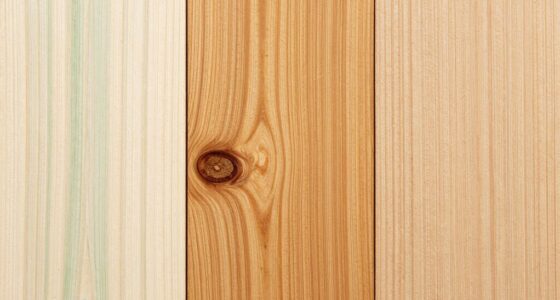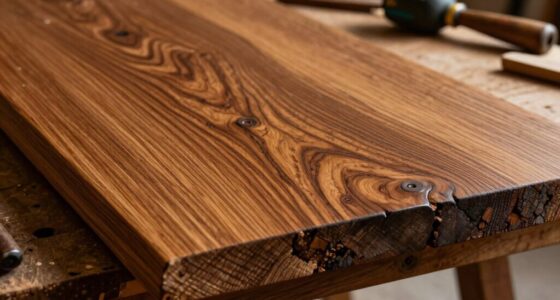

Before you build, it’s important to spot wet boards to prevent future problems. Check for signs like darker color, a damp smell, or a sticky feel. Heavier weight and swollen edges also indicate excess moisture. Using a moisture meter can give you a precise reading, guaranteeing the wood is properly seasoned. Recognizing these clues early helps you choose dry, stable lumber—keep going to learn more about how to ensure your wood is ready for your project.

Get tools and workshop supplies delivered free — and shop member deals
- Fast, free delivery on millions of items
- Access to Prime Big Deal Days deals on October 6–7
- Prime Video, Amazon Music and more included
Key Takeaways
- Look for visual signs like dark color, swelling, or water stains indicating high moisture content.
- Use a moisture meter to get an accurate reading; aim for 6-8% for indoor projects.
- Feel the surface for stickiness or coldness, which suggests moisture retention.
- Check the weight; heavier boards may contain more water than properly seasoned lumber.
- Smell the wood; a damp or musty odor indicates elevated moisture levels.

Have you ever wondered why dry lumber is essential for quality construction and woodworking projects? The key lies in understanding moisture content and the process of wood seasoning. When you pick out lumber, you’re not just selecting boards based on appearance or size; you need to consider how much water they contain. Moisture content directly impacts how the wood will behave once used in your project. If the moisture level is too high, the wood can warp, crack, or shrink as it dries out over time, leading to structural issues or a less polished finish. That’s why ensuring your lumber has been properly seasoned is crucial. Proper wood seasoning reduces the moisture content, stabilizing the wood and making it less prone to movement once installed. It involves drying the wood thoroughly, either naturally through air drying or artificially with kiln drying, until it reaches an ideal moisture level, typically around 6-8% for indoor projects. Understanding moisture content is vital because it directly affects the longevity and stability of your build.
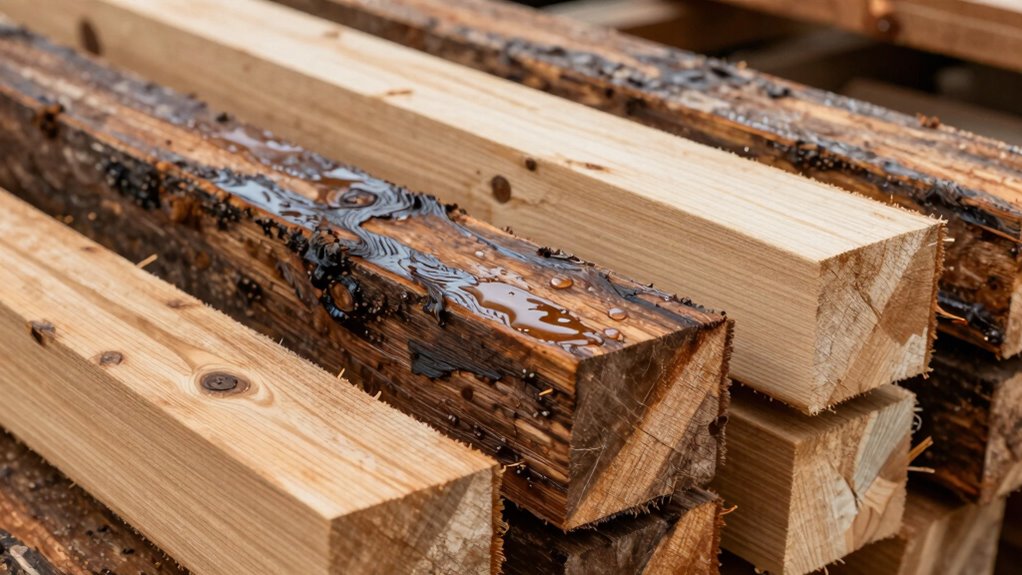
Knowing how to spot wet boards before you begin construction can save you time and money. Wet or unseasoned lumber often appears darker or has a duller finish compared to fully seasoned wood. You might notice a strong, damp smell, or the surface may feel sticky or cold to the touch. Sometimes, wet boards have visible signs of moisture, like water stains or a swollen appearance, especially along the edges. When you pick up a board, check its weight—wet lumber feels heavier because of the excess water. If you’re unsure, you can use a moisture meter to get an accurate reading. A moisture meter quickly tells you whether the wood has reached the appropriate moisture level, allowing you to avoid boards that will shrink or warp after installation.
The importance of wood seasoning can’t be overstated. It improves the stability, durability, and overall quality of your finished project. Using wet or improperly dried boards can lead to problems such as cracking, splitting, or joint failure later on. When you work with properly seasoned, dry lumber, you’re ensuring that your project will look better, last longer, and require less maintenance. It also makes your work more predictable because dry wood responds consistently to cuts, finishes, and fasteners. In the end, investing time in selecting properly dried, seasoned wood means you’ll craft a stronger, more professional-looking result. So, always check the moisture content and choose dry lumber—your project’s success depends on it.
As an affiliate, we earn on qualifying purchases.
Frequently Asked Questions
Can Wet Lumber Cause Structural Issues Over Time?
Wet lumber can definitely cause structural issues over time. When moisture retention occurs, it promotes wood deterioration, weakening the boards’ integrity. As the wood absorbs water, it becomes more prone to warping, cracking, and rot, which compromises your structure’s stability. If you build with wet lumber, you risk future problems like mold growth and reduced load-bearing capacity, so always make certain your wood is properly dried before using it.
How Long Should I Wait for Wet Boards to Dry?
Time flies when you’re waiting, but you should wait until your wet boards are properly dry. Typically, this takes 24 to 48 hours, but it depends on moisture measurement and drying techniques. Use a moisture meter to check if the moisture content drops below 19%, indicating dryness. Proper airflow, dehumidifiers, and heat can speed up drying. Never rush this step, or you risk future problems.
Are There Specific Tools to Detect Moisture Content?
You can use moisture meters and hygrometers to detect moisture content in your wood. Moisture meters are handy because they provide quick, accurate readings directly from the board’s surface or core, helping you identify wet spots. Hygrometers measure humidity levels in the air, giving you an idea of overall moisture conditions. Both tools make it easier to guarantee your lumber is properly dried before you start building.
Does Drying Time Vary by Wood Species?
Did you know that hardwoods like oak take up to twice as long to dry as softwoods such as pine? Yes, drying time varies by wood species because each type has different moisture content and density. When planning your project, consider the specific wood species you’re using, as it directly influences the drying duration. Proper drying guarantees your lumber is stable and less prone to warping or cracking down the line.
Can Finishing or Staining Hide Moisture Problems?
Finishing or staining can’t effectively hide moisture problems because moisture concealment isn’t foolproof. Stains may temporarily mask uneven surfaces or discoloration, but they won’t address underlying issues like trapped moisture or mold. You risk future problems if you rely solely on staining limitations to hide wet boards. It’s best to verify your lumber is thoroughly dry before finishing, as moisture can cause warping, cracking, or mold growth over time.
Conclusion
By learning to spot wet boards before you build, you guarantee your project stays strong and lasts longer. Don’t wait until cracks or warping show up—trust your eyes and touch to identify moisture issues early. After all, isn’t it smarter to catch problems now than fix costly mistakes later? Taking a moment to check your lumber can save you time, money, and frustration down the road. So, are you ready to build with confidence?
Fall yard work Picks
leaf blowers
As an affiliate, we earn on qualifying purchases.