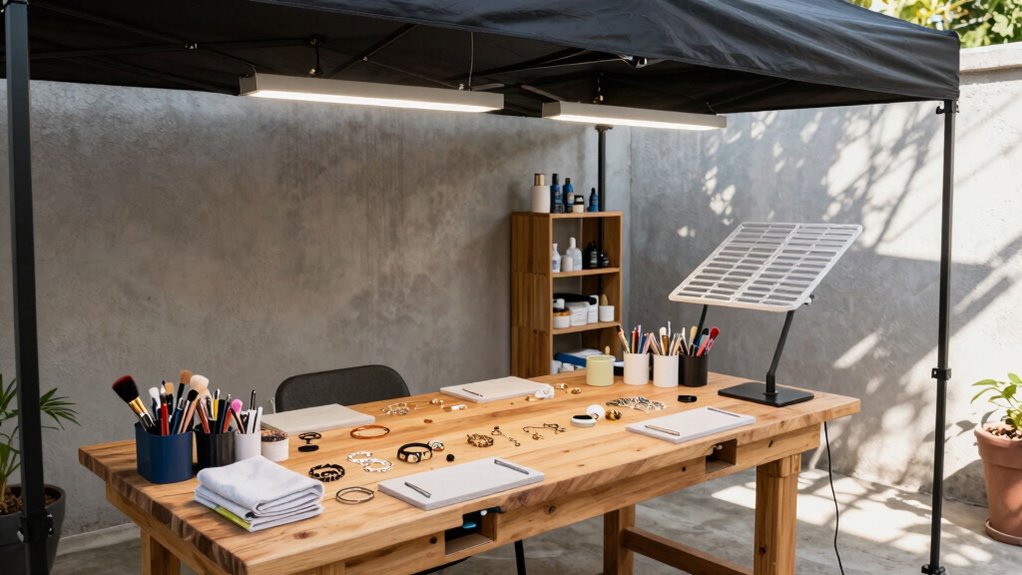

To set up a finishing area without a separate building, choose a flat, well-ventilated space within your existing workspace. Clear clutter and organize your tools with storage solutions to boost efficiency. Install exhaust fans or open windows to maintain good airflow and control fumes. Regularly maintain your equipment and use personal protective gear for safety. Keep safety measures like fire extinguishers nearby and establish procedures for hazardous materials. For more detailed steps, keep exploring how to create a safe, effective finishing zone indoors.

Get tools and workshop supplies delivered free — and shop member deals
- Fast, free delivery on millions of items
- Access to Prime Big Deal Days deals on October 6–7
- Prime Video, Amazon Music and more included
Key Takeaways
- Designate a flat, well-ventilated corner or section within your existing workspace for finishing tasks.
- Install portable exhaust fans or air purifiers to ensure proper airflow and fume removal.
- Organize tools and materials efficiently to minimize clutter and streamline the finishing process.
- Use portable or movable safety equipment, like fire extinguishers and PPE, within the designated area.
- Maintain regular equipment maintenance and cleaning to ensure safety and high-quality finishes.
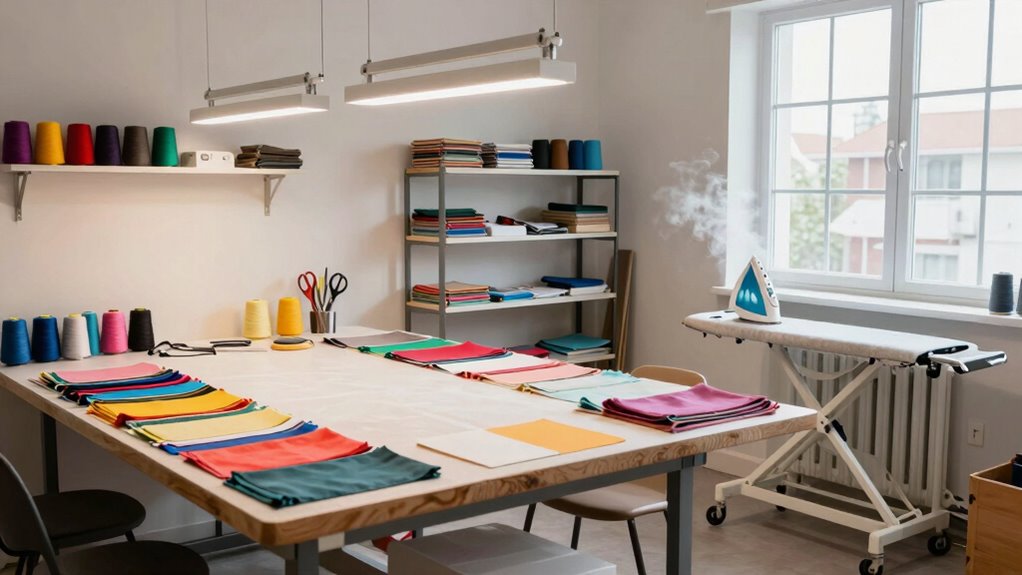
Setting up a finishing area is a vital step in ensuring your project looks professional and polished. Even if you don’t have a separate building, you can still create an efficient space that meets your needs. The key is to designate a specific area within your workspace that’s dedicated to finishing tasks, such as sanding, staining, or sealing. This helps contain dust, fumes, and messes, preventing them from spreading to other parts of your shop or home. When you organize this space, start by clearing a flat, well-ventilated zone that’s easy to clean and access. Good airflow is essential, especially when working with chemicals or paints, so consider installing exhaust fans or opening windows during operation.
Once you’ve established the location, focus on equipment maintenance. Regularly inspecting and cleaning your tools and machines ensures they function safely and effectively. For example, keep your sanders, sprayers, and brushes in good condition, replacing worn parts when needed. Well-maintained equipment reduces the risk of malfunctions, which can cause accidents or uneven finishes. Also, organize your tools and materials in storage solutions that prevent clutter. This not only speeds up your workflow but also minimizes the chances of accidents caused by misplaced items.
Safety protocols are critical in any finishing area. Always wear appropriate personal protective equipment, such as masks, gloves, and goggles, to shield yourself from dust, fumes, and splashes. Make sure your space has proper lighting so you can see details clearly, reducing errors and mishaps. Keep a fire extinguisher nearby, especially if you’re working with flammable finishes or solvents. It’s also wise to establish procedures for handling and disposing of hazardous materials responsibly, complying with local regulations. Ventilation is crucial—ensure your finishing area has enough airflow to vent fumes and prevent dangerous buildup. If you’re working indoors, consider using exhaust fans or air purifiers to maintain air quality. Additionally, using proper ventilation techniques ensures that fumes are effectively removed, safeguarding your health. Incorporating air quality monitoring can further help you maintain a safe environment by alerting you to hazardous fumes.
In addition, set clear boundaries for your finishing zone to keep other parts of your workspace clean and safe. Post safety signs or instructions if needed, and always follow manufacturer guidelines for your products. By maintaining your equipment diligently and respecting safety protocols, you create a secure environment that promotes high-quality results. The more organized and protected your finishing area is, the smoother your project will go from start to finish. Even without a dedicated building, a well-planned finishing zone helps you produce professional-looking results while keeping safety top priority.
portable exhaust fan for workshop
As an affiliate, we earn on qualifying purchases.
As an affiliate, we earn on qualifying purchases.
Frequently Asked Questions
What Permits Are Needed for a Finishing Area?
You’ll need permits for your finishing area, especially for material storage and equipment maintenance. Check local regulations to see if you require a building permit, environmental permits, or safety certifications. Proper ventilation and waste disposal plans may also need approval. Contact your city or county’s building department to confirm compliance, secure the necessary permits, and avoid fines. Staying informed helps you create a safe, legal, and efficient finishing space.
How to Ensure Proper Ventilation in a Small Space?
You might think sealing the space tight keeps everything in, but proper ventilation is key for air quality and odor control. Install exhaust fans or vents that actively circulate air, and consider adding air purifiers with activated carbon filters. Keep windows open when possible, and use inline fans to guarantee fresh air flows in and out. Ironically, letting air in prevents buildup, proving good ventilation isn’t just a suggestion—it’s essential.
What Safety Equipment Is Essential for Finishing Work?
You need personal protective equipment like gloves, goggles, and a respirator to safeguard against fumes, dust, and chemicals during finishing work. Fire safety measures are vital, so keep fire extinguishers nearby, guarantee proper ventilation, and avoid open flames or sparks. Always wear your PPE properly, and follow safety protocols to prevent accidents. Regularly inspect safety equipment and maintain a clean, organized workspace to minimize risks.
How to Prevent Dust Contamination in a Shared Area?
To prevent dust contamination in a shared area, you should use air filtration systems to trap airborne particles and maintain good airflow. Additionally, set up dust barriers, like plastic sheeting or temporary walls, around your finishing zone to contain dust. Regularly clean the area and minimize movement to reduce dust spread. These measures help keep your workspace clean and protect other areas from contamination.
What Are Cost-Effective Solutions for Space Efficiency?
Your finishing area can become a space-saving powerhouse with innovative storage solutions like stackable bins and wall-mounted racks, turning chaos into order. Optimize lighting by installing bright, energy-efficient LEDs that make the space feel larger and more inviting. These cost-effective strategies maximize every inch, reduce clutter, and enhance workflow, making your finishing area as efficient and spacious as possible without breaking the bank.
Conclusion
Setting up a finishing area without a separate building is achievable with careful planning and efficient use of space. By prioritizing ventilation, organization, and safety, you can create a functional workspace that boosts productivity. Did you know that well-designed finishing areas can reduce processing time by up to 30%? Implementing these tips not only streamlines your workflow but also enhances safety and quality, making your setup both practical and professional.
Halloween Picks
halloween
As an affiliate, we earn on qualifying purchases.