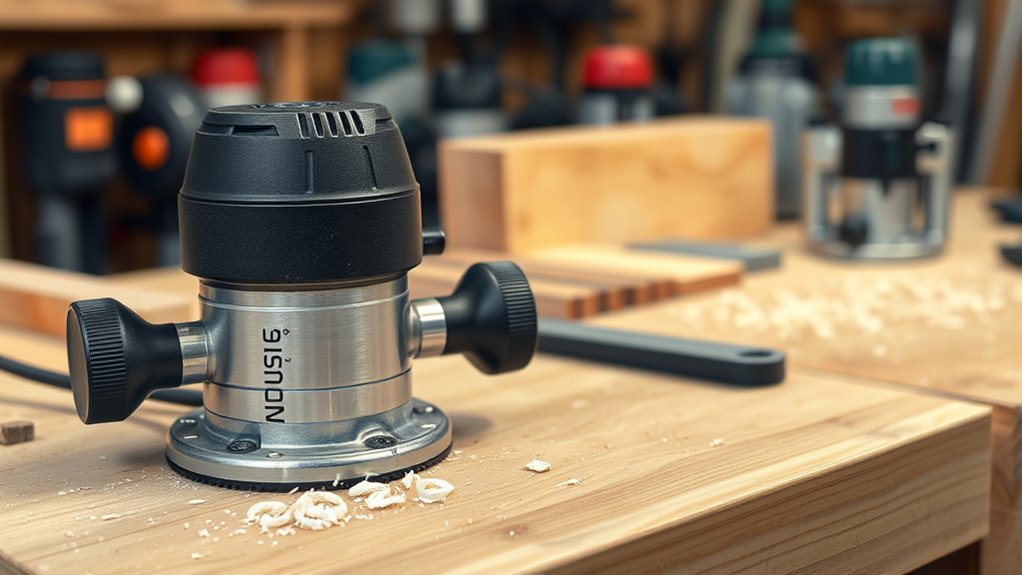

Woodworking routers range from compact palm tools for trimming edges to powerful plunge and fixed-base models for demanding cuts. I’d make the Bosch 1617EVSPK my best overall pick for its combination of power and base versatility; the Bosch PR20EVS Colt stands out for controlled one-handed work, while the SKIL RT1322-00 offers both plunge and fixed-base setups. The main tradeoff is between compact handling and the capacity and control of a full-size router. I also weighed speed control, collet compatibility, included accessories, and the value of getting more than one base. Read on for the full comparison and a guide to choosing a router that fits your projects.

Get business pricing on tools and workshop supplies
- Business-only prices and quantity discounts
- Tax-exempt purchasing
- Multiple users, one account, clear invoices
Complete the kit


Key Takeaways
- The Bosch 1617EVSPK is the most adaptable pick: its fixed and plunge bases suit a wider range of shop tasks than any of the compact routers here.
- The Bosch PR20EVS Colt serves a different purpose: its palm-router format favors edge work and controlled handling, while the larger Bosch 1617 models bring more capacity for demanding cuts.
- The SKIL RT1322-00 and Bosch 1617EVSPK both offer two-base flexibility: compare their power and included setup against how often your work calls for plunge routing.
- Several compact models bundle bits or guides: Hoteche, NANWEI, TwoWin, Teeno, WORKPRO, and DOBETTER include accessories, but bundle size alone says little about cutting control or long-term durability.
- Power ratings are not the whole ranking: usable speed control, a suitable base, collet fit, and the kind of cuts you make matter more than choosing the highest listed wattage or horsepower.


| woodworking router | Power source | Amperage | Base type | Horsepower |
|---|---|---|---|---|
| Hoteche 7.1 Amp Wood Router To | Corded electric | 7.1 A | Fixed | — |
| Bosch PR20EVS Colt 1.0 HP Vari | Corded electric | 5.6 A | Fixed | 1 hp |
| NANWEI 450W Compact Hand Wood | Corded | — | — | — |
| TwoWin 800W Compact Wood Route | — | 6.5 A | Fixed, transparent | 1.25 hp |
| AVID POWER 6.5 Amp 1.25 HP Com | — | 6.5 A | Fixed | — |
| 3.25 HP Plunge Router | Corded electric | 15 A | Plunge | 3.25 HP |
| Teeno Wood Router | Corded electric | 6.5 A | Fixed | 1.25 HP |
| AVID POWER Compact Wood Router | — | 5.3 A | Fixed | 1.25 HP |
| WORKPRO Compact Router Kit | Corded | — | Fixed | — |
| 800W Compact Wood Router Tool | Corded electric | — | — | — |
| Bosch 1617EVS 2.25 HP Electron | Corded electric | 12 A | Fixed | 2.25 HP |
| SKIL 14-Amp Plunge and Fixed-B | Corded electric | 14 A | — | 2.42 hp |
| TEENO 1.25 HP 6.5 Amp Compact | Corded electric | 6.5 A | — | — |
| Bosch 1617EVSPK 2.25 HP Fixed- | Corded electric | 12 A | Fixed and plunge | 2.25 HP |
| DOBETTER 6.5 Amp 1.25 HP Wood | 120 V AC | 6.5 A | Fixed | 1.25 HP |
More Details on Our Top Picks
Hoteche 7.1 Amp Wood Router Tool
The Hoteche stands out among these compact routers for accepting both 1/4-inch and 6mm collets, which can help buyers work with bits they already own in either size. Its 11,500–32,000 RPM variable-speed range also offers more control over cutting pace than the fixed 30,000 RPM TwoWin. At 7.1 amps, it has the strongest stated current rating among these compact options, though amps alone do not establish cutting performance. The fixed base keeps the setup simple for edge work, but it lacks the flexibility of a plunge router. Its depth adjustment reaches 1.18 inches and may take careful handling to set accurately. I’d shortlist it for mixed-bit DIY work, while woodworkers needing plunge cuts or cordless mobility should look elsewhere.
Pros:- Accepts both 1/4-inch and 6mm collets
- Variable speed from 11,500 to 32,000 RPM
- 7.1-amp motor rating
- Aluminum construction and compact ergonomic design
Cons:- Corded power limits use away from an outlet
- Fixed base does not support plunge cuts
- Depth adjustment calls for careful setup
Best for: DIY woodworkers who use both 1/4-inch and 6mm bits and want variable speed for edge routing and cabinetry tasks
Not ideal for: Woodworkers who need plunge routing, cordless mobility, or a more clearly specified depth-control system
- Power source:Corded electric
- Amperage:7.1 A
- Speed range:11,500–32,000 RPM
- Base type:Fixed
- Collet sizes:1/4 in and 6 mm
- Maximum depth adjustment:1.18 in
- Material:Aluminum
Our verdict“Choose the Hoteche if you want a compact fixed-base router that accommodates both 1/4-inch and 6mm bits.”
Bosch PR20EVS Colt 1.0 HP Variable-Speed Palm Router
The Bosch Colt earns its place for woodworkers who value controlled, repeatable depth setting in a compact router. Its macro and micro adjustments make fine changes easier than the Hoteche’s simpler depth adjustment, while soft start and constant-response circuitry help keep startup and cutting behavior controlled. The 16,000–35,000 RPM range is broad, though it starts faster than the AVID POWER’s 10,000 RPM minimum, giving that router more room at the low end. Bosch supplies a fixed base and 1/4-inch collet, so this is a focused tool for trimming and edge work rather than a plunge-routing solution. At 3.3 pounds it is lighter than the 4.8-pound TwoWin, but its cord still ties it to an outlet.
Pros:- Macro and micro depth adjustment for fine setup changes
- Soft-start and constant-response circuitry
- Quick-clamp fixed base
- 3.3-pound weight and compact dimensions
Cons:- Fixed base limits plunge-routing tasks
- Only a 1/4-inch collet is specified
- Corded operation restricts mobility
Best for: Woodworkers making frequent edge profiles or template-guided cuts who want fine depth adjustments in a light palm router
Not ideal for: Buyers seeking plunge-base versatility, lower starting speeds, or support for collets beyond 1/4 inch
- Power source:Corded electric
- Voltage:120 V
- Horsepower:1 hp
- Amperage:5.6 A
- Speed range:16,000–35,000 RPM
- Base type:Fixed
- Collet:1/4 in
- Weight:3.3 lb
- Maximum cutter diameter:1-5/16 in
Our verdict“Pick the Bosch Colt for controlled depth adjustments and a lightweight form suited to detailed edge work.”
NANWEI 450W Compact Hand Wood Router with 15pcs Bits
The NANWEI’s clearest advantage is its transparent base, which helps keep the workpiece edge in view during trimming, grooving, and finishing. That visibility gives it a different appeal from the Bosch Colt, whose listed strengths center on depth-control features rather than a clear base. The NANWEI also includes 15 bits, giving a new DIY user a starting assortment without assembling a separate bit set. Its stated 450W motor and 32,000 RPM speed suit compact detail work, but the supplied information does not specify variable speed or a collet size. That leaves less guidance for matching it to different materials and bits than the Hoteche, which lists both. The fixed, corded setup also narrows its range of work. I’d favor it for visibility and bundled basics over fine speed tuning.
Pros:- Transparent base helps keep the cutting area visible
- Includes 15 router bits
- Adjustable depth with a quick-lock system
- Soft-grip handle
Cons:- Corded design limits mobility
- No variable-speed range is specified
- Collet size is not provided in the product data
Best for: DIY users doing visible edge trimming and light grooving who want a transparent base and an included bit assortment
Not ideal for: Woodworkers who need documented variable speed, specified collet compatibility, or cordless operation
- Power:450 W
- Speed:32,000 RPM
- Number of bits:15
- Power source:Corded
- Base:Transparent
- Depth adjustment:Adjustable
- Lock system:Quick-lock
Our verdict“Choose the NANWEI for visible compact routing and an included bit set when speed and collet details are not your priority.”
TwoWin 800W Compact Wood Router with 15 Router Bits
The TwoWin is aimed at buyers who want a ready-to-start accessory bundle: its kit lists 15 bits, straight and trimming guides, wrenches, and a wooden organizer. That is a broader named set of guides and storage than the AVID POWER’s included accessories, which instead list a dust hood and two collets. The TwoWin pairs its kit with an 800W, 30,000 RPM motor and a transparent fixed base for edging and trimming, but the speed is listed as a single figure rather than a variable range. That makes it less adaptable on paper than the AVID POWER or Bosch Colt when different cutting conditions call for speed adjustment. At 4.8 pounds, it is also heavier than the Bosch. I’d choose it for a stationary, accessory-rich setup, not for buyers who put low weight and adjustable speed first.
Pros:- Includes 15 bits, straight and trimming guides, and a wooden organizer
- 800W motor with a stated 30,000 RPM speed
- Transparent base helps show the edge during trimming
- Includes wrenches and spare carbon brush
Cons:- Fixed base limits routing setup options
- Only a single speed is specified
- At 4.8 pounds, it is heavier than the Bosch Colt
Best for: New shop owners who want a compact corded router with included bits, guides, wrenches, and storage
Not ideal for: Woodworkers who need variable speed, plunge-base capability, or a lighter router for extended handheld work
- Power:800 W
- Voltage:110 V
- Horsepower:1.25 hp
- Amperage:6.5 A
- Speed:30,000 RPM
- Base type:Fixed, transparent
- Collet:1/4 in
- Weight:4.8 lb
- Included components:15 bits, straight guide, trimming guide, wrenches, carbon brush, wooden organizer, bolts, and screws
Our verdict“Pick the TwoWin when a broad accessory kit matters more than variable speed or a lightweight body.”
AVID POWER 6.5 Amp 1.25 HP Compact Fixed-Base Router Kit
The AVID POWER is the most adaptable of these compact kits for buyers who want to tune speed and set depth with a more controlled mechanism. Its 10,000–32,000 RPM variable range starts lower than the Bosch Colt’s 16,000 RPM minimum, while its rack-and-pinion adjustment gives the depth setting a defined mechanical control. The kit also lists 1/4-inch and 3/8-inch collets, an edge guide, a roller guide, bits, and a dust hood, making it more setup-oriented than the NANWEI’s bit bundle. Dual LED lights help show the cutting path, though the dust hood needs a shop vacuum to collect dust. This is still a fixed-base, corded router, so it cannot replace a plunge model or work untethered. It makes the most sense for varied bench and edge tasks.
Pros:- Variable speed from 10,000 to 32,000 RPM
- Rack-and-pinion depth adjustment
- Includes 1/4-inch and 3/8-inch collets plus edge and roller guides
- Dual LED lights illuminate the cutting path
Cons:- Fixed base does not support plunge routing
- Dust hood requires a shop vacuum
- Corded operation limits mobility
Best for: Home woodworkers who want variable speed, rack-and-pinion depth setting, and guides for varied edge-routing tasks
Not ideal for: Buyers who need plunge cuts, cordless use, or dust collection without connecting a shop vacuum
- Power:800 W / 1.25 hp
- Amperage:6.5 A
- Speed range:10,000–32,000 RPM, variable
- Base type:Fixed
- Depth adjustment:Rack-and-pinion
- Collets:1/4 in and 3/8 in
- Included accessories:5 bits, edge guide, roller guide, dust hood, spare carbon brushes, and wrenches
- Body and base material:Aluminum
Our verdict“Choose the AVID POWER for a compact fixed-base router with a broad speed range and useful setup accessories.”
3.25 HP Plunge Router, 2400W, 120V, Model RT-004
The RT-004’s 3.25 HP motor gives it a different job from compact palm routers such as the Bosch PR20EVS Colt: it is suited to demanding cuts where a plunge base and substantial power matter more than easy one-handed handling. Its soft start can make startup easier to control, while variable speed up to 21,000 RPM gives some flexibility across tasks. It can also be mounted in a router table, adding setup options for a shop that needs one full-size tool for handheld and table work. The tradeoff is its weight, which can make extended handheld routing tiring. It runs on 120V and does not include a table, so buyers need the right outlet and must supply their own table setup.
Pros:- 3.25 HP motor is suited to demanding routing tasks.
- Variable speed up to 21,000 RPM supports different cutting needs.
- Soft start helps control startup.
- Can be used handheld or mounted in a router table.
Cons:- Heavy build can cause fatigue during extended handheld use.
- 120V power limits use to compatible outlets.
- Router table must be purchased separately.
Best for: Shop woodworkers who make demanding plunge cuts and want a powerful router that can also be table-mounted.
Not ideal for: Beginners or anyone doing frequent overhead or extended handheld work; its heavy build can be cumbersome, and a table is not included.
- Power source:Corded electric
- Voltage:120 V
- Horsepower:3.25 HP
- Amperage:15 A
- Maximum speed:21,000 RPM
- Base type:Plunge
- Materials:Alloy steel, aluminum, and plastic
Our verdict“Choose the RT-004 for powerful plunge and table work if you can manage its weight and already have a suitable table setup.”
Teeno Wood Router, 6.5 Amp, 1.25 HP, 31000 RPM, Compact Edge Trimmer with 15 Router Bits Set
The Teeno pairs a 1.25 HP fixed-base router with 15 bits, making it a practical entry point for edge profiles and pattern work. Its transparent base gives a clearer view of the work area than the opaque base described for the AVID POWER Compact Wood Router, which can help when aligning a cut. The adjustable depth adds flexibility for shallow passes, while its 31,000 RPM speed suits compact-router tasks. The included bit set gives a new woodworker several profiles to start with, though the product data does not specify bit sizes or a warranty. This is a corded, fixed-base trimmer, so it lacks the plunge capability of the RT-004 and depends on an outlet nearby. Buyers should also weigh the listed concern about fatigue during prolonged handheld use.
Pros:- Includes 15 router bits for a range of routing profiles.
- Transparent base improves visibility around the cut.
- Adjustable depth supports controlled shallow cuts.
- 31,000 RPM speed suits compact routing and trimming.
Cons:- Corded operation restricts movement around large workpieces.
- Fixed base does not support plunge routing.
- Warranty and customer support details are not specified.
Best for: New hobby woodworkers who want a compact fixed-base router, visible work area, and a supplied variety of bits for edge and pattern tasks.
Not ideal for: Woodworkers who need plunge cuts, cordless mobility, or clear warranty and support details before buying.
- Power source:Corded electric
- Power:800 W
- Horsepower:1.25 HP
- Amperage:6.5 A
- Maximum speed:31,000 RPM
- Base type:Fixed
- Material:ABS plastic
- Included bits:15 router bits
Our verdict“Pick the Teeno as a bit-inclusive starter trimmer for edge and pattern work, provided a fixed base meets your needs.”
AVID POWER Compact Wood Router, 630W, 5.3A
The AVID POWER is a compact fixed-base router with an accessory set aimed at guided trimming: its straight guide helps follow a line, while the roller guide can track an edge. That gives it a more directed setup than the Teeno Wood Router, whose supplied kit emphasizes a larger number of bits. Its 35,000 RPM maximum speed is high for a compact tool, and adjustable depth plus a 1/4-inch collet suit common trimming and groove work. The five included bits and replacement carbon brushes add practical shop supplies. But its fixed base restricts routing setups compared with the plunge-base RT-004, and the cord limits reach unless an outlet or extension is close. The plastic body may also be less reassuring for buyers seeking a heavier-duty, full-size router.
Pros:- Straight and roller guides support controlled trimming.
- Includes five bits and replacement carbon brushes.
- Adjustable depth helps set repeatable cutting depth.
- 1/4-inch collet fits common compact-router accessories.
Cons:- Fixed base limits routing setups compared with a plunge router.
- Corded design restricts mobility.
- Plastic construction may not suit heavy-duty work.
Best for: DIY woodworkers doing edge trimming and guided cuts who want guides, common 1/4-inch tooling, and replacement brushes in the kit.
Not ideal for: Buyers who need plunge routing, a cordless tool, or a full-size router for heavy stock removal.
- Power:630 W
- Amperage:5.3 A
- Voltage:110 V
- Horsepower:1.25 HP
- Maximum speed:35,000 RPM
- Base type:Fixed
- Collet size:1/4 inch
- Included accessories:Five bits, straight guide, roller guide, two wrenches, and replacement carbon brushes
Our verdict“Choose this AVID POWER model for guided edge work and a useful accessory bundle, rather than plunge cuts or heavy routing.”
WORKPRO Compact Router Kit, 6.5 Amp Corded Hand Trimmer Router Tool, 6 Variable Speeds for Woodworking
The WORKPRO’s standout feature is its 12,000–30,000 RPM speed range, which gives it more adjustment than the fixed-speed compact options here. Lower settings can suit slower work, while faster settings support trimming and grooving; this makes it a more adaptable choice than the AVID POWER Compact Wood Router, whose listed maximum speed is higher but whose description does not mention variable speed. The kit also includes guides, a dust hood, wrenches, and six bits, plus 1/4-inch and 3/8-inch collet cones for broader bit compatibility. Its cord and reported weight still make long handheld sessions less convenient. The listing describes a fixed base, so this remains a compact edge and surface tool rather than a substitute for the plunge capability of the RT-004.
Pros:- Variable speed from 12,000 to 30,000 RPM suits varied cutting tasks.
- Includes 1/4-inch and 3/8-inch collet cones.
- Dust hood and guides support a more controlled setup.
- Six included bits provide several starting profiles.
Cons:- Corded operation limits mobility.
- May be tiring during prolonged handheld use.
- Fixed base does not provide plunge functionality.
Best for: Woodworkers who switch among trimming, grooving, and surface tasks and want speed adjustment plus two collet sizes.
Not ideal for: People who need cordless mobility, frequent plunge cuts, or a lightweight router for long handheld sessions.
- Power:6.5 A
- Speed range:12,000–30,000 RPM
- Collet sizes:1/4 inch and 3/8 inch
- Base type:Fixed
- Power source:Corded
- Included accessories:Guides, wrenches, dust hood, and six router bits
Our verdict“Choose the WORKPRO if speed adjustment and two collet sizes matter more than low weight or plunge capability.”
800W Compact Wood Router Tool, 32,000 RPM Electric Palm Router, 1/4″ Collet with Edge & Roller Guide
This compact router is pitched around a high-speed 800 W motor and a six-piece carbide bit set, a combination that suits detailed edge work and repeatable trimming. The transparent base and adjustable depth help keep the cutting area visible and the pass controlled. Compared with the WORKPRO Compact Router Kit, this listing specifies carbide bits and a 1/4-inch collet but does not list variable-speed adjustment or a speed range, so it offers less documented control for matching speed to different materials. Its 31,000 RPM maximum is close to the WORKPRO’s upper limit, but a high maximum alone does not make it suitable for every delicate cut. The edge and roller guides add useful support, while corded power keeps it tethered to an outlet. Product data also gives little detail on motor amperage or base construction beyond the clear view.
Pros:- 800 W motor supports compact routing and trimming tasks.
- Includes a six-piece carbide bit set.
- Adjustable depth and transparent base aid controlled cuts.
- Edge and roller guides support guided routing.
Cons:- Corded design restricts movement around the workpiece.
- Variable-speed control is not specified.
- Limited product data makes motor and base comparisons difficult.
Best for: DIYers and detail-focused woodworkers who want a compact 1/4-inch router with carbide bits and guides for edge work.
Not ideal for: Buyers who need cordless freedom, documented variable speed, or detailed electrical and construction specifications.
- Power source:Corded electric
- Power:800 W
- Maximum speed:31,000 RPM
- Collet size:1/4 inch
- Color:Red
- Included accessories:Six-piece carbide bit set, edge guide, and roller guide
Our verdict“Pick this compact router for its carbide bits and guided detail work if fixed high-speed operation fits your projects.”
Bosch 1617EVS 2.25 HP Electronic Fixed-Base Router
The Bosch 1617EVS is the fixed-base choice for woodworkers who value controlled depth settings and steady cuts. Its microfine adjustment helps dial in bit height for repeatable edge profiles, while Constant Response Circuitry helps maintain speed as the bit meets resistance. Compared with the Bosch 1617EVSPK, this model gives up the plunge base, so it is less suited to routing starts in the middle of a panel; in return, it is a simpler fit for fixed-base work and router-table setups. Variable speed supports a range of bits and materials, but the cord limits movement around larger workpieces. Choose it for careful, repeatable routing; skip it if one tool needs to handle both fixed-base and plunge cuts.
Pros:- Microfine depth adjustment supports precise bit positioning.
- Constant Response Circuitry helps maintain speed under load.
- Variable speed accommodates different routing tasks.
- Hardwood handles provide a secure grip.
Cons:- Fixed base cannot make plunge cuts.
- Corded power restricts movement around large workpieces.
Best for: Woodworkers who make repeatable edge profiles or use a router table and want fine fixed-base depth control.
Not ideal for: Buyers who need plunge routing for interior cutouts or want the flexibility of a two-base kit.
- Power source:Corded electric
- Voltage:120 V
- Horsepower:2.25 HP
- Amperage:12 A
- Speed range:8,000–25,000 RPM
- Base type:Fixed
- Weight:4.5 kg
- Material:Aluminum
Our verdict“Choose the Bosch 1617EVS for precise fixed-base and router-table work; pick the Bosch 1617EVSPK if you also need plunge routing.”
SKIL 14-Amp Plunge and Fixed-Base Router Combo (RT1322-00)
The SKIL RT1322-00 earns its place for buyers who want both fixed-base and plunge routing without stepping up to the Bosch 1617EVSPK kit. Its 14-amp motor, electronic feedback, and soft start support controlled cuts, while the included 1/4-inch and 1/2-inch collets broaden bit compatibility. The plunge base reaches a stated 2-1/8-inch depth of cut, making it more capable for interior starts than the fixed-base-only Bosch 1617EVS. LED lights and dust ports also help keep the cutting area visible and manageable. The tradeoff is heft: at 14.3 pounds, changing direction or working for long stretches can be tiring. This is a practical all-rounder for a bench-based shop, but less appealing if a lightweight router is the priority.
Pros:- Includes both fixed and plunge bases.
- Electronic feedback and soft start support controlled routing.
- Includes 1/4-inch and 1/2-inch collets.
- LED lights and dust extraction ports aid visibility and cleanup.
Cons:- At 14.3 pounds, it can be tiring for prolonged handheld use.
- Corded design limits mobility.
Best for: Home-shop woodworkers who want fixed and plunge bases, broad collet compatibility, and included dust adapters.
Not ideal for: Beginners or trim-focused users who need a light router for extended handheld work.
- Power source:Corded electric
- Voltage:110 V
- Horsepower:2.42 hp
- Amperage:14 A
- Maximum speed:25,000 rpm
- Base types:Fixed and plunge
- Fixed-base depth of cut:1-3/4 in
- Plunge-base depth of cut:2-1/8 in
- Weight:14.3 lb
Our verdict“Pick the SKIL combo for two-base versatility and included accessories if its weight is manageable for your projects.”
TEENO 1.25 HP 6.5 Amp Compact Wood Router
The TEENO 1.25 HP compact router is aimed at new woodworkers who want accessories ready for common edge and guide work. Its transparent base makes the bit area easier to see, and six speed settings offer more control across wood and laminate than a single-speed tool. The 15-piece bit set, guides, two collets, dust hood, and case give it a broader starter package than the DOBETTER 1.25 HP router, which includes 12 bits. That package does not make it a substitute for a full-size machine: its 1.25 HP motor is better matched to lighter routing than demanding cuts that suit the 2.25 HP Bosch routers. It is a compact corded option for learning and smaller jobs, though the supplied data lists ABS construction and gives no voltage specification.
Pros:- Transparent base improves visibility near the bit.
- Six speed settings provide adjustment for different tasks.
- Includes 15 carbide bits, guides, collets, and a carrying case.
- Rubberized grip and vibration reduction support handheld control.
Cons:- 1.25 HP motor is less suited to heavy cuts than the Bosch 2.25 HP models.
- Corded design limits mobility.
- ABS material may not appeal to buyers seeking an all-metal body.
Best for: New DIY woodworkers doing light edge shaping and laminate work who want a ready-to-use guide and bit kit.
Not ideal for: Woodworkers regularly making deep or heavy cuts who need the power and base options of a full-size router.
- Power source:Corded electric
- Amperage:6.5 A
- Motor power:1.25 HP (800 W)
- Speed range:15,000–32,000 RPM
- Variable speeds:6
- Weight:2.25 kg
- Material:ABS
- Model number:TEENO-3709-SLTSK
Our verdict“Choose the TEENO for light routing and a generous starter kit, but move to a full-size Bosch for heavier work.”
Bosch 1617EVSPK 2.25 HP Fixed-Base and Plunge Router Kit
The Bosch 1617EVSPK is the strongest fit here for woodworkers who want a substantial router with both plunge and fixed-base capability. Its 2.25 HP motor and Constant Response Circuitry help maintain speed under load, while soft start and coarse plus microfine depth adjustment add control across different cuts. Unlike the Bosch 1617EVS, it can handle plunge starts as well as fixed-base work, and its fixed base is ready for router-table use. The included case, collets, and wrenches make it a more complete two-base package than the TEENO compact router. Its 18.2-pound weight makes handheld work tiring, though, and the cord still limits reach. This is a capable shop-centered kit, not the easy-carry option.
Pros:- Fixed and plunge bases cover a wide range of routing tasks.
- 2.25 HP motor with speed maintenance under load.
- Coarse and microfine depth adjustments support controlled setup.
- Includes 1/2-inch and 1/4-inch collets, wrenches, and a carrying case.
Cons:- At 18.2 pounds, it is heavy for extended handheld routing.
- Corded operation restricts movement.
Best for: Experienced shop woodworkers who need one powerful router for plunge cuts, fixed-base routing, and table work.
Not ideal for: Users who prioritize low weight, frequent overhead routing, or compact edge trimming.
- Power source:Corded electric
- Voltage:120 V
- Horsepower:2.25 HP
- Amperage:12 A
- No-load speed:8,000–25,000 rpm
- Base type:Fixed and plunge
- Weight:18.2 lb
- Dimensions:11.5 in W × 11.6 in H
- Warranty:One-year limited
Our verdict“Choose the Bosch 1617EVSPK for a powerful, shop-based two-base setup; choose the lighter 1617EVS if plunge capability is unnecessary.”
DOBETTER 6.5 Amp 1.25 HP Wood Router with Variable Speed and Accessories
The DOBETTER 1.25 HP router suits occasional woodworking where a broad accessory bundle matters more than a heavy-duty motor. Its variable speed reaches 32,000 RPM, and soft start can make startup less abrupt than on a basic compact router. The supplied 12 bits, edge and roller guides, dust hood, and bag give it useful coverage for straightforward shaping jobs. Compared with the TEENO 1.25 HP compact router, DOBETTER lists an aluminum alloy body and includes a soft-start system, while TEENO has six stated speed settings, a transparent base, and a larger 15-bit set. Neither matches the cutting capacity of the 2.25 HP Bosch routers. Assembly and adjustment take some setup, and the fixed base limits plunge work, so this is best for lighter, occasional cuts.
Pros:- Variable speed reaches up to 32,000 RPM.
- Soft start supports smoother startup.
- Includes 12 bits, guides, a dust hood, and a portable bag.
- Aluminum alloy is listed among the body materials.
Cons:- 1.25 HP motor is not suited to the heavier work of the Bosch 2.25 HP routers.
- Fixed base does not support plunge cuts.
- Requires assembly and adjustment.
Best for: Occasional DIY woodworkers who want a compact fixed-base router with guides and bits for basic projects.
Not ideal for: Frequent users doing heavy cuts or anyone who needs a plunge base and full-size motor power.
- Power source:120 V AC
- Horsepower:1.25 HP
- Amperage:6.5 A
- Maximum rotational speed:32,000 RPM
- Base type:Fixed
- Materials:Aluminum 6061, 6063; plastic; stainless steel
- Included bits:12
- Included accessories:Portable bag, edge guide, roller guide, dust hood, wrench, carbon brushes
Our verdict“Choose DOBETTER for occasional light routing with included accessories, and choose a Bosch 1617 model for demanding shop work.”
How We Picked
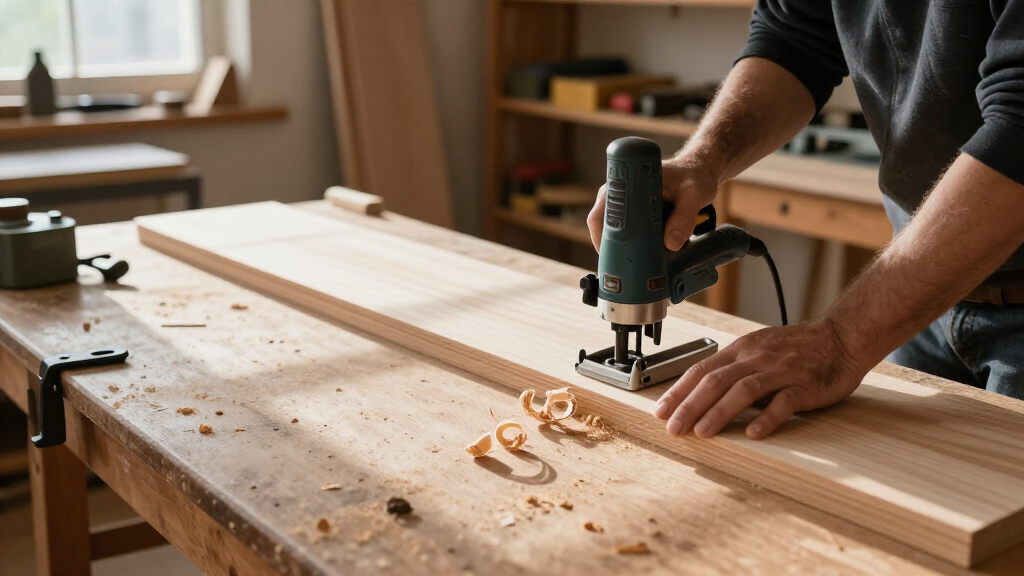
I compared these woodworking routers by how well their format and controls suit common routing jobs: edge trimming, roundovers, dadoes, and guided or template cuts. The main factors were power for the intended class, speed adjustment, base configuration, collet compatibility, depth control, and the usefulness of included guides and bits. A compact router can rank well for one-handed work without competing with a full-size model on capacity.
The ranking favors useful capability and flexibility over accessory count or headline specifications alone. That puts the Bosch 1617EVSPK first for its fixed and plunge bases, while the Bosch Colt earns a separate role for compact control. The SKIL combo also rates highly for offering two base styles. Entry-level compact models remain relevant for lighter work, but sparse specifications or an emphasis on bundled accessories make it harder to recommend them for sustained, demanding cuts.
| woodworking router | Base type |
|---|---|
| Hoteche 7.1 Amp Wood Router To | Fixed |
| Bosch PR20EVS Colt 1.0 HP Vari | Fixed |
| NANWEI 450W Compact Hand Wood | — |
| TwoWin 800W Compact Wood Route | Fixed, transparent |
| AVID POWER 6.5 Amp 1.25 HP Com | Fixed |
| 3.25 HP Plunge Router | Plunge |
| Teeno Wood Router | Fixed |
| AVID POWER Compact Wood Router | Fixed |
| WORKPRO Compact Router Kit | Fixed |
| 800W Compact Wood Router Tool | — |
| Bosch 1617EVS 2.25 HP Electron | Fixed |
| SKIL 14-Amp Plunge and Fixed-B | — |
| TEENO 1.25 HP 6.5 Amp Compact | — |
| Bosch 1617EVSPK 2.25 HP Fixed- | Fixed and plunge |
| DOBETTER 6.5 Amp 1.25 HP Wood | Fixed |
Factors to Consider When Choosing Woodworking Routers
Choose a router around the cuts you expect to make, the way you plan to guide it, and the parts you can support over time. These factors can help narrow the field before comparing individual models.
Match Router Size to the Cut
A compact router is easier to guide along an edge and works well for trimming, small roundovers, and light template routing. A full-size router has more capacity for larger bits and deeper cuts, though its weight can make delicate edge work harder to control. A common mistake is buying more power than a project needs and then struggling to guide the tool safely. Another is asking a small trim router to perform repeated deep cuts that call for a larger machine. If your work spans both types, a base kit may cover more jobs than owning a single specialized router.
Choose a Base for How You Start Each Cut
A fixed base holds the cutter at a set depth, which suits edge profiles and setups where the router starts on the workpiece. A plunge base lets the bit enter material after the base is positioned, a useful approach for stopped grooves and some mortises. Base changes can add flexibility, but they also take storage space and may add setup steps. Before buying a combo, check whether the bases are included and whether each has the adjustment features you need. If most of your cuts begin at an edge, a fixed-base router may be simpler to handle and maintain.
Treat Variable Speed as a Bit-Matching Tool
Variable speed lets you reduce cutter speed for larger bits and adjust the tool to suit the material and cut. That matters because running a large bit too fast can make a cut harder to control and may produce poor results. A router with several speed settings gives more options, but the labels alone do not show how easy the control is to reach or set. Check the router’s guidance for bit-size limits and recommended speeds before relying on a dial. For small bits and light trimming, a simpler speed setup may be enough; varied bit sizes make adjustment more useful.
Check Collet Fit Before Building a Bit Collection
Collet size determines which bit shanks the router can hold. Many compact models in this roundup list a 1/4-inch collet, while the Hoteche also lists a 6 mm collet. Those dimensions are close but not interchangeable, so confirm the supported size rather than assuming an existing bit will fit. Also check whether the router accepts other collets if you expect your collection to change. Buying a large bit set before confirming the collet can leave you with cutters the tool cannot use. Make bit compatibility part of the purchase decision, especially if you already own accessories.
Look Beyond the Included Accessories
Included bits and guides can help you begin common tasks, but the quantity in a bundle does not indicate the quality of the cutters or the accuracy of the guides. Think about which profiles and guide types your projects actually require. A straight edge or template guide that fits your work can be more useful than a broad set of bits you will rarely reach for. Check whether the accessory mounts securely and whether replacement parts are available. If the router itself is a long-term tool, prioritize predictable depth adjustment and a comfortable grip over the size of the starter bundle.
Plan for Dust, Support, and Repeated Cuts
Routing creates chips and fine dust, and a clear view of the cutter path helps with both accuracy and control. Look for a setup that lets you connect dust collection or work with a suitable shop vacuum where supported. For repeated cuts, stable depth adjustment and a base that stays square matter more than a high no-load speed figure. A router used in a table also needs compatible mounting and enough room for safe bit changes. Before choosing a model for that role, confirm its table compatibility and the availability of suitable accessories. These details can determine whether a router fits your shop routine after the first project.
Frequently Asked Questions
Should I buy a compact router or a full-size router first?
Start with the work you expect to do most often. A compact router is easier to control for edge trimming and small profiles, while a full-size model handles larger bits and more demanding cuts. If you expect to make both types of cut, a kit with fixed and plunge bases can cover more situations, though it will be heavier to manage than a palm router. Avoid using a compact model for repeated cuts beyond its stated capacity. The best first router is the one suited to your most common work, with a safe margin for the less frequent jobs.
Is a plunge base worth choosing over a fixed base?
A plunge base is useful when a cut needs to begin inside a board, such as a stopped groove. A fixed base is often simpler for edge profiles because you set the depth before routing and keep it in place. Buyers who mostly make edge cuts may not gain much from carrying a plunge mechanism. If your projects include both edge and interior cuts, a two-base kit can reduce the need to buy a second router. Check how the depth stop and base adjustments work before choosing based on the base name alone.
Can I use 6 mm router bits in a router with a 1/4-inch collet?
No; do not assume those shank sizes are interchangeable. A bit needs a collet that matches its shank, and an incorrect fit can be unsafe and damage the tool or bit. The Hoteche listing specifies both 1/4-inch and 6 mm collets, while many compact options list 1/4-inch. Confirm the exact collet supplied and any compatible replacements before buying bits. If you already own cutters, make their shank size part of your router shortlist.
Do the router kits with included bits make a better first purchase?
A kit can help you start if its bits match the cuts you plan to make and the shanks fit the router. Bundled accessories vary, so a larger bit count does not tell you whether the cutters are suitable for regular use. Check which profiles are included, whether guides are part of the kit, and whether replacements are easy to find. A router with better depth control or a more useful base may be the stronger choice even with fewer accessories. Treat bundled bits as a convenience, then judge the tool on its own capabilities.
What should I prioritize if I plan to use a router in a table?
Check table compatibility, mounting provisions, and how easily you can change bits and adjust depth from the setup you plan to use. A compact router may be convenient for lighter table work, but its capacity and adjustment method may limit larger tasks. Full-size models can suit more demanding cuts, though the router table and mounting plate must support the tool. Consider how you will keep the workpiece stable and collect dust during repeated passes. Verify these details for the specific router and table combination before buying.
Conclusion
I’d choose the Bosch 1617EVSPK as the best overall for a shop that needs both fixed-base and plunge routing. The SKIL RT1322-00 is another strong fit for buyers who want two base styles in one kit, while the Bosch 1617EVS suits those seeking a powerful fixed-base option. For compact precision work, the Bosch PR20EVS Colt is my pick; beginners focused on light trimming can start with a manageable compact router such as the AVID POWER 6.5 Amp kit. For buyers prioritizing included accessories, compare the Hoteche, TwoWin, WORKPRO, and other bundled compact models by bit compatibility and controls. Match the tool to your usual cuts first, then let power and included extras settle the final choice.
Fall yard work Picks
leaf blowers
As an affiliate, we earn on qualifying purchases.