Bowl turning feels very different from spindle turning because it requires working on a curved, thicker blank with specific tools and techniques. You need to carefully manage grain orientation for strength, stability, and a beautiful finish, which isn’t as critical in spindle turning. Proper tool selection, like curved gouges, and adjusting your approach as the shape changes are key. If you want to master these differences and improve your skills, there’s more to discover ahead.

Get business pricing on tools and workshop supplies
- Business-only prices and quantity discounts
- Tax-exempt purchasing
- Multiple users, one account, clear invoices
Key Takeaways
- Grain orientation in bowls runs vertically, affecting cutting techniques and requiring different tool control compared to spindle turning.
- Bowl shaping involves larger, curved tools like gouges, which demand varied angles and sweeping motions.
- The changing curvature of the bowl surface requires continuous adjustment of cutting techniques during turning.
- Internal and external contours of bowls pose unique challenges, unlike the straight profile of spindles.
- Proper tool positioning and grain management are crucial to prevent tear-out and achieve a smooth finish.
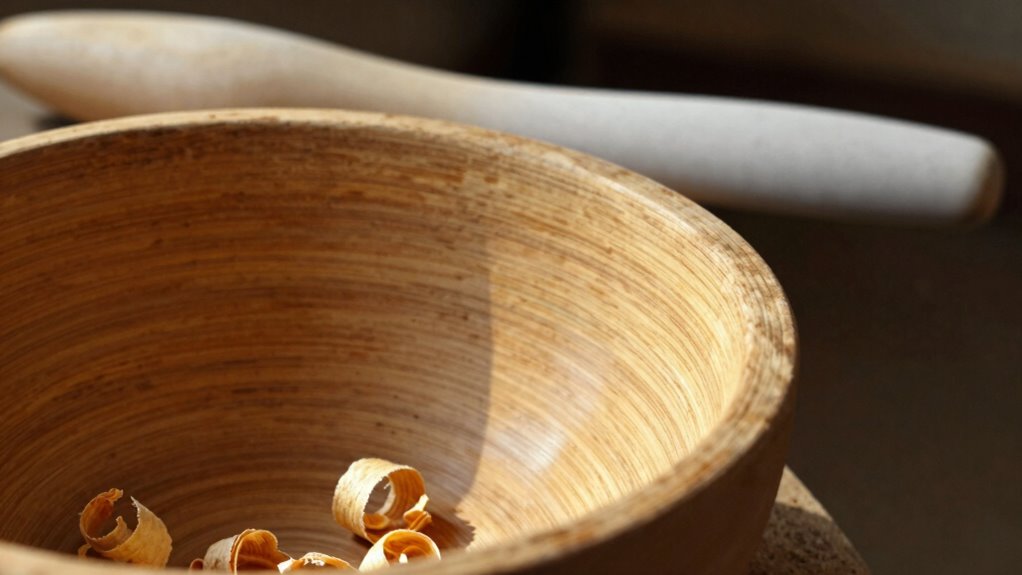
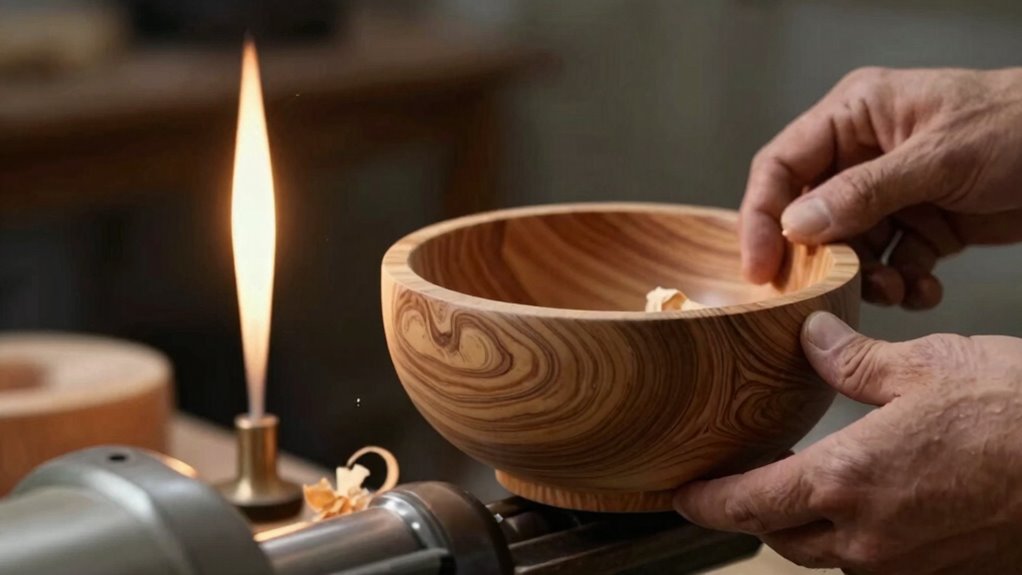
Bowl turning feels so different from spindle turning because it involves a distinct set of techniques, tools, and challenges. When you’re working on a bowl, you need to consider the grain orientation carefully. Unlike spindle turning, where the grain generally runs along the length of the piece, bowl turning requires you to think about the grain in multiple directions. You want to position the wood so that the grain runs vertically from the bottom to the rim, which helps prevent cracking and guarantees strength. Proper grain orientation also enhances the visual appeal, revealing the natural beauty of the wood. To achieve this, you might need to adjust your blank before mounting it on the lathe, making sure the grain runs in the most favorable direction for shaping and stability. Recognizing the importance of grain orientation is key to successful bowl turning. Tool selection plays a pivotal role in bowl turning. You’ll find that the tools used differ markedly from those for spindle work. For bowls, you typically need larger, curved tools like bowl gouges, which give you better control over the wide, sweeping cuts required to shape the interior and exterior. Skew chisels and parting tools also come into play, but your primary focus should be on choosing the right gouge for the task at hand—whether it’s roughing out the blank or refining the final shape. The curvature of the tool’s cutting edge helps you maintain smooth, continuous cuts across the rounded surfaces, reducing the risk of catches or gouges. This is especially important because the diameter of the bowl can vary greatly, demanding different angles and approaches. The process of turning a bowl demands a different mindset than spindle work. You’re constantly adjusting your technique to work with the bowl’s shape, which means your tool angles and movements change as you progress. The orientation of the grain influences your cutting direction—cutting against the grain can cause splintering or tear-out, so you need to plan your cuts carefully. Additionally, understanding the wood’s behavior during cutting can help prevent common issues like chipping or vibration, thereby improving your overall results. Developing a comprehensive understanding of the turning process helps in making better decisions about tool angles and cutting techniques. Practicing different cutting techniques can significantly enhance your control and safety during the process. Furthermore, paying attention to the tool grip and positioning can also make a noticeable difference in achieving smooth, precise cuts. Overall, bowl turning challenges you to adapt your skills and tools, paying close attention to grain orientation and making deliberate tool choices, all to create a functional, beautiful piece.
Products Worth Considering

Levoit Vital 100S-P Air Purifier with Washable Pre-Filter

Dyson Car+Boat Cordless Handheld Vacuum

Dyson Ball Animal 3 Upright Vacuum
As an affiliate, we earn on qualifying purchases.
Frequently Asked Questions
How Does Tool Choice Differ Between Bowl and Spindle Turning?
You choose different tools for bowl and spindle turning mainly because of tool ergonomics and cutting angles. For bowls, you use gouges with deeper curves to access the interior, ensuring comfortable ergonomics and ideal cutting angles. For spindles, you prefer skew chisels and parting tools with precise cutting angles suitable for straight, clean cuts. This tool selection helps you achieve better control and safety, matching each turning type’s specific requirements.
What Safety Concerns Are Unique to Bowl Turning?
Think of bowl turning as weaving a delicate tapestry, where safety gear becomes your shield against flying chips and dust. You need to focus on dust control, as the shavings can be unpredictable and create airborne particles. Always wear eye protection, a dust mask, and a face shield. Keep your workspace clear, and maintain steady control to prevent accidents. These precautions keep your artistic journey smooth and safe.
How Does Wood Selection Impact Bowl Turning Difficulty?
Your choice of wood considerably impacts bowl turning difficulty. Dense woods like oak or maple resist shaping, requiring more effort, while softer woods like cherry or pine are easier to work with. Grain orientation also matters; straight-grain woods produce smoother cuts and less tear-out, making your work simpler. Selecting the right wood with appropriate density and grain direction helps you control the process, reducing frustration and improving final results.
Are There Specific Techniques to Master for Bowl Shaping?
You can master bowl shaping by focusing on specific techniques like careful blending of curves and consistent wall thickness. Artistic expression thrives when you adapt your technique to the wood’s grain and shape, which can seem intimidating at first. Don’t worry about perfection; refine your skills through practice. Overcoming initial hesitation allows you to develop a natural feel for the process, making your bowls more expressive and refined.
What Maintenance Is Required for Bowl Turning Equipment?
You need to regularly maintain your bowl turning equipment by sharpening tools to guarantee clean cuts and smooth surfaces. Also, prioritize dust control by using dust extractors or masks, as bowl turning creates fine wood particles that can be harmful. Check your lathe and tool rest for stability, lubricate moving parts as needed, and inspect belts and electrical connections. Proper maintenance keeps your tools efficient and safe for consistent, high-quality bowl turning.
Conclusion
Once you grasp the differences between bowl and spindle turning, you’ll realize it’s like discovering a whole new universe of craftsmanship. The challenges may seem intimidating at first, but the sense of achievement is nothing short of life-changing—like revealing the secret to creating art from raw wood. Embrace the learning curve, and soon you’ll feel more confident, turning masterpieces that seem to breathe and come alive under your hands. Keep at it—you’re capable of incredible things!