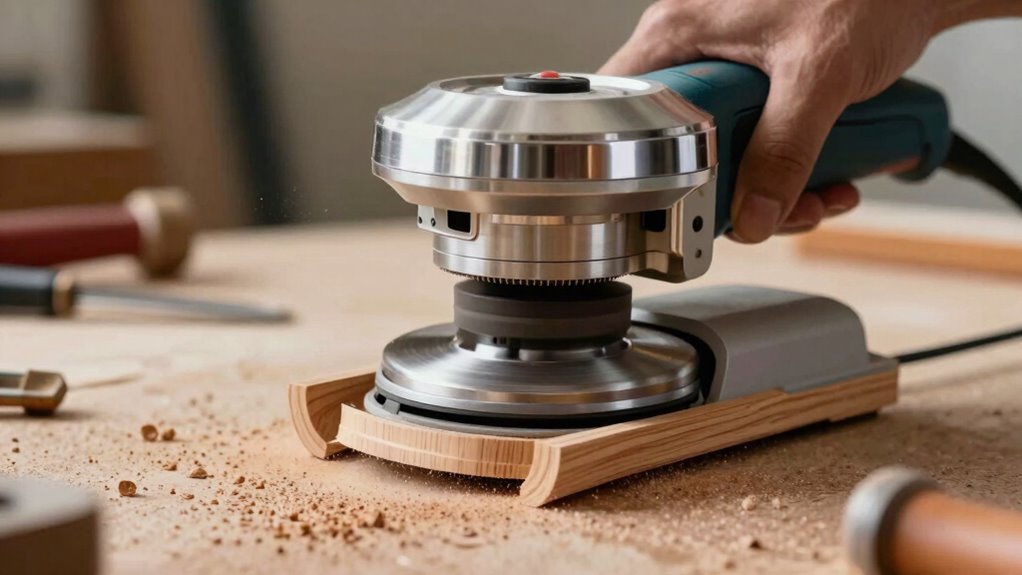

An oscillating spindle sander helps you achieve cleaner, smoother curves in your woodworking projects by combining rotation and oscillation for precise sanding. It adapts to the contours of the wood, preventing burn marks and gouges while ensuring even sanding across edges. With various spindle sizes, you can tackle tight curves and broad arcs without switching tools, saving time and frustration. This tool not only elevates your craftsmanship but also boosts your confidence in taking on complex designs. You’ll discover even more benefits and techniques ahead.

Get tools and workshop supplies delivered free — and shop member deals
- Fast, free delivery on millions of items
- Access to Prime Big Deal Days deals on October 6–7
- Prime Video, Amazon Music and more included
Key Takeaways
- The oscillating motion ensures even sanding, preventing burn marks and gouges for a smoother finish on curves.
- Various spindle sizes accommodate different radii, allowing for cleaner transitions and precise shaping of intricate designs.
- The combination of rotation and oscillation adapts to wood contours, ensuring every curve receives uniform attention.
- A built-in dust collection system maintains a clean workspace, enhancing visibility and focus during sanding.
- Investing in an oscillating spindle sander elevates craftsmanship, resulting in professional-quality curves and improved project aesthetics.
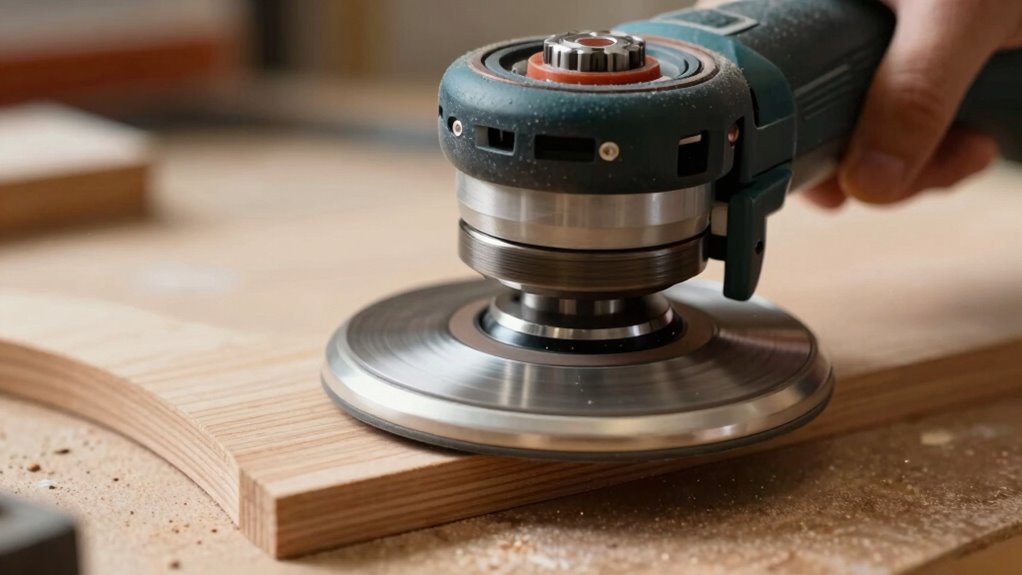
An oscillating spindle sander can be a game-changer for your woodworking projects. If you’ve ever struggled to achieve clean, smooth curves, you know how frustrating it can be. Without the right tools, those curves can end up looking jagged and uneven, ruining the overall aesthetic of your piece. With a spindle sander, you’ll discover how it enhances curve sanding efficiency, allowing you to achieve that professional look you desire.
An oscillating spindle sander transforms your woodworking, ensuring smooth, professional curves and a flawless finish.
When you use a spindle sander, you’re leveraging its unique design that combines rotation and oscillation. This dual action allows for greater spindle sander precision. Unlike traditional sanders, the oscillation helps to prevent burn marks and gouges, so you get a smooth finish right off the bat. You won’t have to worry about over-sanding or under-sanding any corners or edges, as the tool adapts to the contours of your wood, ensuring every curve gets the attention it needs.
The various spindle sizes available allow you to choose the right bit for the specific radius you’re working on. This versatility means you can tackle everything from tight curves to broader arcs without swapping tools constantly. It saves you time, and let’s be honest, who doesn’t want to work more efficiently? With a spindle sander, you can sand intricate designs and complex shapes with ease, making your woodworking projects not just easier but also more enjoyable.
Another significant benefit is the dust collection system that often comes with these sanders. Keeping your workspace clean not only makes for a more pleasant experience but also improves visibility while you work on your curves. You’ll be able to see exactly where you’re sanding, ensuring that every curve is perfectly shaped and smooth. The more you can focus on your work without distraction, the better your results will be. Additionally, understanding woodworking tools can help you select the best equipment for your needs.
In the end, investing in an oscillating spindle sander isn’t just about having another tool in your workshop; it’s about elevating the quality of your craftsmanship. You’ll find that your curves look cleaner, and your overall projects will have a professional touch. Your woodworking will reflect your skill, and you’ll gain the confidence to tackle even the most challenging designs. Embrace the precision and efficiency that an oscillating spindle sander offers, and watch your woodworking skills soar.
oscillating spindle sander for woodworking
As an affiliate, we earn on qualifying purchases.
As an affiliate, we earn on qualifying purchases.
Frequently Asked Questions
What Types of Materials Can I Use With an Oscillating Spindle Sander?
You can use an oscillating spindle sander with various wood types, including softwoods like pine and hardwoods like oak. It’s great for sanding contours and intricate shapes. Experiment with sanding techniques such as using different grit papers to achieve the finish you want. Just remember to adjust the speed and pressure based on the material to get the best results. This tool really shines when you’re working on detailed woodworking projects!
How Do I Maintain My Oscillating Spindle Sander for Optimal Performance?
To maintain your oscillating spindle sander for peak performance, follow these maintenance tips: regularly clean the sanding drums and make certain they’re free from debris. Use proper sanding techniques by choosing the right grit for your project. Check the tension of the spindle and replace worn-out parts promptly. Lubricate moving components as needed, and store your sander in a dry place to prevent rust. Doing this keeps your sander running smoothly and efficiently.
Can I Use Different Grit Sandpaper on the Same Spindle?
Yes, you can use different grit sandpaper on the same spindle, but it’s best to switch them out when needed. For effective grit selection, start with coarser grit for shaping and move to finer grit for finishing. This approach enhances your sanding techniques, ensuring smoother results. Just be mindful to clean the spindle between grits to avoid cross-contamination. You’ll achieve a more polished finish and extend the life of your sandpaper.
Are Oscillating Spindle Sanders Safe for Beginners?
Yes, oscillating spindle sanders can be safe for beginners if you follow some key safety precautions. Always wear safety goggles and a dust mask to protect yourself from debris. Make sure you secure your workpiece firmly, and keep your hands clear of the spindle while it’s in motion. Start with beginner tips like using lower speeds and experimenting on scrap wood to get comfortable. With practice, you’ll master this tool safely!
How Does an Oscillating Spindle Sander Compare to a Regular Belt Sander?
An oscillating spindle sander offers versatility that a regular belt sander can’t match. While the belt sander excels in efficiency for flat surfaces, the spindle sander shines when tackling curves and intricate shapes. You’ll find it easier to achieve smooth edges and detailed contours with its rotating spindle. If you’re working on projects that require detailed finishing, the spindle sander’s unique design makes it the better choice for finesse and precision.
Conclusion
To sum up, using an oscillating spindle sander can truly elevate the quality of your curved projects. With its unique motion, it can reduce sanding marks by up to 50%, giving your curves a smoother, cleaner finish. Plus, it’s easier to control than traditional sanders, making it perfect for both beginners and pros. So, if you want to enhance your woodworking skills, investing in one of these tools is definitely worth it!
Halloween Picks
halloween
As an affiliate, we earn on qualifying purchases.