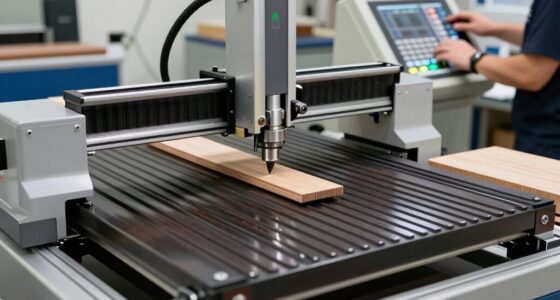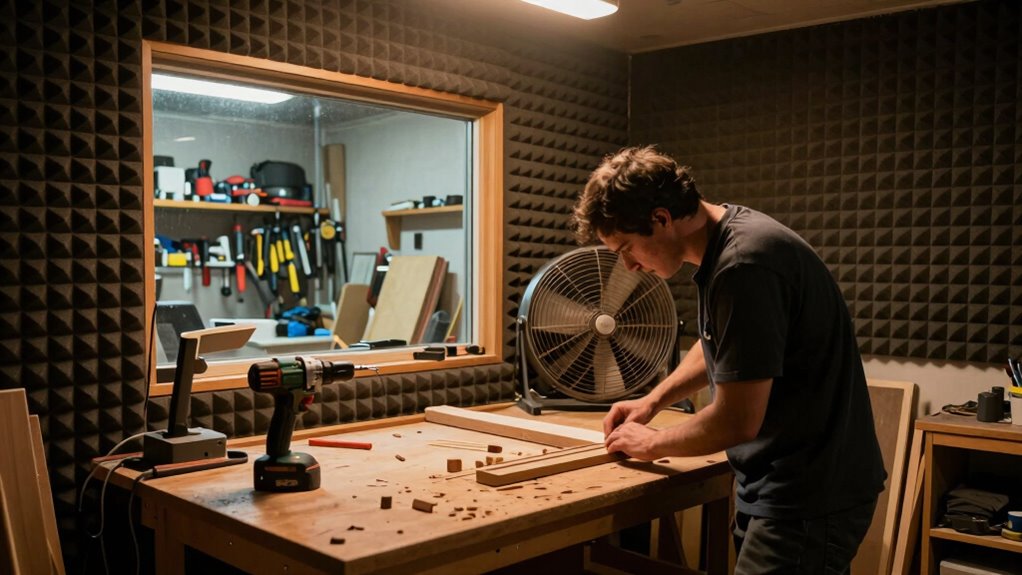

Ensuring noise control in your workshop is essential for safety, health, and productivity. Excessive noise can cause long-term hearing damage, fatigue, and decreased focus, impacting your work quality. Incorporating soundproofing, vibration dampening, and proper planning from the start helps create a safer, more comfortable environment. Addressing noise early prevents costly retrofits and boosts morale. You’ll discover practical ways to make your workspace quieter and more efficient as you explore further.

Get business pricing on tools and workshop supplies
- Business-only prices and quantity discounts
- Tax-exempt purchasing
- Multiple users, one account, clear invoices
Key Takeaways
- Ensures compliance with safety regulations and prevents legal issues.
- Enhances worker health by reducing long-term hearing loss and fatigue.
- Improves workspace comfort and focus, boosting overall productivity.
- Protects equipment lifespan by minimizing vibration and noise-related wear.
- Facilitates proactive planning, reducing costly retrofits and future disruptions.
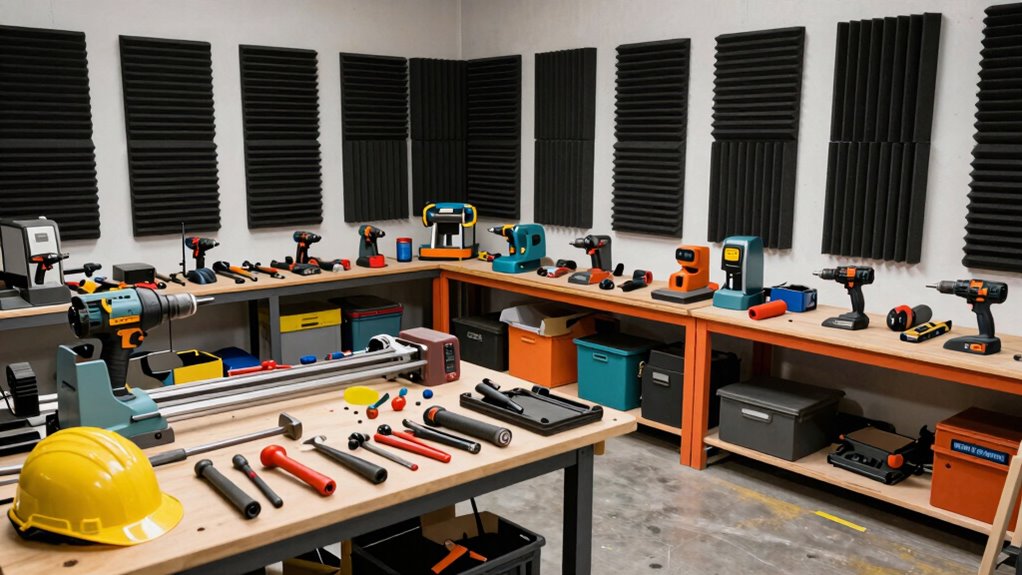
Workshops can be loud environments, and without proper noise control measures, they pose risks to your hearing and overall safety. Excessive noise levels aren’t just a nuisance—they can cause long-term hearing loss, increase fatigue, and reduce your focus and productivity. That’s why making noise control a key part of your workshop planning is essential. You need to think beyond just the tools and materials; you also have to consider how sound travels and how to minimize it effectively. Incorporating soundproofing materials into your workshop design can considerably reduce noise levels, protecting your hearing and creating a safer, more comfortable workspace. These materials, such as acoustic panels, insulation, or specialized barriers, absorb or block sound waves, preventing them from bouncing around and amplifying. When chosen carefully, soundproofing materials can make a noticeable difference, especially in areas where loud machinery runs frequently. Additionally, understanding the principles of biodiversity and sustainable living practices can help you select eco-friendly soundproofing solutions that minimize environmental impact. Vibration dampening is another critical element often overlooked but crucial for controlling noise. Many loud sounds originate from machinery vibrations transferring through floors, walls, and equipment mounts. By adding vibration dampening solutions—such as pads, mounts, or isolators—you break the chain of noise transmission. This not only reduces the overall noise levels but also minimizes equipment wear and tear, extending the lifespan of your tools. Incorporating soundproofing techniques that address both sound absorption and vibration mitigation can lead to a more comprehensive noise reduction strategy, ensuring a quieter and safer workspace. Planning for noise control from the start helps you avoid costly retrofits later. Integrate soundproofing into walls, ceilings, and floors, especially around noisy machines, and consider dedicated quiet zones for tasks requiring concentration or safety. Properly executed, these measures can make a substantial difference in your work environment. Furthermore, investing in noise control enhances compliance with safety regulations and promotes a healthier workplace. You’ll find that a quieter workshop not only protects your hearing but also improves overall morale and efficiency. In the end, prioritizing noise control isn’t just about comfort; it’s about safety and long-term sustainability. By selecting effective soundproofing materials and implementing vibration dampening, you create a workspace where you can work more safely, productively, and comfortably. When you plan for noise reduction from the outset, you’re making a smart investment in your health, your equipment, and your work quality. Incorporating soundproofing materials early in your design process can also help you adapt more easily to any future changes in your workshop setup. Including eco-friendly soundproofing solutions can further enhance your commitment to sustainability while maintaining effective noise control. Properly implemented, these measures can also contribute to your workshop’s overall energy efficiency, reducing operational costs and environmental impact.
soundproofing materials for workshop
As an affiliate, we earn on qualifying purchases.
As an affiliate, we earn on qualifying purchases.
Frequently Asked Questions
How Does Noise Impact Long-Term Health in Workshop Environments?
Exposure to excessive noise in workshops can lead to long-term health issues, including noise-induced hearing loss and increased stress levels. You might find your concentration and decision-making decline over time, and stress-related health problems like high blood pressure become more likely. Implementing effective noise control measures helps protect your hearing and reduces stress, ensuring a safer, healthier work environment where you can focus and perform at your best without risking your long-term well-being.
What Are the Most Cost-Effective Noise Reduction Techniques?
Ever wondered how to cut noise costs effectively? You can start with soundproof barriers to block loud sounds at their source, and install acoustic panels to absorb excess noise within the workspace. These solutions are affordable and easy to implement, providing significant noise reduction without breaking the bank. By focusing on strategic placement of soundproof barriers and acoustic panels, you’ll create a safer, quieter environment that boosts productivity and protects your hearing.
Are There Specific Regulations or Standards for Workshop Noise Levels?
Yes, there are specific regulations and standards for workshop noise levels that you need to follow. These include regulatory compliance requirements set by local, national, or international authorities, which often specify maximum noise level limits to protect workers’ hearing health. You should regularly measure your workshop’s noise level to guarantee it meets these standards, and implement noise control strategies if it exceeds permissible limits, maintaining a safe and compliant work environment.
How Can Noise Control Improve Worker Productivity?
Noise mitigation and acoustic optimization can substantially boost your worker productivity by creating a more focused environment. When noise levels are controlled, employees can concentrate better, leading to fewer mistakes and quicker task completion. It’s like killing two birds with one stone—improving safety and efficiency simultaneously. By implementing effective noise control measures, you foster a workspace where workers feel comfortable and motivated, ultimately enhancing overall workshop performance.
What Are Innovative Technologies for Noise Absorption?
You can incorporate innovative technologies like advanced soundproof materials and acoustic panels to absorb noise effectively. Modern soundproof materials, such as porous foams and mineral wool, trap sound waves, reducing their transmission. Acoustic panels, especially those with innovative designs or eco-friendly materials, further dampen sound reflections. Using these solutions, you create a quieter workspace that enhances safety and productivity, making noise control an integral part of your workshop planning.
Conclusion
Ignoring noise control might save you time now, but it’s a gamble with your long-term health and focus. While a bustling workshop feels lively, unchecked noise can drown out your concentration and cause stress. Think of noise control as your silent partner—quietly enhancing safety and productivity, much like a well-organized workspace. Balancing sound isn’t just about silence; it’s about creating an environment where precision thrives and hazards diminish. Prioritize noise control, and watch your workshop flourish.
Halloween Picks
halloween
As an affiliate, we earn on qualifying purchases.