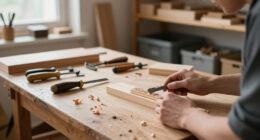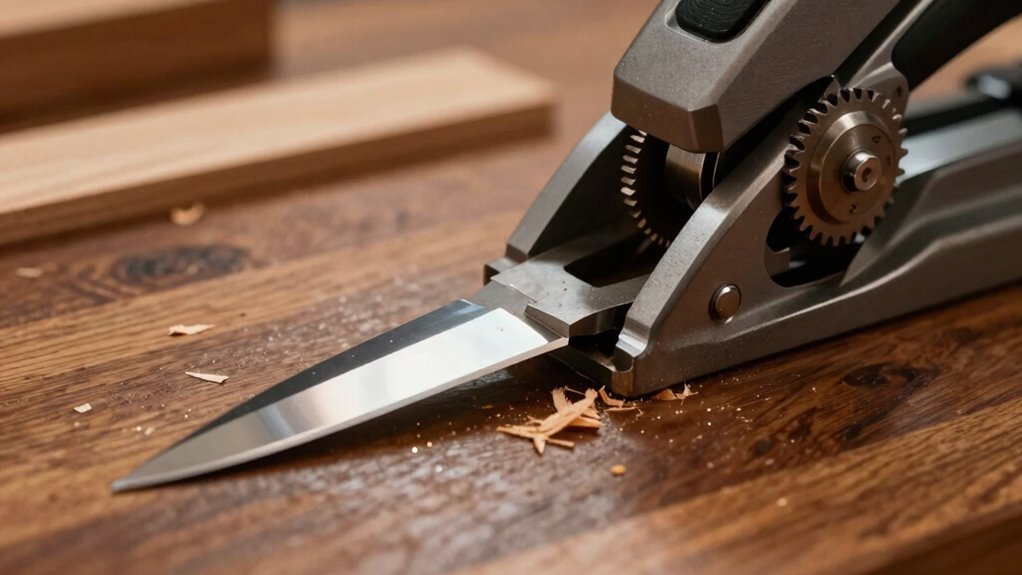

To quickly enhance your jointer’s performance, focus on knife alignment. Ensuring your knives are parallel to the table can prevent uneven wood treatment and achieve a smoother finish. Don’t underestimate the depth adjustment either; start with shallow cuts and gradually increase to avoid tear-out. Always double-check your settings after adjustments to maintain precision. When you’re mindful of these details, you’ll notice immediate improvements in your projects. There’s even more to discover about maximizing your jointer’s potential.
Key Takeaways
- Ensure proper knife alignment using a straightedge for parallelism to achieve a smooth finish.
- Adjust depth of cut gradually, starting shallow to prevent tear-out and ensure a clean surface.
- Double-check knife settings after adjustments, as minor shifts can significantly impact performance.
- Maintain knives regularly through sharpening or replacement to enhance project quality and efficiency.
- Focus on precision in knife settings, as small details can lead to substantial improvements in woodworking results.
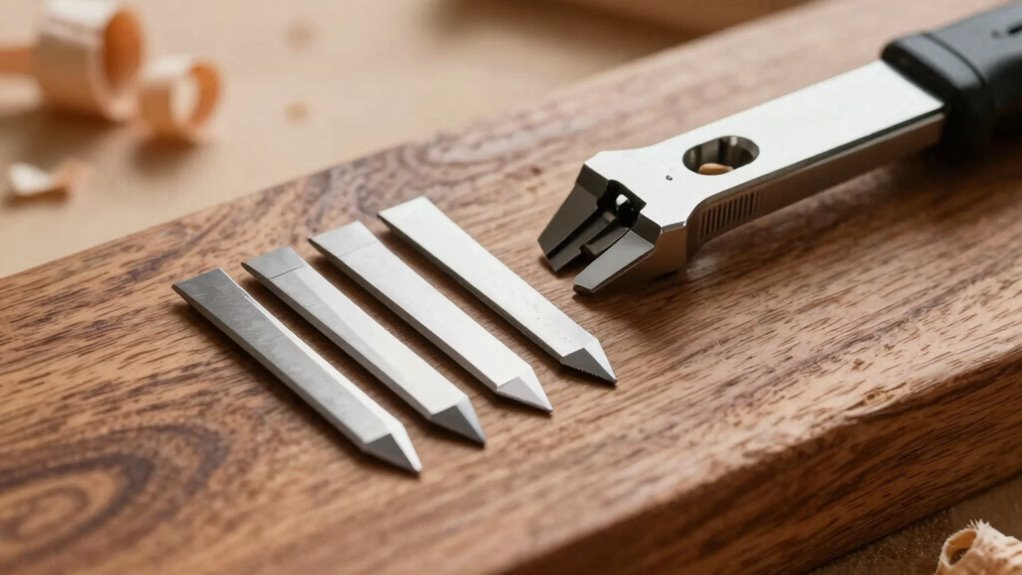
Getting the knife settings just right on your jointer can make a huge difference in your woodworking results. If you’re not careful with knife alignment and depth adjustment, you might end up with uneven surfaces or wood that splinters instead of gliding smoothly through the machine. You want your projects to shine, and achieving that means paying attention to the details, especially the knife settings.
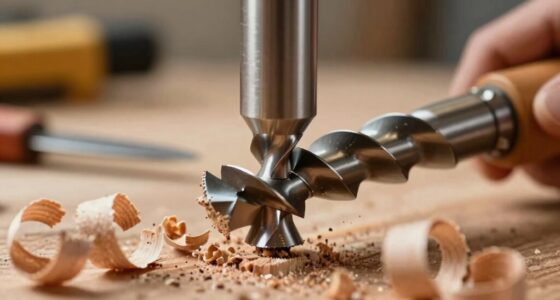
First, let’s talk about knife alignment. Proper alignment guarantees that your knives are parallel to the table, which is essential for a clean cut. If the knives are misaligned, one side of your wood might get a different treatment than the other, resulting in a less-than-perfect finish. To align your knives, you can use a straightedge or a dial indicator. By adjusting the height of your knives, you’ll create a consistent cutting surface. Take your time with this step; it’s vital for achieving that smooth finish you’re after.
Proper knife alignment is crucial for achieving a clean cut, ensuring a flawless finish on your woodworking projects.
Next, depth adjustment plays a significant role in how your jointer performs. You want to set the depth of cut so it’s not too aggressive but still effective enough to remove any imperfections. A shallow cut might leave your wood rough, while a deep cut could cause tear-out. A good rule of thumb is to start with a shallow cut and gradually increase the depth until you find the sweet spot. Always make test passes with scrap wood to gauge the results before tackling your main project. This way, you can avoid any unpleasant surprises. Additionally, accurate knife setting is crucial for ensuring consistent results on every pass.
After you’ve made your adjustments, it’s important to check them again. Sometimes, as you tighten the settings, minor shifts can occur. Double-checking knife alignment and depth adjustment guarantees you’re still on the right track. Woodworking is all about precision, and those small details can lead to big results.
Finally, don’t forget to maintain your knives. Dull knives can wreak havoc on your woodworking projects, so make it a habit to sharpen or replace them regularly. A well-maintained jointer will not only give you better results but will also make the process more enjoyable.
jointer knife alignment straightedge
As an affiliate, we earn on qualifying purchases.
As an affiliate, we earn on qualifying purchases.
Frequently Asked Questions
How Often Should I Check My Jointer Knives?
You should check your jointer knives regularly, ideally every few hours of use or after noticeable changes in performance. Maintaining proper knife alignment is essential for best results. Incorporate this check into your maintenance schedule, ensuring you keep an eye on wear and tear. If you notice any inconsistencies in the cut or hear unusual sounds, it’s time to inspect and adjust the knives. Regular maintenance will keep your jointer working efficiently.
What Type of Knife Material Is Best?
For your jointer, high speed steel (HSS) knives are a great choice if you prefer sharpness and ease of sharpening. They’re versatile and work well for various woods. However, if you want durability and longer life, go for carbide blades. They stay sharp longer and handle tough materials better, but they’re harder to sharpen. Consider your projects and how often you’ll use the jointer to decide which material fits your needs best.
Can I Use Dull Knives on My Jointer?
You can’t use dull knives on your jointer if you want ideal results. Dull knives reduce jointer performance and can lead to poor finishes and increased tear-out. Regular knife maintenance is essential for keeping your tools effective. Sharpen or replace your knives as needed, and always check alignment. By focusing on these knife maintenance tips, you’ll guarantee your jointer performs at its best and saves you time and frustration in the long run.
How Do I Clean My Jointer Knives?
To clean your jointer knives, start by using a soft cloth and a mild solvent to remove resin and debris. For example, if you recently worked with sticky hardwood, you’ll notice buildup quickly. Regular knife maintenance is essential; consider sharpening the blades every few uses. After cleaning, inspect the edges for nicks or dullness. Keeping them sharp guarantees smooth cuts and prolongs their lifespan, making your woodworking projects more enjoyable.
What Safety Gear Should I Wear While Using a Jointer?
When using a jointer, you should wear safety goggles, hearing protection, and a dust mask. These gear items protect your eyes from debris, your ears from noise, and your lungs from dust particles. Regular jointer maintenance is essential, including checking knife alignment for peak performance. By prioritizing safety gear and proper maintenance, you can guarantee a smoother, safer woodworking experience while reducing the risk of injury.
Conclusion
By paying attention to the knife setting detail on your jointer, you can greatly enhance your woodworking results. It’s amazing how a small adjustment can lead to smoother surfaces and better finishes, right? Don’t underestimate the importance of precision; it can transform your projects from ordinary to exceptional. So, the next time you’re setting up your jointer, remember that those little tweaks can make a world of difference in your craftsmanship. Happy woodworking!