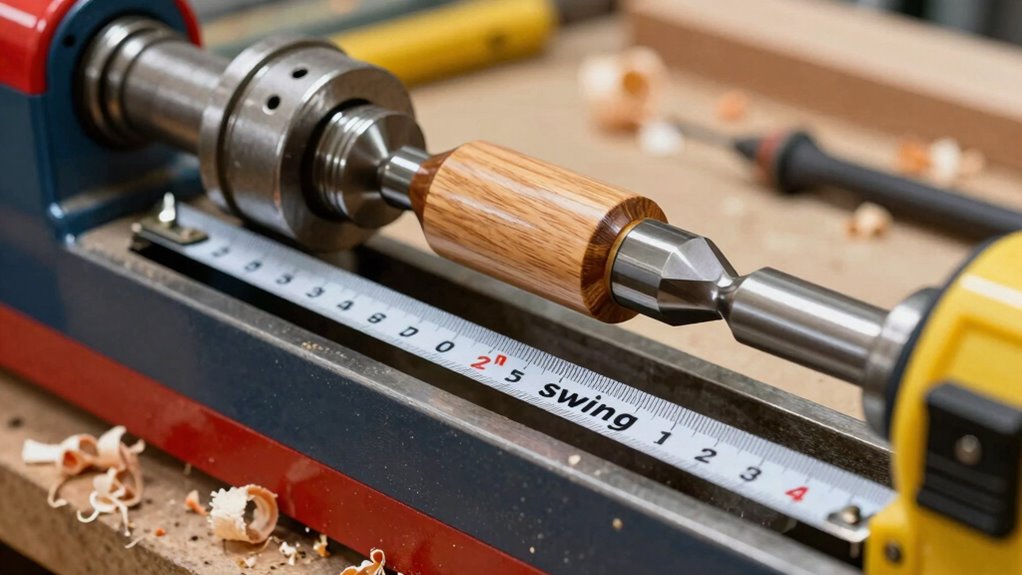

When choosing a wood lathe, understanding the ‘swing’ is key. It’s the maximum diameter of a workpiece you can spin safely, measured from the center to the bed. Many beginners mistake ‘swing’ for the size of the project, but it only indicates capacity for larger diameters. Bigger swing lathes handle bigger projects and denser woods, but require more safety precautions. Keep in mind these details to pick the right machine—if you stay focused, you’ll learn more on how to match your needs.

Get business pricing on tools and workshop supplies
- Business-only prices and quantity discounts
- Tax-exempt purchasing
- Multiple users, one account, clear invoices
Key Takeaways
- ‘Swing’ measures the maximum diameter of a workpiece that can be safely spun on the lathe.
- Larger swing lathes handle bigger, denser projects but require more power and safety precautions.
- Smaller lathes are ideal for delicate or small-scale projects like pens and small bowls.
- Understanding your project size and material helps select the appropriate lathe size and swing capacity.
- Misinterpreting ‘swing’ can lead to unsafe operations or choosing an unsuitable machine for your needs.
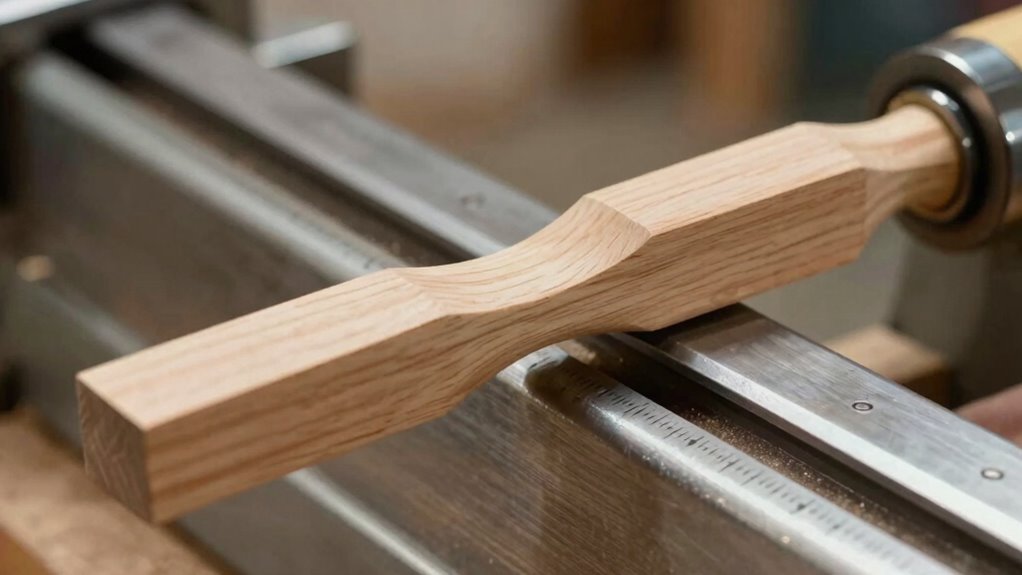
Choosing the right wood lathe size is essential for your projects, whether you’re a beginner or an experienced woodworker. One of the most common measurements that can confuse newcomers is the “swing” size. The swing refers to the maximum diameter of a workpiece that can be safely spun on the lathe, measured from the center of the spindle to the bed. However, many don’t realize that the swing measurement doesn’t account for the length of the workpiece, and understanding this is vital for selecting the right machine.
Choosing the right lathe size depends on project scope and safety considerations.
When considering material compatibility, it’s important to remember that different woods have varying densities and grain structures. A larger lathe with a bigger swing can handle more substantial, dense materials, but it also means you need to assess if your tools, such as gouges and chisels, are compatible with that size. If you’re working with softer woods or smaller projects, a smaller lathe with a more modest swing might be more practical. Choosing a lathe that matches the typical size of your projects helps you avoid overextending your equipment and guarantees smoother operation.
Safety precautions become even more critical when working with larger lathes. A bigger machine requires more power and stability, which increases the risk if not handled properly. Always check your lathe’s maximum capacity and make sure your workpieces don’t exceed these limits. Using the correct tools that fit the lathe’s specifications is essential to prevent accidents. Additionally, ensure your workspace is secure, with proper lighting and enough room to maneuver comfortably. Wearing safety gear like goggles and dust masks is fundamental, especially when working with larger, heavier pieces that might generate more debris or pose a risk of kickback.
Furthermore, understanding the machine capacity and limitations can greatly enhance your safety and project success. It’s also important to recognize that a larger swing doesn’t automatically mean better for every project. If you’re mainly turning small bowls or pens, a smaller lathe with a limited swing will be more manageable and easier to control. Conversely, if you plan to craft large vases or furniture components, opting for a bigger lathe guarantees you can work without restrictions. Always balance your project needs with the machine’s capacity, and don’t forget to adhere to safety precautions to keep your workspace safe.
wood lathe with large swing capacity
As an affiliate, we earn on qualifying purchases.
As an affiliate, we earn on qualifying purchases.
Frequently Asked Questions
Can I Upgrade My Wood Lathe’s Swing Size Later?
Yes, you can upgrade your wood lathe’s swing size later, but you need to take into account lathe size limitations and upgrade considerations. Most lathes aren’t designed for easy size upgrades, so you might need to replace the entire machine or major components. Check your lathe’s specifications first, and consult with the manufacturer or a professional to understand what’s feasible without risking damage or voiding warranties.
What Safety Gear Is Recommended for Different Lathe Sizes?
Don’t cut corners when it comes to safety gear—you’ll regret it later. For smaller lathes, always wear safety glasses and dust masks to protect your eyes and lungs from shavings and dust. Larger lathes generate more debris, so consider adding face shields and hearing protection. No matter the size, staying safe is a no-brainer; it’s better to be safe than sorry, especially when working with powerful equipment.
How Does Lathe Size Affect Project Complexity?
Your lathe size directly impacts project complexity; larger lathes handle bigger, more intricate projects, while smaller ones suit simpler tasks. With a bigger lathe, you can create wider bowls or larger spindles, but it requires more skill and safety precautions. A smaller lathe is ideal for detailed work and small projects, making it easier for beginners. Choose your lathe size based on the complexity and scale of the projects you want to pursue.
Are Larger Lathes Suitable for Beginners?
Larger lathes, with greater lathe capacity, aren’t usually ideal for beginners. Only about 20% of new woodturners start with bigger models, since they can be overwhelming. For beginners, it’s better to choose a smaller lathe that’s easier to handle and control. Larger lathes require more experience and can be more challenging to operate safely, so focusing on beginner considerations helps you learn effectively and build confidence.
What Maintenance Is Required for Various Lathe Sizes?
You need to regularly check your lathe motor for overheating or unusual noise, ensuring it runs smoothly. Keep the tool sharpening tools sharp to prevent strain on the motor and achieve better cuts. For larger lathes, inspect belts and pulleys, and for smaller ones, clean and lubricate moving parts. Proper maintenance extends your lathe’s lifespan, improves safety, and keeps your projects precise, regardless of lathe size.
Conclusion
Now that you understand the swing specs and their importance, it’s a bit like discovering the perfect size for your projects—you might find yourself unexpectedly inspired. Just as a small lathe can surprise you with big results, knowing this guide helps you choose smarter. So, next time you’re browsing lathes, remember, it’s all about finding the right fit—because sometimes, the biggest surprises come from the smallest details.
Fall Picks
fall essentials
As an affiliate, we earn on qualifying purchases.