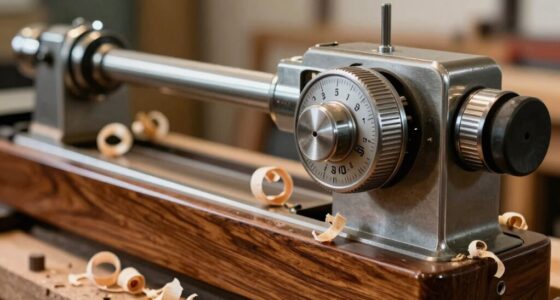
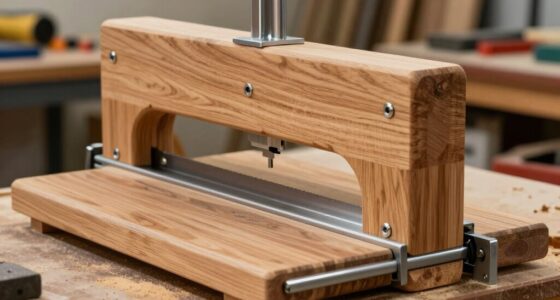
Benchtop jointers are great for achieving flat, smooth surfaces on lumber, making your woodworking projects easier and more professional. However, if you don’t set them up correctly, you might end up with uneven surfaces, causing frustration. Regular maintenance is essential, too; dull blades can ruin your results. So, while these tools offer versatility and convenience, the wrong setup or neglect can create problems. Discover how to maximize your jointer’s potential for the best outcomes.

Get tools and workshop supplies delivered free — and shop member deals
- Fast, free delivery on millions of items
- Access to Prime Big Deal Days deals on October 6–7
- Prime Video, Amazon Music and more included
Key Takeaways
- Benchtop jointers efficiently flatten and smooth lumber, solving issues related to uneven surfaces and preparing wood for further machining.
- Their compact design is ideal for small workshops, addressing space limitations while providing essential woodworking capabilities.
- However, improper setup and alignment can create problems, leading to uneven surfaces and frustration during use.
- Regular maintenance and blade sharpening are crucial; neglecting these can result in poor cut quality and increased tear-out.
- While versatile and convenient, users must balance material selection with skill level, as denser woods can pose additional challenges.

Benchtop jointers are vital tools for any woodworker looking to achieve flat, smooth surfaces on their lumber. They’re compact, making them a great choice for those with limited workshop space. However, while benchtop jointers offer several advantages, they also come with their own set of challenges. Understanding both sides can help you make informed decisions about your woodworking journey.
One of the primary advantages of using a benchtop jointer is its effectiveness in preparing wood for additional machining. By employing proper woodworking techniques, you can quickly flatten edges and surfaces, guaranteeing your boards are ready for glue-ups or joinery. This saves time and enhances the final quality of your projects. However, setup challenges can arise. You’ll need to verify the jointer is level and properly aligned before use. If not set up correctly, you may end up with uneven surfaces, which can lead to frustration down the line.
A benchtop jointer efficiently prepares wood for machining, ensuring flat surfaces for seamless glue-ups and joinery, but proper setup is crucial.
User experiences highlight the importance of material selection when working with benchtop jointers. Softer woods can be easier to manage, while denser hardwoods may require more patience and effort. It’s vital to choose materials that match your skill level and the capabilities of your jointer. Additionally, budget considerations often come into play. While benchtop jointers are generally more affordable than larger models, investing in a quality machine can pay off regarding durability and performance. Proper machine setup and regular maintenance are essential for consistent results.
Maintenance tips are important for keeping your jointer in top shape. Regularly checking the blades and keeping them sharp can greatly enhance your results. A dull blade can lead to tear-out, affecting the smoothness of your wood surfaces. Moreover, practicing safety is paramount. Always use push blocks and maintain a safe distance from the cutter head to prevent accidents. Proper blade sharpness and understanding how it impacts cut quality can be highly beneficial. Additionally, understanding the material properties can help you select the right settings and techniques for different types of wood.
Despite their challenges, the benefits of benchtop jointers often outweigh the drawbacks. They offer versatility and convenience, especially for hobbyists and small workshops. With proper care and attention, you can maximize their potential and minimize issues. Whether you’re flattening boards for a new project or just honing your skills, a benchtop jointer can be a valuable addition to your toolkit. Ultimately, recognizing both the advantages and the potential challenges will empower you to make the most of this vital woodworking tool.
As an affiliate, we earn on qualifying purchases.
Frequently Asked Questions
How Do Benchtop Jointers Compare to Larger Models in Performance?
Benchtop jointers offer excellent cut quality and are often more cost-efficient than larger models. You’ll appreciate their setup ease, making them ideal for smaller shops or DIY projects. However, size limitations can restrict the width and length of the stock you can work with. While they provide a great user experience for hobbyists, professionals might find larger models better suited for extensive tasks and increased material handling capabilities.
Can I Use a Benchtop Jointer for Hardwoods?
Yes, you can use a benchtop jointer for hardwoods. In fact, it’s effective for hardwood species like oak and maple, which have densities around 40–50 pounds per cubic foot. With proper jointing techniques, you’ll achieve smooth, flat surfaces even on tougher woods. Just guarantee your jointer’s blades are sharp and well-set; this’ll make a significant difference in performance. Enjoy the satisfaction of creating perfectly jointed pieces for your projects!
What Maintenance Is Required for a Benchtop Jointer?
To maintain your benchtop jointer, regularly check and adjust the blade sharpening to guarantee clean cuts. Dust collection is essential, so empty the bag or clean the system frequently to prevent buildup that can affect performance. Lubricate moving parts as needed and inspect the tables for flatness. Keeping your jointer clean and well-maintained will enhance its longevity and efficiency, making your woodworking projects smoother and more enjoyable.
Are Benchtop Jointers Portable for Job Site Use?
Yes, benchtop jointers are portable for job site use. Their lightweight design makes it easy to transport, allowing you to move them between different locations without much hassle. When considering weight, look for models that balance sturdiness and portability. Many jointers come with convenient handles or compact frames, enhancing their job site portability. This way, you can set up quickly and get to work without feeling bogged down by heavy equipment.
What Safety Features Should I Look for in a Benchtop Jointer?
When you’re choosing a benchtop jointer, look for safety features like blade safety guards that act like a protective shield, keeping your fingers safe. A good dust collection system is essential too, as it keeps your workspace clean and reduces hazards. You’ll want adjustable tables for precision and a sturdy base to prevent tipping. Prioritizing these features guarantees your projects run smoothly while you stay safe in your workshop.
Conclusion
In the world of woodworking, benchtop jointers are like double-edged swords. They can smooth out rough edges and bring your projects to life, yet they might also introduce new challenges. Embrace the beauty they offer, but be prepared for the learning curve that comes with them. As you navigate their quirks, remember that every tool has its dance—find your rhythm, and you’ll create masterpieces that echo your passion and skill.
Halloween Picks
halloween
As an affiliate, we earn on qualifying purchases.