
Random orbital sanders feel great when dust control works because it helps you achieve a smooth finish without frustration. Dust can settle on your project, leading to uneven surfaces and poor results. With effective dust management, you can focus better and enjoy the process. Using vacuum attachments and keeping your tools clean not only enhances performance but also boosts your health and safety. Discover how to optimize your sanding experience for flawless results as you continue.

Get tools and workshop supplies delivered free — and shop member deals
- Fast, free delivery on millions of items
- Access to Prime Big Deal Days deals on October 6–7
- Prime Video, Amazon Music and more included
Key Takeaways
- Effective dust control ensures a smooth finish, preventing frustration during the sanding process.
- Clean workspaces enhance focus and visibility, allowing better control of the sander.
- Proper dust collection reduces uneven surfaces, leading to polished and professional results.
- Regular maintenance of dust systems improves tool performance and extends lifespan.
- A safe environment, free of dust, contributes to an enjoyable and efficient sanding experience.
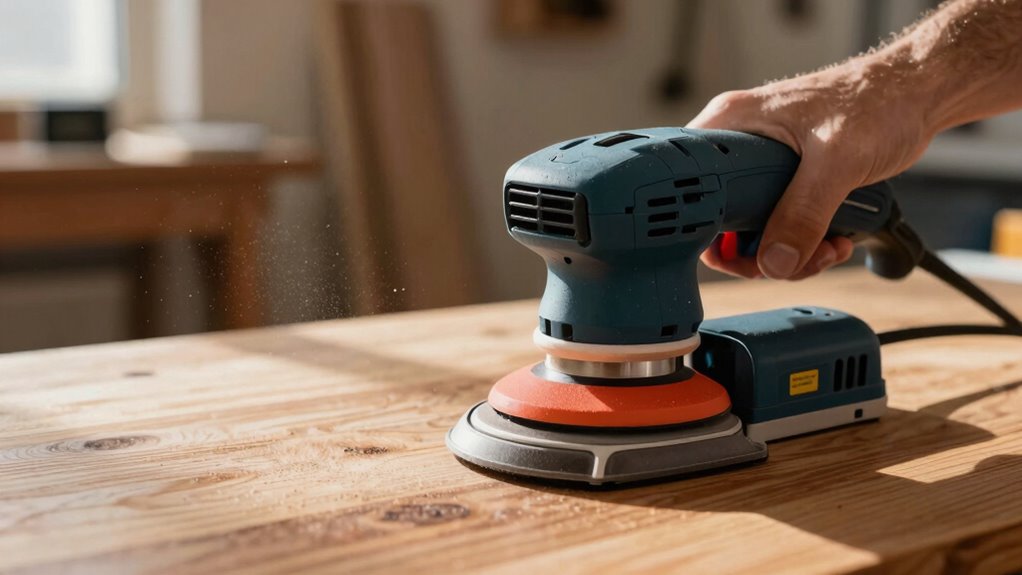
When it comes to woodworking, a random orbital sander is vital for achieving that smooth finish you desire. However, the satisfaction you get from using this tool can quickly diminish if dust control isn’t up to par. You might start with high hopes and great sanding techniques, but if dust clouds your workspace, you’ll find yourself frustrated rather than focused. Effective dust collection is important not just for cleanliness but for guaranteeing a quality finish on your projects.
A random orbital sander is essential for a smooth finish, but poor dust control can quickly lead to frustration and diminished results.
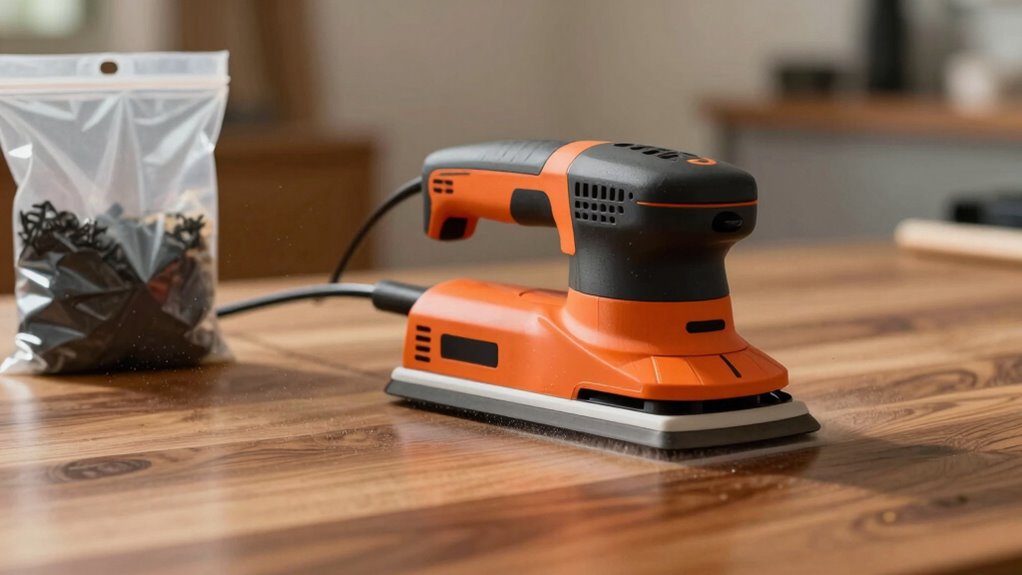
You know how significant surface preparation is before you even think about applying your finish. If dust settles on your wood while you’re sanding, it can lead to an uneven surface, ruining all your hard work. A good random orbital sander helps, but without proper dust control, you’re just inviting problems. Using a vacuum attachment or a dust bag is a game-changer. Not only does it keep your workspace tidy, but it also allows you to see your progress more clearly, helping you identify areas that need more attention. Dust collection is essential for maintaining a clean work environment and ensuring optimal sanding results. Proper dust extraction systems can make a noticeable difference in your project outcomes. Incorporating an effective dust management system can also help reduce health risks associated with airborne dust particles. Additionally, understanding how to properly operate your tools can improve both safety and efficiency during your projects.
Moreover, tool maintenance plays a significant role in keeping your sander performing at its best. Regularly checking the dust collection system will confirm it’s functioning properly. If you neglect this, you might find your sander is working harder than it should, leading to premature wear and tear. Keeping the tool clean and well-maintained not only enhances its lifespan but also improves your sanding experience. When everything’s working smoothly, you can really appreciate the power of your sander.
You might also consider experimenting with different grits and sanding techniques. Starting with a coarser grit removes material quickly while a finer grit will provide that polished touch. If you’re battling dust at the same time, you’re better equipped to achieve a flawless finish. Remember, the smoother the surface, the better your final product will look, so don’t underestimate the importance of dust control.
As you work, stay mindful of your surroundings. Dust not only affects your project but can also pose health risks. Wearing a mask and guaranteeing proper ventilation creates a more enjoyable environment. When dust control works effectively, you’ll find that using your random orbital sander feels great, allowing you to focus on your craft. In the end, a clean workspace leads to a beautiful finish, turning your woodworking projects into true masterpieces. Incorporating dust control solutions can significantly enhance your overall woodworking experience.
random orbital sander with dust collection
As an affiliate, we earn on qualifying purchases.
As an affiliate, we earn on qualifying purchases.
Frequently Asked Questions
How Do I Choose the Right Grit for My Sanding Project?
To choose the right grit for your sanding project, start by evaluating the material and the desired finish. For rough surfaces, go with lower grits like 60 or 80 for aggressive sanding. As you refine, switch to higher grits, such as 120 or 220, to smooth things out. Use proper sanding techniques, moving in the direction of the grain, and remember that grit selection greatly impacts your project’s final look.
Can I Use a Random Orbital Sander on Painted Surfaces?
Yes, you can use a random orbital sander on painted surfaces. It’s great for paint removal and surface preparation. Just make sure to start with a coarser grit to strip the paint, then switch to finer grits for a smooth finish. Always keep the sander moving to avoid damaging the surface. Don’t forget to wear a mask and goggles to protect yourself from dust and debris during the process.
What Maintenance Is Required for a Random Orbital Sander?
Think of your random orbital sander as a trusty steed; it needs proper care to gallop smoothly. For sander upkeep, regularly check and clean the dust collection system to guarantee it breathes easy. Replace worn sanding pads and inspect the power cord for frays or damage. Keeping it clean and well-maintained not only extends its life but also enhances performance, making your sanding experience much more enjoyable. Don’t let neglect slow you down!
Are There Any Safety Precautions I Should Take While Sanding?
Yes, you should take safety precautions while sanding. Always wear protective gear, including a dust mask or respirator to minimize dust inhalation risks. Safety goggles protect your eyes from debris, and hearing protection is essential if you’re using power tools for extended periods. Make certain your workspace is well-ventilated and consider using a vacuum attachment for your sander to reduce dust. Being proactive about safety will help you work more effectively and protect your health.
How Long Do Sandpaper Discs Typically Last?
You’ll find that sandpaper discs can be quite the troopers, often lasting anywhere from a few hours to several days, depending on usage. Regarding sandpaper lifespan, finer grits tend to wear out faster than coarser ones. So, if you’re working on detailed projects, you might need to swap them out more frequently. Keep an eye on their performance, and you’ll know when it’s time for a fresh disc!
Conclusion
When you fire up that random orbital sander, the smooth hum promises perfection. But wait—without effective dust control, that blissful experience can quickly turn into a gritty nightmare. You can almost feel the fine particles swirling around, settling on your freshly sanded project, ruining hours of work. Imagine the satisfaction of a flawless finish, but only if the dust is kept at bay. So, will you risk it, or invest in the right dust control? The choice is yours.
Fall yard work Picks
leaf blowers
As an affiliate, we earn on qualifying purchases.