
The size of your drill press table matters more than travel because a larger table boosts stability and precision. It gives you a solid foundation, preventing wobbling when applying pressure. You’ll find it easier to organize tools and materials, which saves time and reduces distractions. Plus, a bigger table accommodates various workpieces, allowing for multi-sided drilling without hassle. Understanding this can really elevate your project outcomes, and there’s more to explore about maximizing your drilling setup.

Get business pricing on tools and workshop supplies
- Business-only prices and quantity discounts
- Tax-exempt purchasing
- Multiple users, one account, clear invoices
Key Takeaways
- A larger table provides stability, reducing the risk of wobbling and ensuring precision in drilling tasks.
- Increased surface area helps organize tools and materials, enhancing workspace efficiency during projects.
- Bigger tables accommodate various workpiece sizes, allowing for versatile drilling without limitations.
- Stability from a robust table minimizes errors and enhances confidence in applying pressure during complex tasks.
- Selecting a larger table can significantly improve overall project quality and workflow, making it a crucial investment.

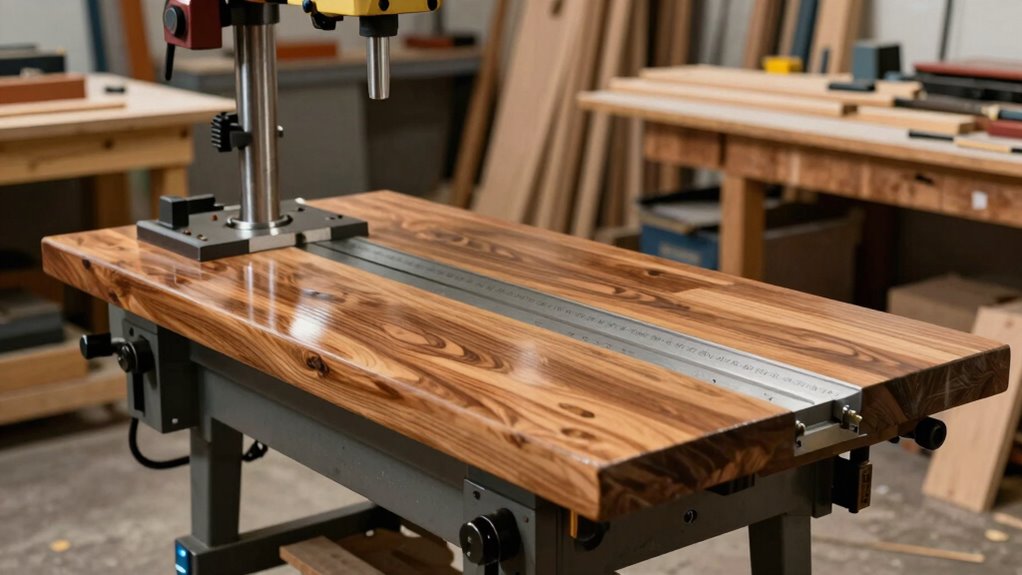
When it comes to drill presses, the size of your table can greatly impact your projects. You might think that the travel of your drill press is the main feature that determines its effectiveness, but the table size plays a significant role, especially in enhancing table stability and workspace efficiency. A larger table provides a solid foundation for your workpiece, allowing you to clamp or secure materials without worrying about them wobbling or tipping. This stability is essential when you’re aiming for precision in your drilling tasks.
Imagine setting up a small, flimsy table. It’s likely to shake or move, which can lead to inaccurate holes. Conversely, a robust, larger table gives you the confidence to apply pressure without fear of compromising your work. You can drill deeper and more accurately, knowing your materials are stable. If you’re working on complex projects, having that extra surface area allows you to maneuver your pieces easily, reducing the risk of errors that come from shifting or slipping. Additionally, a larger table often comes with additional features, making it even more versatile for different types of work.
A sturdy, spacious table empowers you to drill with precision, ensuring stability and reducing errors during complex projects.
Moreover, workspace efficiency is another significant factor where table size shines. A larger table means you can spread out your tools and materials, making it easier to access everything you need without constantly rearranging your workspace. You can organize your drill bits, clamps, and other accessories right at hand, saving you time and minimizing distractions. This organization is particularly beneficial during lengthy projects, where switching between tasks can become cumbersome. A larger table also allows for better integration of additional accessories, further increasing your work options.
The versatility of a bigger table can’t be overstated, either. Whether you’re drilling small pieces or larger boards, a spacious table accommodates both, allowing you to handle various materials without limitation. You can also tackle multi-sided drilling jobs with ease, repositioning your workpiece without having to constantly fuss with your setup. This adaptability can save you significant time and effort, making your drilling tasks more enjoyable and less frustrating. By understanding the importance of table size, you can select the right equipment that enhances both your workflow and project quality.
In the end, while drill press travel is essential, don’t underestimate the importance of a well-sized table. Investing in a larger table can vastly improve your overall drilling experience. It enhances stability, boosts your workspace efficiency, and allows you to tackle a broader range of projects with confidence. Additionally, considering table size importance ensures you choose equipment that truly meets your project needs. So, when you’re considering your next drill press, remember: a bigger table just might be the key to revealing your full potential.
As an affiliate, we earn on qualifying purchases.
Frequently Asked Questions
What Materials Can I Use on a Drill Press Table?
You can use various table materials on a drill press table, like plywood, MDF, or melamine, each offering different benefits. Plywood is strong and durable, while MDF provides a smooth surface finish ideal for precision work. Melamine adds a glossy surface that reduces friction and wear. Make sure to choose a material that suits your project needs, and consider adding a sacrificial layer for extra protection against wear and tear.
How Do I Maintain My Drill Press Table?
To maintain your drill press table, start by cleaning it regularly with a soft cloth to remove sawdust and debris. Apply a coat of wax for surface protection, which helps prevent rust and keeps the table smooth. Inspect for scratches or dents and fill them as needed. Don’t overlook the table’s height adjustment mechanism; keep it lubricated to guarantee smooth operation. Regular table maintenance keeps your workspace efficient and prolongs the tool’s life.
Can I Retrofit a Larger Table to My Drill Press?
Yes, you can retrofit a larger table to your drill press. When doing so, focus on table stability to guarantee accurate drilling. Look for mounting options that fit your drill press model securely. You might need to create custom brackets or use clamps to attach the new table effectively. Always double-check the alignment and stability after installation to maintain precision during your work. A larger table can greatly enhance your drilling capabilities!
What Accessories Enhance a Drill Press Table’s Functionality?
To enhance your drill press table’s functionality, consider adding table clamps and fence systems. Table clamps securely hold your workpieces, allowing for more precise drilling without movement. Fence systems help you align your projects accurately, ensuring consistent results. You might also look into additional accessories like dust collection systems or T-track systems for versatility. These enhancements can make your drill press much more efficient, saving you time and improving your overall project quality.
Is a Larger Table Always Better for Precision Work?
A larger table isn’t always better for precision work. While it offers more workpiece support, what really matters is table stability. If a large table lacks rigidity, it can introduce unwanted movement, affecting your accuracy. A smaller, sturdier table may provide better support for your workpiece, allowing for finer control. Focus on the table’s quality and stability rather than just its size to enhance your precision while drilling.
Conclusion
In woodworking, a drill press table is like a sturdy foundation for a house. Without it, even the finest tools can’t create a solid structure. Think of a chef who can’t find a cutting board—no matter how sharp the knife, the meal won’t come together. Similarly, having a spacious drill press table lets you maneuver and position materials easily, ensuring your projects come out just right. So, prioritize that table size; it’s the heart of your workshop!
Fall yard work Picks
leaf blowers
As an affiliate, we earn on qualifying purchases.