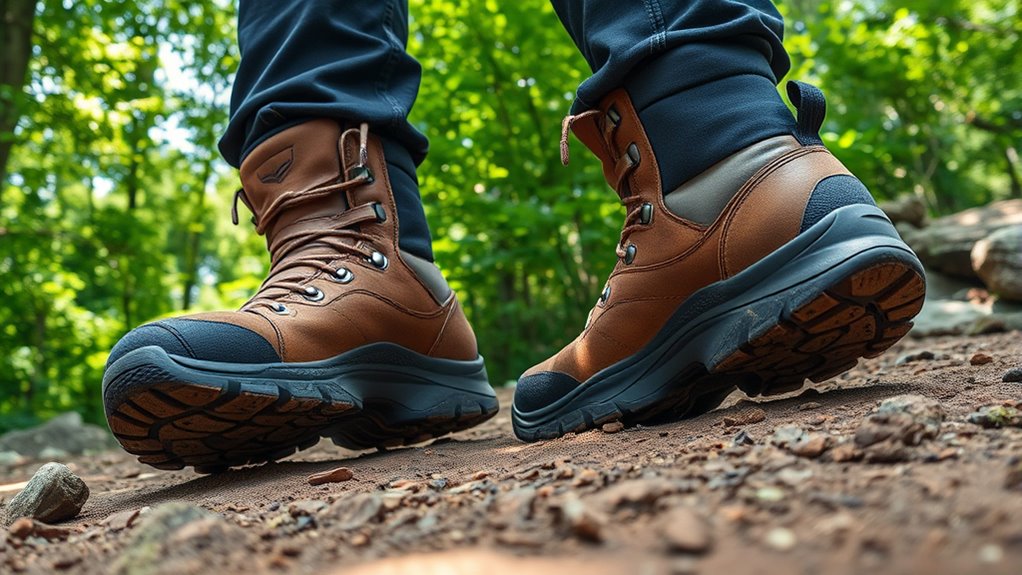

For premium hiking boots for rugged trails, I’d make the Oboz Men’s Bridger Mid B-DRY my best overall pick for its balance of support, protection, and waterproofing. The Kenetrek Men’s Hardscrabble Hiker is a stronger match for demanding, rough-ground hikes, while the Danner Mountain 600 EVO stands out for hikers who want a lighter, more agile boot. The main tradeoff is between the weight and flexibility that make long days easier and the firm structure that can feel more secure under a loaded pack. Waterproof membranes also help in wet conditions but may feel warmer and dry more slowly than less enclosed designs. Read on for the full comparison, ranking logic, and advice on choosing a boot for your terrain and fit.

Get business pricing on tools and workshop supplies
- Business-only prices and quantity discounts
- Tax-exempt purchasing
- Multiple users, one account, clear invoices
Complete the kit



Key Takeaways
- The lineup favors balance over maximum stiffness: the Oboz Bridger Mid B-DRY is the best overall choice because it brings trail protection and support together without being positioned as an expedition-only boot.
- Kenetrek models serve the more demanding end of the list: the Hardscrabble Hiker and Bridger High make more sense when added structure and coverage matter more than a light, nimble feel.
- Danner’s Mountain 600 family offers several distinct routes: the standard model, its GORE-TEX counterpart, and the EVO differ in weather protection and construction, so buyers should check the exact version rather than shop by family name alone.
- Merrell Moab 3 Mid options lean toward accessible comfort: the standard and waterproof versions suit hikers who want a familiar mid-height style, while neither should be chosen on model name alone without checking the specific weather protection.
- Boot height and waterproofing are not substitutes for fit: the Asolo TPS 535 LTH V EVO and higher Kenetrek models may appeal to buyers seeking a more substantial build, but a secure heel and comfortable toe room matter more than extra material.
| Oboz Men’s Bridger Mid B-DRY |  | Best for Support on Rugged, Wet Trails | Upper material: Waterproof nubuck and durable textile | Fabric type: 100% leather | Sole material: Rubber | VIEW ON AMAZON | See Our Full Breakdown |
| Danner Mountain 600 Men’s Hiking Boots |  | Best for Wet-Trail Grip | Waterproofing: Danner Dry barrier | Upper material: Full-grain leather or smooth suede | Shaft height: Ankle | VIEW ON AMAZON | See Our Full Breakdown |
| Timberland Men’s Flume Mid Waterproof Hiking Boot |  | Best for Straightforward Wet-Weather Coverage | Upper material: Waterproof Premium Timberland Leather | Sole material: Rubber | Shaft height: Ankle | VIEW ON AMAZON | See Our Full Breakdown |
| Danner Men’s Mountain 600 ID Gore-Tex Hiking Boots |  | Best for Lightweight Waterproof Protection | Outer material: Nylon | Inner material: Gore-Tex | Water resistance: Waterproof | VIEW ON AMAZON | See Our Full Breakdown |
| Merrell Men’s Moab 3 Mid Hiking Boot |  | Best for Cushioned Dry-Trail Hiking | Upper material: Pigskin leather and mesh | Water resistance: Not water resistant | Lining: 100% recycled mesh | VIEW ON AMAZON | See Our Full Breakdown |
| Kenetrek Men’s Hardscrabble Hiker Hiking Boots |  | Best for Heavy Loads | Upper material: 100% leather | Lining: Synthetic | Sole: Rubber | VIEW ON AMAZON | See Our Full Breakdown |
| Kenetrek Men’s Corrie II Hiker Hiking Boots |  | Best for Agile Rugged-Trail Hiking | Upper material: Leather and nylon | Shaft height: 7 inches | Shaft circumference: 9 inches | VIEW ON AMAZON | See Our Full Breakdown |
| Merrell Men’s Moab 3 Mid Waterproof Hiking Boots |  | Best for Cushioned Day Hikes | Upper: Pig suede leather and breathable mesh | Waterproofing: Waterproof membrane | Shaft height: Ankle | VIEW ON AMAZON | See Our Full Breakdown |
| Kenetrek Men’s Bridger High Hiking Boots |  | Best Lightweight Support Pick | Weight: 2.9 pounds per pair | Shaft height: 7 inches | Shaft circumference: 9 inches | VIEW ON AMAZON | See Our Full Breakdown |
| Columbia Men’s Transverse Hike Waterproof Boots |  | Best for Mixed-Weather Trail Versatility | Upper material: Leather and mesh | Shaft height: Ankle | Shaft circumference: 1 inch | VIEW ON AMAZON | See Our Full Breakdown |
| Danner Men’s Mountain 600 EVO 4.5″ Hiking Boot – Waterproof GORE‑TX, Vibram Megagrip, OrthoLite Footbed |  | Best for Wet-Trail Grip | Upper: Full-grain leather | Waterproof liner: GORE‑TX | Outsole: Vibram Megagrip | VIEW ON AMAZON | See Our Full Breakdown |
| Danner Mountain 600 Men’s Hiking Boots |  | Best for Cushioned Day Hikes | Upper: Suede (listed fabric type); description also mentions full-grain leather | Waterproof barrier: Danner Dry | Midsole: Vibram SPE | VIEW ON AMAZON | See Our Full Breakdown |
| Asolo Men’s TPS 535 LTH V EVO Leather Hiking Boots |  | Best for Heavy-Load Hiking | Upper: 2.6–2.8 mm water-resistant full-grain leather | Lining: Cambrelle | Midsole: Co-injected polyurethane | VIEW ON AMAZON | See Our Full Breakdown |
| Danner Skyridge Men’s Waterproof Hiking Boots |  | Best for Trail-to-Town Versatility | Upper: 100% leather and textile; suede and cotton ripstop | Waterproof barrier: Danner Dry | Footbed: Ortholite triple-density polyurethane | VIEW ON AMAZON | See Our Full Breakdown |
| premium hiking boots for rugged trail | Shaft height | Outsole | Midsole | Upper material |
|---|---|---|---|---|
| Oboz Men’s Bridger Mid B-DRY | 4.5 inches | — | — | Waterproof nubuck and durable textile |
| Danner Mountain 600 Men’s Hiki | Ankle | Vibram Fuga with Megagrip compound | Rubberized EVA | Full-grain leather or smooth suede |
| Timberland Men’s Flume Mid Wat | Ankle | — | — | Waterproof Premium Timberland Leather |
| Danner Men’s Mountain 600 ID G | — | Danner Plyolite | Vibram SPE | — |
| Merrell Men’s Moab 3 Mid Hikin | — | Vibram TC5+ rubber | Lightweight EVA foam | Pigskin leather and mesh |
| Kenetrek Men’s Hardscrabble Hi | 7 inches | — | — | 100% leather |
| Kenetrek Men’s Corrie II Hiker | 7 inches | Grapon rubber | 5 mm nylon | Leather and nylon |
| Merrell Men’s Moab 3 Mid Water | Ankle | Vibram rubber | Super Rebound Compound | — |
| Kenetrek Men’s Bridger High Hi | 7 inches | KT-Light rubber | Nylon | Leather |
| Columbia Men’s Transverse Hike | Ankle | — | — | Leather and mesh |
| Danner Men’s Mountain 600 EVO | Ankle | Vibram Megagrip | — | — |
| Danner Mountain 600 Men’s Hiki | Ankle | Vibram Fuga | Vibram SPE | — |
| Asolo Men’s TPS 535 LTH V EVO | Ankle | Asolo/Vibram Triple Power Structure | Co-injected polyurethane | — |
| Danner Skyridge Men’s Waterpro | Ankle | Mountain Tread with multi-directional lugs | Lightweight EVA | — |
More Details on Our Top Picks
Oboz Men’s Bridger Mid B-DRY
The Oboz Bridger Mid B-DRY suits hikers who want a supportive leather boot for rough ground and changeable weather. Its waterproof, breathable membrane and multidirectional rubber tread address two common trail problems: wet feet and uncertain footing. The triple-density EVA insole, deep heel cup, and arch profile add structure for long days, while the 4.5-inch shaft offers ankle coverage without the height of a high-cut boot. Compared with the Danner Mountain 600, this Oboz emphasizes structured underfoot support over a lighter-feeling build. That comes with a clear compromise: at 19 ounces per shoe, it may feel tiring on long-distance hikes or for fast-moving hikers. Choose it for support and grip, not for a minimal, nimble stride.
Pros:- B-DRY membrane offers waterproof protection while allowing moisture to escape.
- Triple-density EVA insole, deep heel cup, and arch profile provide structured underfoot support.
- Multidirectional rubber tread is suited to rocky and wet terrain.
- Mid-cut shaft offers ankle coverage with a 4.5-inch height.
Cons:- At 19 ounces per shoe, it is relatively heavy for long days on foot.
- Its supportive, structured build may feel less nimble than a lighter hiking shoe.
Best for: Hikers tackling rocky, wet trails who want a supportive mid-cut leather boot and a structured insole for long days.
Not ideal for: Fast hikers and long-distance walkers who prioritize low weight; each shoe weighs 19 ounces.
- Upper material:Waterproof nubuck and durable textile
- Fabric type:100% leather
- Sole material:Rubber
- Shaft height:4.5 inches
- Weight per shoe:19.0 oz
- Waterproof membrane:B-DRY
- Insole:Triple-density EVA with deep heel cup and arch profile
Our verdict“Choose the Bridger Mid B-DRY if trail support, waterproofing, and traction matter more to you than minimizing weight.”
Danner Mountain 600 Men’s Hiking Boots
The Danner Mountain 600 is the grip-focused choice here, pairing a waterproof Danner Dry barrier with a Vibram Fuga outsole and Megagrip compound for traction on wet as well as dry surfaces. Its Ortholite triple-density footbed and rubberized EVA midsole bring cushioning and support, while the leather or suede upper gives it a more traditional look than the nylon-upper Danner Mountain 600 ID Gore-Tex. Two lace options let buyers change the look without changing the boot’s trail role. The tradeoff is that this is not the lightest-feeling option, and its substantial build may be less appealing to hikers who favor fast, low-profile footwear. The available information also lists no shaft height beyond “ankle,” so buyers seeking a precisely specified level of ankle coverage may prefer the Oboz Bridger Mid.
Pros:- Danner Dry barrier provides waterproof protection.
- Vibram Fuga outsole with Megagrip compound is designed for grip on wet and dry surfaces.
- Ortholite triple-density footbed and rubberized EVA midsole add cushioning and support.
- Includes two lace options and offers a full-grain leather or smooth suede upper.
Cons:- May feel heavier than lightweight hiking shoes.
- The ankle-height specification does not give a numeric shaft measurement.
Best for: Hikers who regularly cross wet or mixed terrain and want a waterproof leather or suede boot with a traction-focused outsole.
Not ideal for: Weight-conscious hikers seeking a particularly light boot, or buyers who need a precise shaft-height specification before choosing.
- Waterproofing:Danner Dry barrier
- Upper material:Full-grain leather or smooth suede
- Shaft height:Ankle
- Shaft circumference:30 cm
- Outsole:Vibram Fuga with Megagrip compound
- Insole:Ortholite triple-density polyurethane
- Midsole:Rubberized EVA
- Lace options:Two laces included
Our verdict“Pick the Mountain 600 if wet-trail traction and a traditional upper matter more than a lightweight feel or precisely stated shaft height.”
Timberland Men’s Flume Mid Waterproof Hiking Boot
The Timberland Flume Mid keeps its design straightforward: waterproof Premium Timberland Leather, a fully gusseted tongue, and a mesh lining give hikers practical coverage against trail moisture. Rustproof speed-lace hardware with hooks at the top makes lacing easier to adjust than a basic eyelet setup, while the EVA footbed supplies cushioning without adding a more elaborate support system. Compared with the Oboz Bridger Mid B-DRY, the Flume’s listed details give less emphasis to a structured insole, outsole tread design, or measured weight. That makes it harder to judge for demanding, uneven terrain where precise support and grip are priorities. Its materials and mid-height format suit hikers who want weather protection and simple trail functionality, but the provided specifications do not establish the same rugged-ground traction credentials as the Danner options.
Pros:- Waterproof Premium Timberland Leather upper helps keep trail moisture out.
- Fully gusseted tongue helps limit debris and water entry at the front of the boot.
- Rustproof speed-lace hardware and top hooks support quick lace adjustment.
- Mesh lining and EVA footbed provide a simple comfort-focused interior.
Cons:- The product details do not specify an outsole tread pattern or traction compound for rugged terrain.
- The listed EVA footbed provides less support detail than the Oboz Bridger’s triple-density insole and heel cup.
Best for: Casual-to-moderate trail hikers who want a leather mid boot with waterproof coverage and easy-to-adjust speed-lace hardware.
Not ideal for: Hikers choosing primarily for technical rocky terrain, pronounced underfoot support, or detailed outsole traction data.
- Upper material:Waterproof Premium Timberland Leather
- Sole material:Rubber
- Shaft height:Ankle
- Shaft circumference:9.25 inches
- Lining:Mesh
- Footbed:EVA
- Lace hardware:Rustproof speed-lace hardware with lace hooks at top
Our verdict“Choose the Flume Mid for practical waterproof leather coverage and easy lacing, but favor a more fully specified traction-and-support boot for technical trails.”
Danner Men’s Mountain 600 ID Gore-Tex Hiking Boots
The Danner Mountain 600 ID Gore-Tex stands out for combining waterproof coverage with a build described as lightweight. Its Gore-Tex lining is the clearest choice in this group for hikers who specifically want that membrane, while the Vibram SPE midsole and OrthoLite footbed add cushioning and support for varied terrain. The Danner Plyolite outsole is described as grippy, though the supplied details do not name a compound or tread pattern. Compared with the leather-and-Megagrip Danner Mountain 600, this ID version prioritizes a nylon outer and a lighter feel over the other model’s more specifically identified wet-and-dry outsole. That makes it appealing for hikers balancing rough trails with weight, but the product data give no fit or sizing guidance, so buyers should check those details before committing.
Pros:- Gore-Tex lining provides waterproof protection.
- Vibram SPE midsole and OrthoLite footbed offer cushioning and support.
- Lightweight design is intended to reduce the burden of a more substantial boot.
- Danner Plyolite outsole is described as providing grip on rugged terrain.
Cons:- No specific fit or sizing information is supplied.
- The outsole details do not identify a traction compound or tread pattern, unlike the Mountain 600’s Megagrip specification.
Best for: Hikers seeking a lightweight-feeling boot with a Gore-Tex waterproof lining, cushioning, and support for varied trail terrain.
Not ideal for: Buyers who need detailed fit or sizing guidance, or who want a named outsole compound and tread specification for technical terrain.
- Outer material:Nylon
- Inner material:Gore-Tex
- Water resistance:Waterproof
- Sole material:Rubber
- Midsole:Vibram SPE
- Footbed:OrthoLite
- Outsole:Danner Plyolite
- Color:Almond Butter
Our verdict“Choose the Mountain 600 ID if waterproof Gore-Tex and a lighter-feeling build lead your priorities, provided you can verify fit details separately.”
Merrell Men’s Moab 3 Mid Hiking Boot
The Merrell Moab 3 Mid is the comfort-and-traction option for dry trails, with a cushioned EVA midsole, contoured removable insole, heel Air Cushion, and Vibram TC5+ outsole. A molded nylon arch shank adds structure, while the protective toe cap helps shield against trail knocks. Recycled laces, webbing, and mesh lining offer a material choice that differs from the leather-focused Oboz Bridger Mid B-DRY. The decisive limitation is its stated lack of water resistance: unlike the Oboz or either Danner, this Moab is not the pick for rain, wet vegetation, or muddy routes where keeping feet dry matters. Its supportive cushioning makes sense for hikers who prioritize comfort and grip in dry conditions, but buyers should not mistake its rugged outsole for waterproof protection.
Pros:- Vibram TC5+ rubber outsole is specified for trail traction.
- Removable contoured insole, EVA midsole, and heel Air Cushion support comfort and shock absorption.
- Molded nylon arch shank adds structure underfoot.
- Recycled laces, webbing, and mesh lining incorporate recycled materials.
Cons:- Not water resistant, unlike the waterproof Oboz Bridger and Danner options.
- Leather-and-mesh upper does not offer the stated waterproof coverage of the Timberland Flume Mid.
Best for: Hikers on dry, varied trails who want cushioned underfoot comfort, a supportive insole, and a protective toe cap.
Not ideal for: Hikers regularly facing rain, wet vegetation, stream crossings, or muddy trails, since this model is not water resistant.
- Upper material:Pigskin leather and mesh
- Water resistance:Not water resistant
- Lining:100% recycled mesh
- Insole:Kinetic Fit ADVANCED removable contoured insole with reinforced heel cushioning
- Midsole:Lightweight EVA foam
- Arch support:Molded nylon arch shank
- Outsole:Vibram TC5+ rubber
- Additional feature:Air Cushion in heel for shock absorption and stability
Our verdict“Pick the Moab 3 Mid for cushioning and traction on dry trails, but choose a waterproof model for persistently wet routes.”
Kenetrek Men’s Hardscrabble Hiker Hiking Boots
The Hardscrabble Hiker is the load-carrying pick here: its full-grain leather upper, 7-inch shaft, and supportive midsole are suited to long days over uneven ground with a substantial pack. A waterproof Windtex membrane adds weather protection, while the rubber outsole is described as providing traction on rough surfaces. Compared with the Kenetrek Bridger High, this model weighs more—3.5 pounds per pair versus 2.9—so it favors a more substantial, supportive feel over easier foot turnover. That weight and the leather construction bring tradeoffs: expect a potential break-in period, and hikers prioritizing a lighter boot may prefer the Bridger High or Corrie II. I’d shortlist this pair for demanding routes where support matters more than minimizing weight.
Pros:- Full-grain leather construction is suited to demanding use.
- Waterproof Windtex membrane provides protection in wet conditions.
- Supportive midsole is intended to help under heavy loads.
- Rubber outsole is designed for traction on uneven surfaces.
Cons:- At 3.5 pounds per pair, it is heavier than the Kenetrek Bridger High.
- May require a break-in period.
- Premium materials come with a higher price point than basic hiking boots.
Best for: Backpackers and hunters who carry heavy loads on rough trails and want a substantial leather boot.
Not ideal for: Fast-moving hikers or anyone prioritizing a light boot; the listed pair weight is 3.5 pounds and the leather may need breaking in.
- Upper material:100% leather
- Lining:Synthetic
- Sole:Rubber
- Shaft height:7 inches
- Weight:3.5 pounds
- Water resistance:Waterproof
- Closure:Lace-up
- Waterproof membrane:Windtex
Our verdict“Choose the Hardscrabble Hiker if you want a supportive leather boot for heavy loads and can accept extra weight and break-in time.”
Kenetrek Men’s Corrie II Hiker Hiking Boots
The Corrie II aims for a more flexible, agile feel than the Hardscrabble Hiker, pairing a leather-and-nylon upper with a 5 mm nylon midsole and a 7-inch shaft. Its Windtex breathable membrane adds wet-weather coverage, while reinforced toe and heel guards address the scuffs and knocks common on rocky trails. Arch support, shock absorption, and ankle padding give it a supportive feature set without the Hardscrabble’s all-leather construction. The Grapon rubber outsole is intended to provide dependable grip, though the supplied details don’t specify a tread pattern or performance on particular surfaces. This is a strong fit for hikers who want a protected boot that feels less cumbersome; the tradeoffs are a possible break-in period and a premium price compared with basic options.
Pros:- Leather-and-nylon upper balances durability with a more flexible design.
- Windtex membrane provides waterproof, breathable protection.
- Reinforced toe and heel guards help protect against trail impacts.
- Arch support, shock absorption, and ankle padding add supportive features.
Cons:- May require a break-in period.
- Higher price point than basic hiking boots.
- Limited color options.
Best for: Hikers and hunters who want waterproof ankle support and reinforced protection while keeping their boot choice relatively agile.
Not ideal for: Buyers seeking a low-cost, ready-to-wear boot or a wide choice of colors; a break-in period may also be needed.
- Upper material:Leather and nylon
- Shaft height:7 inches
- Shaft circumference:9 inches
- Waterproof membrane:Windtex breathable membrane
- Midsole:5 mm nylon
- Outsole:Grapon rubber
- Support features:Arch support, shock absorption, and ankle padding
- Reinforcements:Toe and heel guards
Our verdict“Pick the Corrie II for protected, supportive hiking with a more agile focus than the heavier Hardscrabble Hiker.”
Merrell Men’s Moab 3 Mid Waterproof Hiking Boots
The Moab 3 Mid Waterproof leans toward cushioning and everyday trail comfort rather than the more substantial support focus of the Kenetrek Hardscrabble Hiker. Its pig suede and breathable mesh upper is paired with a waterproof membrane, a removable contoured footbed with reinforced heel cushioning, and a Super Rebound Compound midsole designed to absorb shock. A Vibram rubber outsole supplies the stated grip, while medium support makes this a less heavy-duty proposition than Kenetrek’s models for carrying substantial loads over rugged ground. The removable footbed is useful for fit adjustments, but the product details don’t provide a weight or shaft measurement beyond “ankle,” making direct fit and weight comparisons difficult. I’d choose it for cushioned day hikes, not as the first pick for maximum load support.
Pros:- Waterproof membrane helps protect against wet trail conditions.
- Removable contoured footbed includes reinforced heel cushioning.
- Super Rebound Compound midsole is designed to absorb shock.
- Vibram rubber outsole provides traction.
Cons:- Medium support may not suit hikers seeking maximum support under heavy loads.
- Ankle-height shaft offers less coverage than the listed 7-inch Kenetrek boots.
- Product details do not state the boot’s weight.
Best for: Day hikers who want a waterproof mid boot with cushioned heel support and a removable footbed.
Not ideal for: Backpackers carrying heavy loads who want the more explicitly load-focused support of the Kenetrek Hardscrabble Hiker.
- Upper:Pig suede leather and breathable mesh
- Waterproofing:Waterproof membrane
- Shaft height:Ankle
- Shaft circumference:4 inches
- Footbed:Removable Kinetic Fit ADVANCED contoured footbed with reinforced heel cushioning
- Support:Medium
- Midsole:Super Rebound Compound
- Outsole:Vibram rubber
Our verdict“Choose the Moab 3 Mid Waterproof for cushioned day hikes, but favor a Kenetrek model for a more load-focused rugged-trail boot.”
Kenetrek Men’s Bridger High Hiking Boots
The Bridger High stands out as the lighter Kenetrek option for rugged routes: it weighs 2.9 pounds per pair, compared with 3.5 pounds for the Hardscrabble Hiker, yet keeps a 7-inch leather upper and a full-length nylon midsole. Its K-Straps ankle support system and padded collar are aimed at a secure, supported fit, while the Windtex membrane provides waterproof, breathable coverage. The KT-Light rubber outsole is specified for traction across varied terrain. That combination makes it a more appealing choice than the Hardscrabble for hikers who want less weight without giving up a structured boot. The main fit limitation is clear: it comes in medium and wide widths, with no narrow option. I’d prioritize it over the Corrie II when stated weight and ankle support are the deciding factors.
Pros:- Listed weight of 2.9 pounds per pair is lower than the Hardscrabble Hiker’s.
- K-Straps and a padded collar provide a defined ankle-support system.
- Windtex membrane offers waterproof, breathable protection.
- KT-Light rubber outsole is designed for traction on varied terrain.
Cons:- No narrow width option is listed.
- Its supportive 7-inch build may be more boot than buyers want for easy day hikes.
Best for: Rugged-trail hikers and hunters who want a lighter 7-inch leather boot with structured ankle support.
Not ideal for: Hikers with narrow feet, since the listed width options are medium and wide only.
- Weight:2.9 pounds per pair
- Shaft height:7 inches
- Shaft circumference:9 inches
- Upper material:Leather
- Waterproof membrane:Windtex
- Outsole:KT-Light rubber
- Midsole:Nylon
- Width options:Medium and wide
- Ankle support:K-Straps with padded collar
Our verdict“Choose the Bridger High if you want Kenetrek-style ankle support in a lighter package and medium or wide widths fit you.”
Columbia Men’s Transverse Hike Waterproof Boots
The Transverse Hike is the most technology-led, broadly versatile option in this group: OMNI-TECH waterproof-breathable construction pairs with TECHLITE impact absorption and OMNI-GRIP traction. Its leather-and-mesh upper and ankle-height shaft suggest a less substantial profile than the 7-inch Kenetrek Bridger High, which adds a dedicated K-Straps ankle-support system. That makes the Columbia a reasonable match for hikers who want cushioning and grip across changing trail conditions, rather than the Bridger’s more explicit support setup for rugged routes. The available description does not specify weight, midsole material, or a dedicated ankle-support feature, so I would not assume it matches the Kenetrek models for heavy-load stability. Potential break-in time and limited color options are also listed drawbacks.
Pros:- OMNI-TECH construction provides waterproof-breathable protection.
- TECHLITE cushioning is designed for impact absorption and energy return.
- OMNI-GRIP is specified for traction across multiple terrain types.
- Leather-and-mesh upper combines two materials in an ankle-height design.
Cons:- May require breaking in for optimal comfort.
- Limited color options are listed.
- No dedicated ankle-support system or weight is provided in the supplied product details.
Best for: Day hikers who want waterproof construction, impact-absorbing cushioning, and multi-terrain traction for varied conditions.
Not ideal for: Backpackers seeking a specified high-support build for heavy loads; the product details do not list a dedicated ankle-support system.
- Upper material:Leather and mesh
- Shaft height:Ankle
- Shaft circumference:1 inch
- Waterproof technology:OMNI-TECH
- Impact absorption:TECHLITE
- Traction technology:OMNI-GRIP
- Sole material:Rubber
- Hardware:Metal
- Cushioned collar:Yes
Our verdict“Choose the Transverse Hike for waterproof cushioning and versatile traction, but consider the Bridger High if ankle support on rugged trails is your priority.”
Danner Men’s Mountain 600 EVO 4.5″ Hiking Boot – Waterproof GORE‑TX, Vibram Megagrip, OrthoLite Footbed
The Mountain 600 EVO pairs a waterproof GORE‑TX liner with a Vibram Megagrip outsole, making it a strong choice for day hikers who regularly encounter slick rock or damp paths. Compared with the Danner Skyridge, its named Megagrip compound gives this pick a clearer traction focus, while the Skyridge emphasizes a lightweight EVA midsole and a multi-directional tread. The EVO’s removable OrthoLite Eco footbed adds cushioning and can be taken out for fit adjustments. Its full-grain leather upper favors durability, but may feel stiff until broken in. The ankle-height shaft keeps movement less restricted than a taller boot, yet offers less coverage for heavy packs or demanding climbs. Choose it for wet, varied day-hike terrain rather than maximum ankle support.
Pros:- Waterproof GORE‑TX liner is suited to changing, wet conditions.
- Vibram Megagrip outsole is designed for traction on wet and dry terrain.
- Full-grain leather upper favors long-term wear.
- Removable OrthoLite Eco footbed provides cushioning and fit-adjustment flexibility.
Cons:- Full-grain leather may need a break-in period.
- Ankle-height coverage may be limited for heavy loads or technical climbs.
Best for: Day hikers who want waterproof leather construction and reliable grip on wet or mixed terrain without a taller shaft.
Not ideal for: Hikers carrying heavy loads on technical routes who need more ankle coverage, or anyone unwilling to allow time for leather break-in.
- Upper:Full-grain leather
- Waterproof liner:GORE‑TX
- Outsole:Vibram Megagrip
- Footbed:Removable OrthoLite Eco
- Shaft height:Ankle
- Shaft circumference:11.02 inches
- Origin:Imported
- Sole material:Leather (as listed)
Our verdict“Choose the Mountain 600 EVO for waterproof protection and wet-trail grip on day hikes, but look elsewhere for extra ankle support under a heavy pack.”
Danner Mountain 600 Men’s Hiking Boots
The Danner Mountain 600 is the comfort-oriented choice among these Danner options, combining a Danner Dry waterproof barrier with an Ortholite triple-density footbed for hikers who want cushioning on varied day-hike terrain. Its Vibram SPE midsole and Fuga outsole bring grip and underfoot cushioning together, while the Mountain 600 EVO instead specifies Vibram Megagrip and a removable OrthoLite Eco footbed. That makes the EVO the more clearly targeted pick for wet-trail traction; this model’s appeal is its balanced comfort package. The ankle-height design offers a practical middle ground between freedom of movement and some ankle coverage, but neither version is the obvious choice for heavy-load support. The leather upper may also need time to soften. Pick this boot for cushioned hikes, not for a stiff, highly supportive trekking boot.
Pros:- Danner Dry barrier is described as waterproof.
- Ortholite triple-density footbed provides layered cushioning and support.
- Vibram SPE midsole and Fuga outsole combine cushioning with trail grip.
- Suede or full-grain leather upper offers a durable, traditional construction.
Cons:- May require break-in before reaching full comfort.
- Ankle-height construction may not provide enough support for heavy loads.
- The provided description does not specify the upper material for every version.
Best for: Day hikers seeking waterproof protection and a cushioned footbed for mixed trails, with ankle-height coverage and a classic leather look.
Not ideal for: Hikers who prioritize a specifically named wet-grip compound or need substantial support for heavy packs and technical routes.
- Upper:Suede (listed fabric type); description also mentions full-grain leather
- Waterproof barrier:Danner Dry
- Midsole:Vibram SPE
- Outsole:Vibram Fuga
- Footbed:Ortholite triple-density
- Shaft height:Ankle
- Origin:Imported
Our verdict“Pick this Mountain 600 for a cushioned, waterproof day-hiking boot; choose the EVO instead if wet-trail Megagrip is your priority.”
Asolo Men’s TPS 535 LTH V EVO Leather Hiking Boots
The Asolo TPS 535 LTH V EVO stands apart from the Danner Mountain 600 options with a 2.6–2.8 mm full-grain leather upper and a co-injected polyurethane midsole aimed at durable support on long hikes. Its Asolo/Vibram Triple Power Structure outsole and self-cleaning tread are intended for traction across varied ground, while adjustable hardware lacing helps secure the fit. Unlike the lighter, day-hike-oriented Mountain 600 EVO, this Asolo is the more support-focused pick for hikers carrying substantial gear. Its water-resistant leather is not described as a waterproof membrane, so it offers less explicit wet-weather protection than either Danner boot with a named barrier. The substantial leather construction may also feel less nimble, and the supplied details omit weight and fit feedback. I’d favor it for durability and load support, not if low weight or guaranteed waterproofing leads your list.
Pros:- Thick, water-resistant full-grain leather upper is built for durable trail use.
- Co-injected polyurethane midsole is suited to cushioning and support on long hikes.
- Asolo/Vibram Triple Power Structure outsole has a self-cleaning tread.
- Adjustable hardware lacing supports a secure fit.
Cons:- Water resistance is specified, but a waterproof membrane is not listed.
- No weight information is provided, making it harder to judge bulk.
- Fit feedback is not included in the supplied product details.
Best for: Experienced hikers carrying heavier packs on long, varied trails who prefer thick leather and a supportive polyurethane midsole.
Not ideal for: Hikers who need a stated waterproof membrane, want a lightweight boot, or depend on detailed weight and fit information before choosing.
- Upper:2.6–2.8 mm water-resistant full-grain leather
- Lining:Cambrelle
- Midsole:Co-injected polyurethane
- Outsole:Asolo/Vibram Triple Power Structure
- Sole material:Rubber
- Shaft height:Ankle
- Shaft circumference:13 inches
- Origin:Imported
Our verdict“Choose the Asolo for leather durability and support under a heavier load, but favor a Danner model if a named waterproof barrier matters more.”
Danner Skyridge Men’s Waterproof Hiking Boots
The Skyridge takes a more mixed-use approach than the Danner Mountain 600 EVO: its suede and cotton ripstop upper, EVA midsole, and Mountain Tread outsole suit hikers who want one boot for trails and everyday wear. The Danner Dry waterproof barrier supplies weather protection, while an Ortholite triple-density footbed adds cushioning underfoot. Compared with the EVO’s Vibram Megagrip outsole, the Skyridge’s multi-directional lugs are presented as slip-resistant for both trail and town rather than as a specialized wet-rock grip feature. Its lightweight EVA midsole may make walking feel less firm than a more support-focused boot, and the leather-and-textile build can add weight relative to synthetic options. This is the practical pick for moderate hikes and daily use, not the strongest match for hikers prioritizing technical terrain or maximum pack support.
Pros:- Danner Dry barrier is designed to keep water out.
- Suede and cotton ripstop upper combines leather with textile construction.
- Ortholite triple-density footbed and EVA midsole provide cushioning.
- Multi-directional Mountain Tread lugs are intended for slip resistance on trails and around town.
Cons:- Leather construction can add weight compared with synthetic boots.
- The outsole is not described with the same wet-grip emphasis as the Mountain 600 EVO’s Megagrip.
- Ankle-height coverage may be limited for heavy packs or highly technical routes.
Best for: Hikers who want a waterproof ankle boot for moderate trails, wet commutes, and everyday wear.
Not ideal for: Technical hikers seeking a specialized wet-rock outsole or strong support under heavy loads, or buyers prioritizing the lightest possible construction.
- Upper:100% leather and textile; suede and cotton ripstop
- Waterproof barrier:Danner Dry
- Footbed:Ortholite triple-density polyurethane
- Midsole:Lightweight EVA
- Outsole:Mountain Tread with multi-directional lugs
- Sole material:Rubber
- Shaft height:Ankle
- Origin:Imported
Our verdict“Choose the Skyridge for waterproof comfort across moderate trails and town use, but pick the Mountain 600 EVO for a more explicitly wet-grip-focused outsole.”

How We Picked
I compared these boots for the demands implied by rugged trails: uneven ground, repeated descents, exposure to wet conditions, and the possibility of carrying a pack. The ranking weighs support and underfoot protection alongside traction, weather coverage, construction, and the practical burden of boot weight and stiffness. I also considered how clearly each model serves a particular hiker, from someone seeking an approachable mid boot to someone who prioritizes a more protective build.
That logic puts balanced options ahead of boots that specialize in only one attribute. Models with a clearly differentiated role, such as a more supportive high-cut design or a lighter waterproof option, remain useful choices but rank lower as all-round recommendations. Where the list includes similar versions or duplicate entries, I distinguish them only where the product names identify a meaningful difference; the Mountain 600 appears twice, so those entries should not be treated as separate designs without confirmation of the exact listing. Fit varies by foot shape, and no feature list can replace trying boots on with hiking socks.
| premium hiking boots for rugged trail | Sole material |
|---|---|
| Oboz Men’s Bridger Mid B-DRY | Rubber |
| Danner Mountain 600 Men’s Hiki | — |
| Timberland Men’s Flume Mid Wat | Rubber |
| Danner Men’s Mountain 600 ID G | Rubber |
| Merrell Men’s Moab 3 Mid Hikin | — |
| Kenetrek Men’s Hardscrabble Hi | — |
| Kenetrek Men’s Corrie II Hiker | — |
| Merrell Men’s Moab 3 Mid Water | — |
| Kenetrek Men’s Bridger High Hi | — |
| Columbia Men’s Transverse Hike | Rubber |
| Danner Men’s Mountain 600 EVO | Leather (as listed) |
| Danner Mountain 600 Men’s Hiki | — |
| Asolo Men’s TPS 535 LTH V EVO | Rubber |
| Danner Skyridge Men’s Waterpro | Rubber |
Factors to Consider When Choosing Premium Hiking Boots For Rugged Trails
Choosing rugged-trail boots is less about collecting the biggest specs and more about matching the boot to your terrain, pack, and feet. I’d settle the fit and support questions before paying extra for a particular membrane or outsole label.
Match Support to Pack Weight and Terrain
A firm boot can feel reassuring on rocky trails or under a heavy pack, but extra stiffness is not automatically better for every hiker. On maintained paths and lighter day hikes, a more flexible boot may feel easier over long distances and require less adjustment. Think about how often you encounter loose rock, steep side slopes, and rough descents rather than choosing by the most demanding trip you might take once a year. A common mistake is buying a very rigid boot for general hiking and then finding that it feels cumbersome on easier miles. If possible, try boots with the pack weight you normally carry and walk on an incline. The right level of support is the one that steadies your foot without creating pressure or restricting your natural stride.
Treat Fit as a Performance Feature
A secure heel and enough room for toes to spread are more useful than a long feature list if the boot rubs or pinches. Feet often swell during a long hike, so test footwear later in the day and wear the socks you plan to hike in. Walk downhill or use a ramp during a fitting; toes hitting the front can turn a comfortable flat-floor fit into a painful descent. Do not assume that a boot from a familiar brand will fit the same as another model from that brand. Insoles and lacing can make modest adjustments, but they cannot fix a boot that is fundamentally too narrow or too loose. If two sizes both seem plausible, compare heel hold and toe clearance under movement rather than relying on the number on the box.
Choose Waterproofing for Your Actual Conditions
A waterproof membrane is useful for persistent rain, wet vegetation, and shallow puddles, but it can retain warmth and slow drying when water gets in over the collar. For consistently dry climates or hot hikes, a less enclosed boot may feel more comfortable and can dry faster after sweat or a crossing. Also remember that waterproofing does not make a boot a substitute for gaiters in deep snow or water above the cuff. Buyers sometimes pay for a membrane because it sounds like an upgrade, then wear it in conditions where breathability matters more. Consider how often your routes are truly wet, how quickly you can dry gear between hikes, and whether you tend to run hot. Treat waterproofing as a conditions-specific choice, not a universal measure of boot quality.
Weigh Grip Against Durability and Terrain
Trail grip depends on the outsole pattern, rubber compound, and the surface beneath you; one outsole cannot excel equally on slick rock, mud, and hard-packed trail. Deep, widely spaced lugs can shed mud more readily, while a flatter contact area may feel more stable on rock, but the best match depends on your local routes. A soft, grippy compound may offer confidence on technical ground but can wear faster with frequent road or hard-surface walking. Check whether your hikes are mostly rocky, muddy, or mixed before treating a named outsole as a guarantee. Also look at how much protection the boot gives around the toe and sides, where repeated impacts can cause discomfort or damage. For rugged trails, balanced traction and protective construction usually matter more than a single aggressive-looking lug pattern.
Pay More for a Real Need, Not a Bigger Spec Sheet
A premium boot is worth the added expense when its support, materials, weather protection, or durability address conditions you regularly face. If most outings are short and on maintained trails, a heavy, highly structured boot may add little beyond break-in time and weight. Conversely, frequent rough terrain and loaded hikes can make a sturdier build a practical choice rather than an indulgence. Avoid paying extra based only on leather, boot height, or a membrane label; each should connect to a specific use case. Factor in care requirements too, since leather may need cleaning and conditioning to maintain its condition. The best purchase is the boot you can wear comfortably on your real routes, not the one with the most elaborate specification.
Plan for Break-In and Ongoing Care
Even a well-fitting hiking boot can need time to flex comfortably, especially if its construction is firm or its upper is substantial. Start with short walks before taking a new pair on a long, remote route, and watch for hot spots rather than waiting for a blister to form. Keep boots clean, let them dry away from direct heat, and follow the maker’s care guidance for leather and waterproof materials. Excessive heat can damage materials and adhesives, while neglect can shorten the useful life of a boot. If discomfort remains in the same spot after sensible lacing adjustments and short outings, do not assume more wear will solve a poor fit. Break-in should refine comfort, not rescue the wrong shape.
Frequently Asked Questions
Which boot should I choose if I want one pair for mixed rugged trails?
I’d start with the Oboz Men’s Bridger Mid B-DRY because it is positioned as the most balanced option in this lineup for support, protection, and wet-weather coverage. If your routes are rougher or you regularly carry a heavier pack, compare it with the Kenetrek Hardscrabble Hiker for a more substantial feel. If lower weight and easier movement matter more, look at the Danner Mountain 600 EVO. Try your leading options on the same day with your usual socks, since fit can outweigh small differences in features. The best single pair is the one that remains comfortable on both your roughest regular route and your easier hikes.
Is a waterproof hiking boot the right choice for warm-weather hiking?
Not always. Waterproof models can help in rain and wet brush, but their membranes may feel warmer than less enclosed footwear during hot, dry hikes. If you often hike in heat or cross water that can enter over the boot collar, a waterproof build may not keep your feet dry for long and can take longer to dry afterward. Compare the waterproof and non-waterproof Moab 3 Mid options according to your usual conditions, rather than assuming one is a universal upgrade. For mixed seasons, ventilation, sock choice, and how frequently your trails stay wet all affect comfort. A waterproof boot is most useful when the conditions justify its tradeoffs.
Should I choose a high-cut boot for ankle support on rocky trails?
A higher cuff can add coverage and may feel more secure, but it does not guarantee protection from a rolled ankle. Fit, lacing, sole stability, and your ability to move confidently over uneven ground all play a part. The Kenetrek Bridger High and other more substantial models may suit hikers who want added structure, while a mid-height option can feel less restrictive on mixed terrain. A common mistake is choosing the tallest boot available without checking whether its stiffness and weight suit the hike. Try walking on an incline and turning your foot gently in a safe fitting area to see whether the boot feels supportive without pressing against your ankle.
How should I compare the different Danner Mountain 600 listings?
Check the full product name and exact version before comparing them, because this roundup includes a standard Mountain 600, a GORE-TEX version, and a Mountain 600 EVO. The named waterproof membrane is a clear distinction for wet-weather use, while the EVO listing specifies features such as a Vibram Megagrip outsole and OrthoLite footbed. The Mountain 600 also appears twice in the supplied product list, so those entries may be duplicates rather than different boots. Do not assume that a feature named on one version carries over to every model in the family. Confirm the construction, waterproofing, and outsole details for the exact pair you are considering.
Can premium hiking boots be comfortable straight out of the box?
Some hikers find a comfortable fit quickly, but substantial boots may need short outings before they feel natural. Comfort on the first try-on is still a useful signal: pressure at the toes, heel slip, or a painful seam should not be dismissed as ordinary break-in. Walk downhill in the boots and check that your toes do not strike the front as your feet move forward. Wear your hiking socks and test any insoles you plan to use, since those can change the fit. Build up distance gradually, and stop if a consistent hot spot appears; a different size or shape may be a better answer than waiting for the boot to soften.
Conclusion
For most hikers seeking one capable boot for rugged trails, I’d choose the Oboz Men’s Bridger Mid B-DRY as the best overall balance. The Merrell Moab 3 Mid is my best value and beginner-friendly direction for hikers who want an approachable mid-height option, with the waterproof version making more sense for persistently wet routes. For a premium, more protective build, I’d compare the Kenetrek Hardscrabble Hiker with the Asolo TPS 535 LTH V EVO and choose by fit and desired stiffness. Hikers who want a lighter, more agile waterproof option should look at the Danner Mountain 600 EVO, while those who prioritize greater coverage can consider the Kenetrek Bridger High. Before deciding, confirm the exact model version and try the finalists on a descent; on rough ground, a secure and comfortable fit matters more than a feature that does not match your hikes.
Halloween Picks
halloween
As an affiliate, we earn on qualifying purchases.