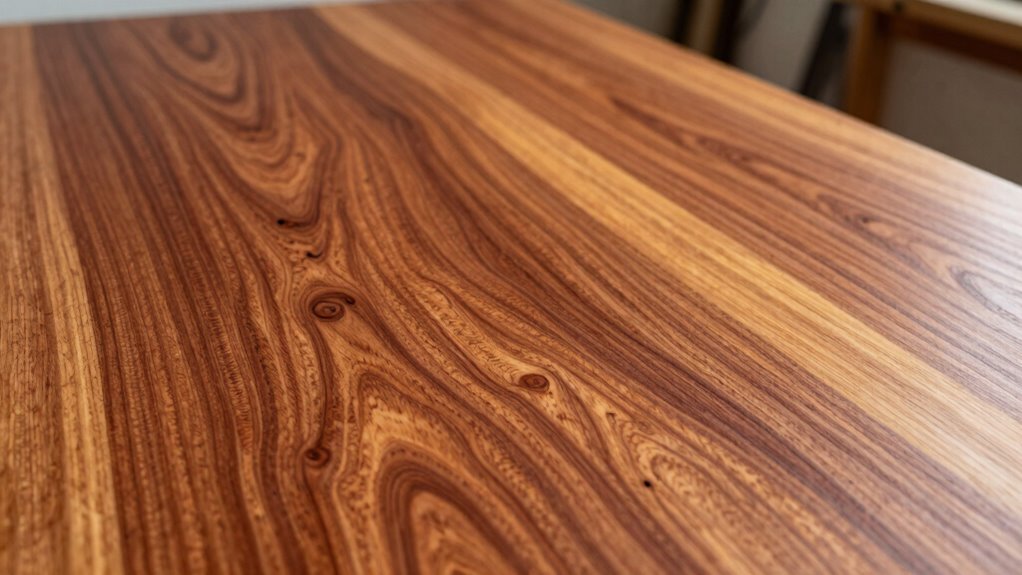

When you work with cherry wood, you’ll notice its color starts with a warm, rich red tone that immediately catches your eye. Over time, the wood naturally lightens to a softer, golden hue through a slow oxidation process. This shift can surprise new builders who expect the initial color to stay the same. Understanding this transformation helps you plan for future aesthetics. If you keep exploring, you’ll find more about how to embrace cherry wood’s beautiful aging process.
Key Takeaways
- Cherry wood initially displays a rich red-pink tone that gradually lightens to a golden hue over time.
- The natural aging process causes subtle color changes, which can surprise builders expecting permanent initial color.
- Stains and finishes influence how much the wood’s color shifts during aging.
- Predicting final color requires understanding cherry wood’s natural oxidation and aging characteristics.
- Embracing the color transformation adds character and uniqueness to cherry wood projects.
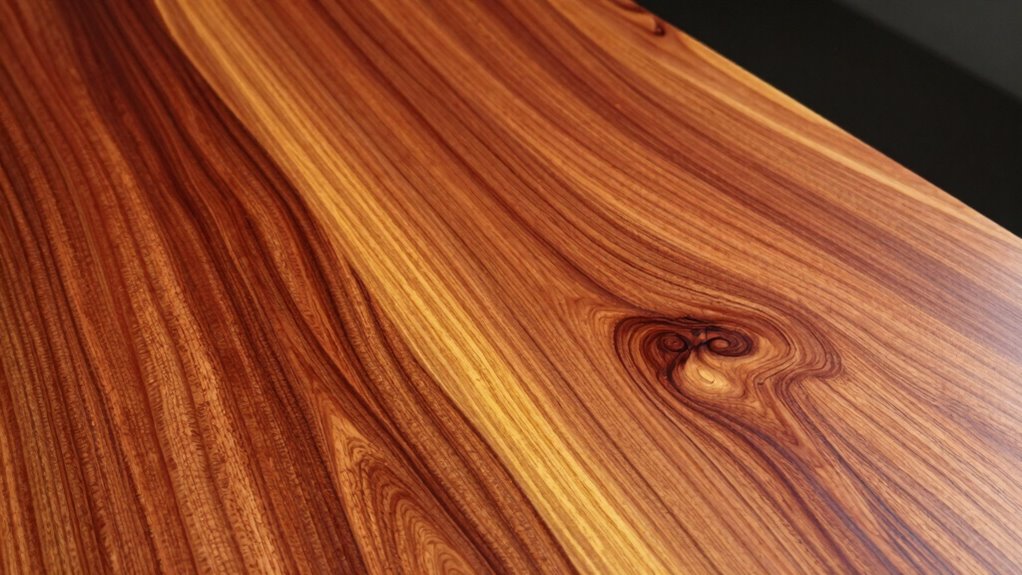
Have you ever noticed how cherry wood changes color over time? When you first work with it, the rich, warm hue can seem almost perfect—deep reds and pinkish undertones that bring a cozy feel. But as you progress through the project, you’ll realize that this beauty isn’t static. The aging process of cherry wood reveals unexpected shifts, which can surprise even seasoned builders. Initially, you might apply a stain to enhance its color or to match other woods in your design. The stain application can deepen the existing tones, creating a polished look right out of the gate. However, the true transformation begins after the piece is finished and exposed to light and air over months or years.
Cherry wood’s rich color evolves naturally over time, adding character and depth to your finished piece.
As cherry wood ages, it gradually lightens, leaning toward a softer, golden hue. This natural shift can catch builders off guard, especially if they’re expecting the original rich reds to stay put. The aging process involves a slow oxidation that alters the wood’s pigments, giving your project a warm, antique feel over time. This change isn’t abrupt but rather a subtle evolution that adds character and depth. It’s important to understand that the initial stain application influences how the wood will age. For example, a darker stain might mask some of the lightening, preserving a richer, more dramatic look longer, while a lighter stain allows the golden tones to shine through more prominently as the wood ages.
You might think about finishing techniques or sealants that can slow down or modify this natural color shift, but most builders accept that aging is part of cherry wood’s charm. It’s a living material that evolves, adding an element of surprise to each project. To better predict how your piece will change, observing how the color shift over time occurs can be very helpful. If you’re designing furniture or cabinetry, you’ll find that the changing hues can either enhance the piece’s character or require you to plan for future color adjustments. It’s also useful to understand how wood aging influences the long-term aesthetics of your project. It’s a good idea to observe how your specific piece reacts to light and air over time, especially if you want to predict its final appearance. Additionally, understanding the aging process helps in selecting the right finishes and stains to achieve your desired look.
Embracing the natural transformation of cherry wood means appreciating its evolving beauty rather than trying to control it entirely. The initial stain application sets the stage, but the true beauty unfolds gradually as the wood matures. It’s this unpredictable change that makes cherry wood so beloved—each piece becomes uniquely yours as it transforms, revealing a depth that can’t be replicated by artificial means. Recognizing the natural color change in cherry wood can also help you plan your project timeline and expectations more accurately.

DWIL Water Based Wood Stain – Multiple Finishes, Fast Drying, Indoor and Outdoor Furniture, Wood Paneling, Cabinets and More, Low Odor & Non-Toxic (8.5oz Red Cherry)
- One-Coat Application: Provides natural matte finish in one coat
- Fast Drying: Dries quickly with excellent coverage
- Indoor & Outdoor Use: Suitable for furniture, cabinets, floors, and more
As an affiliate, we earn on qualifying purchases.
As an affiliate, we earn on qualifying purchases.
Frequently Asked Questions
How Long Does the Color Shift Typically Take to Occur?
The color shift in cherry wood usually takes several months to a few years, depending on factors like natural aging and chemical reactions. As the wood is exposed to sunlight and air, its natural aging process causes the rich, reddish hue to deepen and develop a warm patina. Consistent exposure accelerates the process, while indoor environments may slow it down. Patience is key to witnessing this beautiful transformation.
Does the Color Change Affect Cherry Wood’s Durability?
Think of cherry wood’s color change like a sunset transforming the sky—beautiful but natural. The shift doesn’t weaken the wood’s durability; finish aging and surface treatments can actually enhance its strength. As the finish matures, it forms a protective barrier, maintaining durability despite the color evolution. So, your cherry wood piece remains sturdy, with its changing hue adding character, not compromising its resilience over time.
Can the Color Shift Be Prevented or Controlled?
You can help prevent or control the cherry wood color shift by applying proper wood treatments and protecting it from environmental factors. Using sealants or finishes designed for cherry wood can stabilize its color, while avoiding excessive sunlight, moisture, and temperature fluctuations minimizes natural changes. Regular maintenance and choosing the right protective products guarantee your cherry wood retains its desired hue longer, reducing surprises and keeping your project looking great.
Is the Color Shift Visible on All Cherry Wood Varieties?
Yes, the color shift is visible on all cherry wood varieties, but its prominence varies based on the grain pattern and finish you choose. Some varieties have more pronounced grain patterns that accentuate the shift, while others are subtler. To minimize surprises, select a finish that enhances the wood’s natural tone and consider how the grain pattern interacts with the color change over time. This way, you can better predict and control the overall look.
How Does Lighting Influence the Cherry Wood Color Shift?
Lighting plays a vital role in how cherry wood’s color shift appears, affecting its finish luster and grain pattern visibility. Bright, direct light enhances the rich, warm tones and highlights the grain pattern, making the color shift more noticeable. On the other hand, softer or dim lighting dulls the finish luster, minimizing the shift. To appreciate cherry wood’s full beauty, consider different lighting conditions during your project.
Conclusion
As you continue your journey with cherry wood, you’ll notice its gentle transformation over time, offering a subtle dance of shades that adds depth and character. Embrace this natural evolution, for it’s a quiet reminder that beauty often unfolds gradually, rewarding your patience. With each passing day, your piece becomes more than just craftsmanship—it becomes a story woven with warmth and timeless grace. Trust in this gentle shift; it’s part of the wood’s quiet charm.