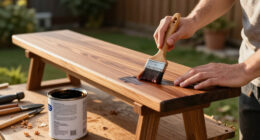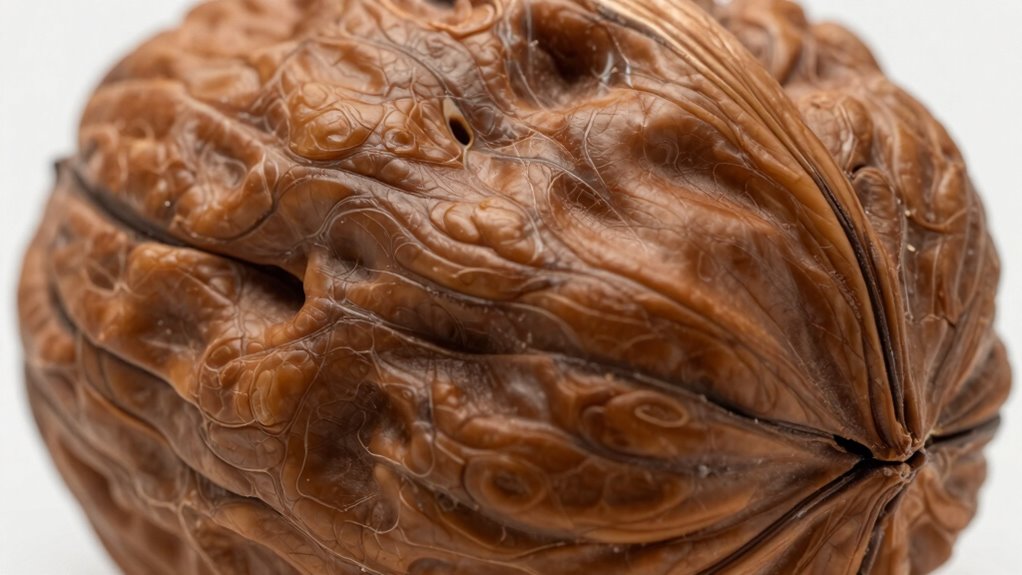

Your experience with walnut’s unique feel under finish comes from its cellular structure and natural oils that create a smooth, buttery surface. Its tight grain pattern reflects light differently, giving it a sophisticated look, while the oils resist scratches and help the finish penetrate evenly. Over time, this combination develops a rich patina, enhancing its beauty and durability. To discover what else makes walnut so distinct, keep exploring its fascinating properties.

Get tools and workshop supplies delivered free — and shop member deals
- Fast, free delivery on millions of items
- Access to Prime Big Deal Days deals on October 6–7
- Prime Video, Amazon Music and more included
Key Takeaways
- Walnut’s natural oils create a smooth, slightly buttery feel that enhances the tactile experience under finish.
- Its cellular structure contributes to a velvety surface after proper sanding, affecting how it feels to the touch.
- The oily composition provides a resilient surface that resists scratches and dents, maintaining its feel over time.
- The fine grain pattern results in a consistent, refined texture that feels uniform under finish.
- Walnut’s natural oils influence how finishes sit, resulting in a unique tactile sensation compared to other woods.
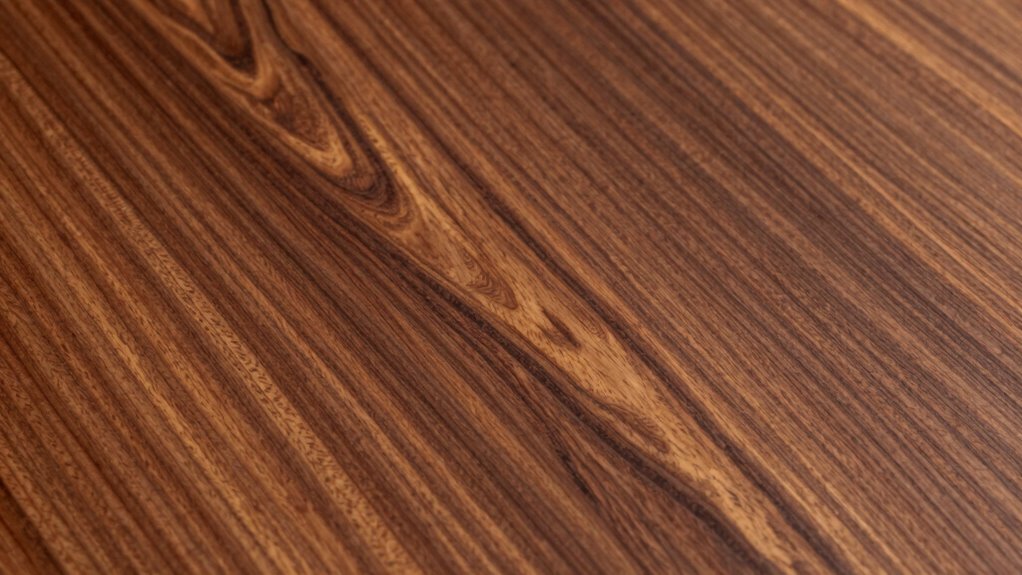
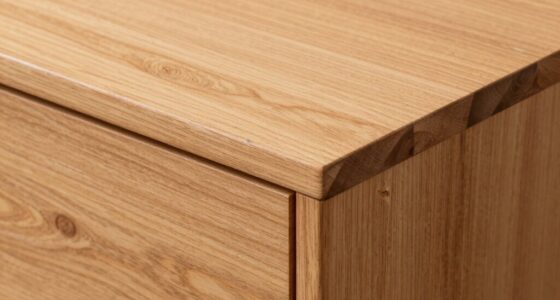
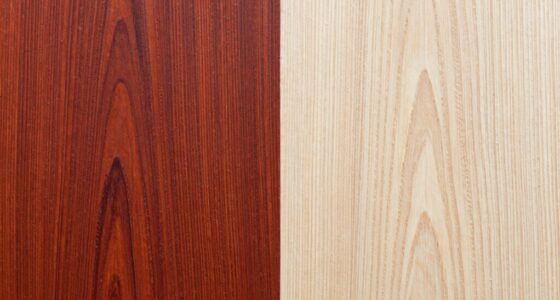
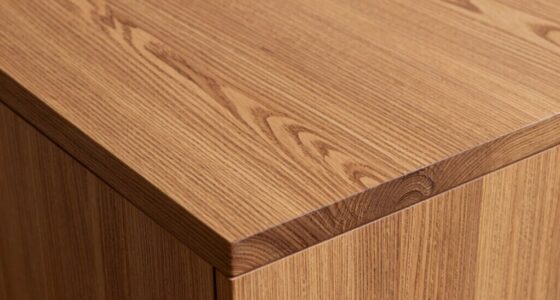
Walnut feels distinctly different under finish because of its unique cellular structure and natural properties, which influence how it absorbs and reacts to finishing materials. When you apply a finish, you’ll notice that the way the grain pattern appears and the surface texture feels is unlike other woods. Walnut’s tight, fine grain pattern gives it a sleek, sophisticated look with subtle variations that catch the light differently depending on the finish you choose. This grain pattern is not just aesthetic; it also affects how the surface absorbs stain or oil, creating depth and richness that are hard to replicate in other species.
Walnut’s fine grain and natural oils create a rich, deep finish with unique depth and sophistication.
As you work with walnut, you’ll observe that its surface texture plays a crucial role in how it responds to finishes. The wood’s smooth surface, combined with its naturally oily composition, allows finishes to sit evenly without blotching or uneven absorption. This consistent surface texture means you can expect a more uniform finish, whether you’re applying oil, varnish, or lacquer. The natural oils in walnut act as a barrier, slowing absorption and resulting in a finish that highlights the wood’s inherent beauty rather than masking it. This characteristic makes walnut particularly popular for high-end furniture, where the finish enhances the rich, dark hues and intricate grain details.
The interplay between the grain pattern and surface texture also influences the feel of the finished piece. Walnut’s surface feels smooth and refined, often with a slight buttery quality under your fingertips. Because of its fine grain and oily surface, it resists minor scratches and dents better than more porous woods, helping your finish last longer without showing wear. When you sand walnut properly, the surface becomes velvety, allowing finishes to penetrate just enough to enhance its natural luster without creating a sticky or uneven surface. Additionally, understanding finishing techniques can further improve the final appearance and durability of your project. Knowing how wood properties affect finishing outcomes can help you choose the right products and application methods for optimal results.
Furthermore, the natural properties of walnut mean that it reacts uniquely during finishing. It tends to deepen in color when exposed to certain finishes, especially oils and stains, revealing more of the grain pattern’s subtle variations. This deepening effect enhances the visual depth and richness, making each finished piece uniquely striking. The cellular structure of walnut also contributes to its ability to develop a beautiful patina over time, further emphasizing its distinctive appearance. In the end, walnut’s distinctive cellular structure, combined with its grain pattern and surface texture, creates a finish that’s not only beautiful but also durable, emphasizing why it feels so different and special under finish compared to other woods.
As an affiliate, we earn on qualifying purchases.
Frequently Asked Questions
Does Walnut’s Grain Affect Its Tactile Feel?
Yes, walnut’s grain pattern markedly affects its tactile feel. The rich, varied grain creates a textured surface that can feel more complex and interesting to your touch. Additionally, the surface smoothness depends on how well the wood is sanded and finished; a finely sanded walnut feels sleek and polished, enhancing its natural grain pattern. So, both grain pattern and surface smoothness combine to give walnut its unique, tactile character.
How Does Moisture Content Influence Walnut’s Surface Texture?
Moisture content directly impacts walnut’s surface texture, influencing its surface smoothness. When moisture levels are high, the wood tends to feel rougher or more uneven because the fibers are swollen and uneven. As the moisture dries out, the surface becomes smoother, revealing a finer tactile feel. Maintaining ideal moisture levels guarantees a consistent surface texture, making walnut feel more refined and pleasant to touch under finish.
Are There Specific Finishing Techniques That Alter Walnut’s Feel?
Yes, you can use specific finishing techniques to alter walnut’s feel. Applying a fine sanding sealer smooths the surface, enhancing the wood aroma and highlighting the visual grain. Using oil finishes like tung or Danish oil penetrates deeply, making the surface feel softer and richer. Gel stains can also change the texture slightly, giving a more tactile experience while emphasizing the natural grain and aroma that make walnut unique.
Does Walnut’s Age Impact Its Softness or Hardness?
Walnut’s age definitely impacts its softness and hardness. As walnut ages, surface aging occurs, which can make it slightly softer and more pliable. Younger walnut tends to be harder and more resilient, while older walnut develops a richer, more textured feel due to natural surface aging. This aging process influences how the wood responds to finishing and how it feels to the touch, giving each piece a unique character.
How Does Walnut Compare to Other Woods in Sensory Feel?
You’ll notice walnut feels distinct from other woods because of its smooth, fine grain pattern and rich color variation. Its surface often feels softer and warmer to the touch, thanks to its dense but slightly oily texture. Compared to harder woods like oak, walnut offers a more luxurious, velvety sensation. Its unique grain pattern and subtle color shifts make it feel more refined and inviting under your hand.
Conclusion
In the end, walnut’s unique feel under finish is like a hidden treasure waiting to be discovered. Its rich, tight grain acts as a natural fingerprint, giving each piece its own personality. When you touch it, you’re not just feeling wood—you’re feeling history, character, and craftsmanship woven into every fiber. So next time you run your hand over walnut, remember, you’re embracing a piece of nature’s artistry that’s as distinctive as a fingerprint.
Halloween Picks
halloween
As an affiliate, we earn on qualifying purchases.