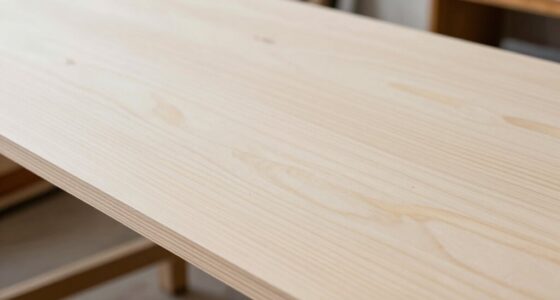

When choosing wood for looks over strength, focus on natural grain patterns, color, and how the wood ages. Look for species like cherry or walnut that develop rich, warm hues over time, or bold grains that add character. Consider how the wood’s natural features will harmonize with your design and environment. Keep in mind that understanding these visual qualities can help you select the perfect wood to enhance your project’s beauty. Explore further to find the ideal match.

Get business pricing on tools and workshop supplies
- Business-only prices and quantity discounts
- Tax-exempt purchasing
- Multiple users, one account, clear invoices
Key Takeaways
- Prioritize wood with desirable grain patterns, such as straight, swirling, or distinctive figures, to enhance visual appeal.
- Select species with natural color variations or rich hues that align with your aesthetic goals.
- Consider how the wood will age and develop character over time, maintaining beauty long-term.
- Match the wood’s natural features with your design environment for harmonious integration.
- Choose wood based on appearance and natural features, not solely on structural strength.
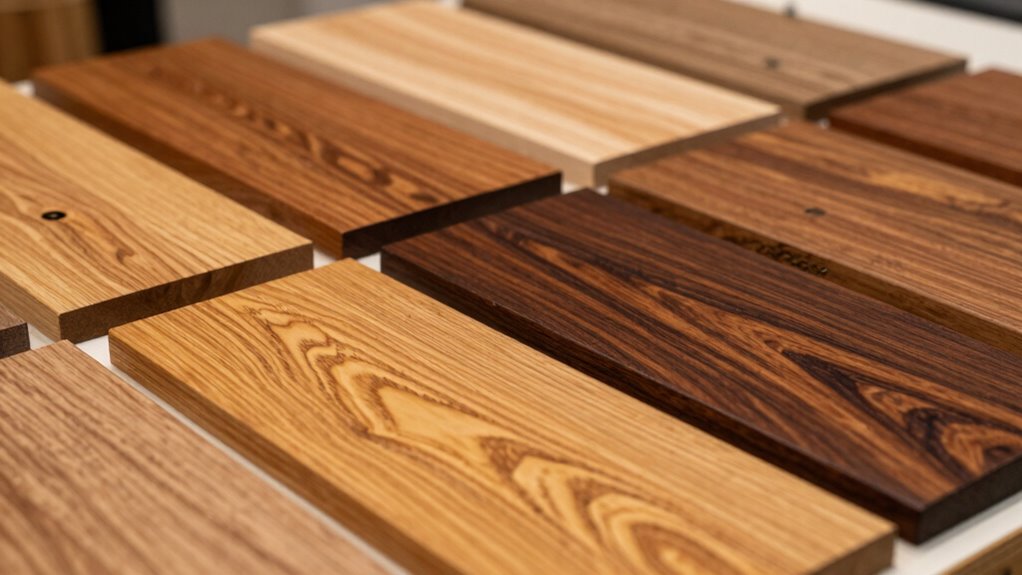
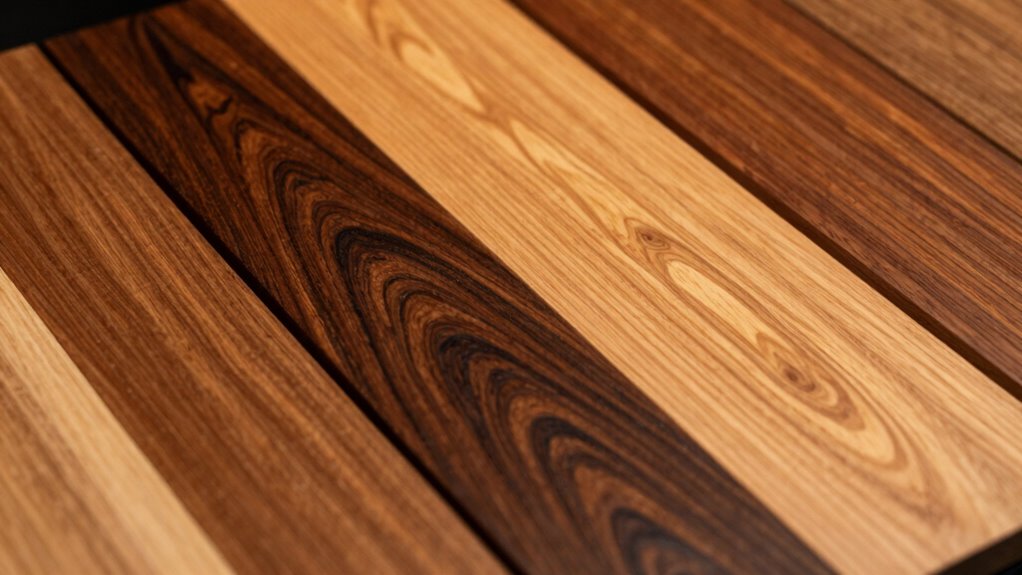
Selecting the right wood species is a crucial step in any woodworking project because it directly impacts the durability, appearance, and overall success of your finished piece. While strength is often a primary concern, focusing on aesthetics—like wood grain and wood coloring—can elevate your project from functional to beautiful. The wood grain pattern plays a significant role in how your piece looks. Some woods have tight, straight grains that provide a sleek, uniform appearance, perfect for modern designs. Others feature bold, swirling grains that add character and a sense of movement to your work. When you choose a wood with a distinctive grain, you’re not just selecting a material; you’re selecting a visual story that will be revealed through your craftsmanship.
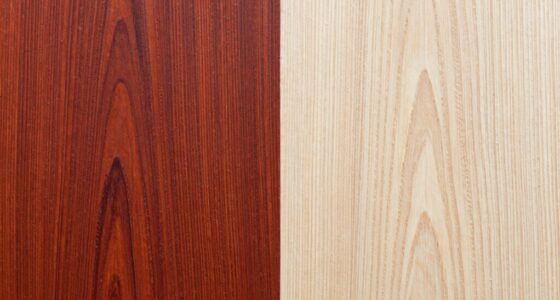
Wood coloring also influences the overall look. Certain woods, like cherry or walnut, develop rich, warm hues over time, adding depth and sophistication. Others, like maple or ash, have lighter, more neutral tones that can be stained or finished to match your desired aesthetic. If you’re aiming for a natural, rustic look, opt for woods with prominent grain patterns and varied coloring, which will highlight the natural beauty of the material. Conversely, if you prefer a sleek, uniform appearance, choose woods with consistent coloring and fine grain. The key is to match the wood’s natural hues with your design goals.
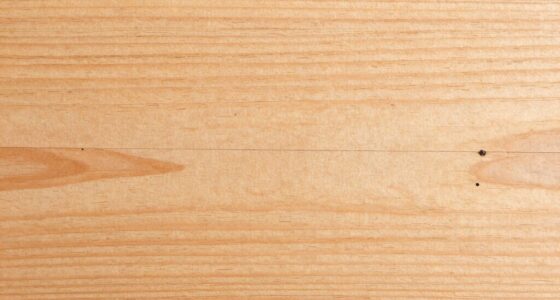
When selecting wood species based on appearance, consider how the wood will age and develop over time. Some woods, like oak or mahogany, maintain their color and grain pattern for decades, offering a timeless appeal. Others, like pine or cedar, might change more noticeably as they age, gaining character and depth. Understanding the natural characteristics of different woods can help you select one that aligns with your aesthetic vision. Additionally, knowing the visual appeal of various woods can guide you toward choices that truly enhance your project’s overall look. When choosing a wood, it’s also helpful to consider how its natural grain and color will harmonize with your intended finish and environment. Moreover, considering the effect of aging on the wood can ensure your project retains its beauty over time. Being aware of a wood’s natural variation can help set realistic expectations for the final appearance as it develops.
wood species for aesthetic woodworking
As an affiliate, we earn on qualifying purchases.
As an affiliate, we earn on qualifying purchases.
Frequently Asked Questions
How Do I Match Wood Color With Existing Furniture?
To match wood color with existing furniture, start by identifying the wood tone, whether warm, cool, or neutral. Use color coordination principles to find shades that complement or contrast tastefully. Consider bringing a sample of your furniture when shopping for new wood pieces, so you can compare hues directly. Opt for finishes or stains that enhance the natural color, creating a cohesive look across your space.
Are Exotic Woods More Visually Appealing Than Domestic Ones?
Exotic woods are often more visually appealing than domestic ones, thanks to their striking grain contrast and exotic textures that seem to dance with light. Their unique colors and intricate patterns can transform a piece into a true masterpiece, elevating your space to artful heights. While domestic woods offer beauty too, exotic species captivate the eye with their bold, luxurious character, making them the ultimate choice for those craving extraordinary visual impact.
How Does Grain Pattern Affect the Overall Appearance?
Grain pattern markedly influences a wood’s overall appearance. You’ll notice that high grain contrast creates striking visual interest, emphasizing the wood’s natural beauty. Texture variation adds depth, making your piece more dynamic and inviting. When selecting wood, consider how the grain pattern aligns with your aesthetic goals—whether you prefer bold, contrasting lines or subtle, uniform textures—to guarantee your project looks balanced and visually appealing.
What Finishes Enhance the Natural Look of Different Woods?
To enhance the natural look of different woods, opt for finishes that highlight grain texture and color variation. Clear oils and varnishes deepen the wood’s natural hue while showcasing its grain pattern. Use matte or satin finishes to preserve a soft, natural appearance, avoiding high-gloss options that can obscure the wood’s organic beauty. Applying these finishes thoughtfully helps you appreciate the unique character of each wood type.
Can Wood Species Influence the Perceived Style or Era of Furniture?
Choosing the right wood species can totally teleport your furniture to a specific era or style. You’ll find that certain woods evoke historical authenticity, like oak for traditional charm or teak for mid-century modern flair. Wood also carries cultural symbolism, making your pieces a reflection of history and identity. By selecting the right species, you can craft furniture that feels timeless and resonates with a particular era or cultural vibe, transforming your space dramatically.
Conclusion
When selecting a wood species based on looks rather than just strength, remember that your choice influences both the aesthetic appeal and the unique character of your project. Did you know that hardwoods like walnut and cherry are often chosen for their rich grain patterns and warm hues, making up only about 20% of commercially available woods? By prioritizing beauty alongside durability, you’ll create a piece that’s not only strong but also stunning—truly a reflection of your personal style.
Halloween Picks
halloween
As an affiliate, we earn on qualifying purchases.