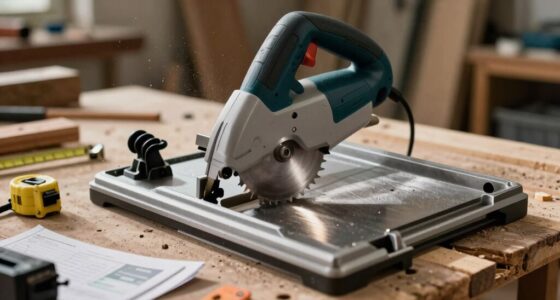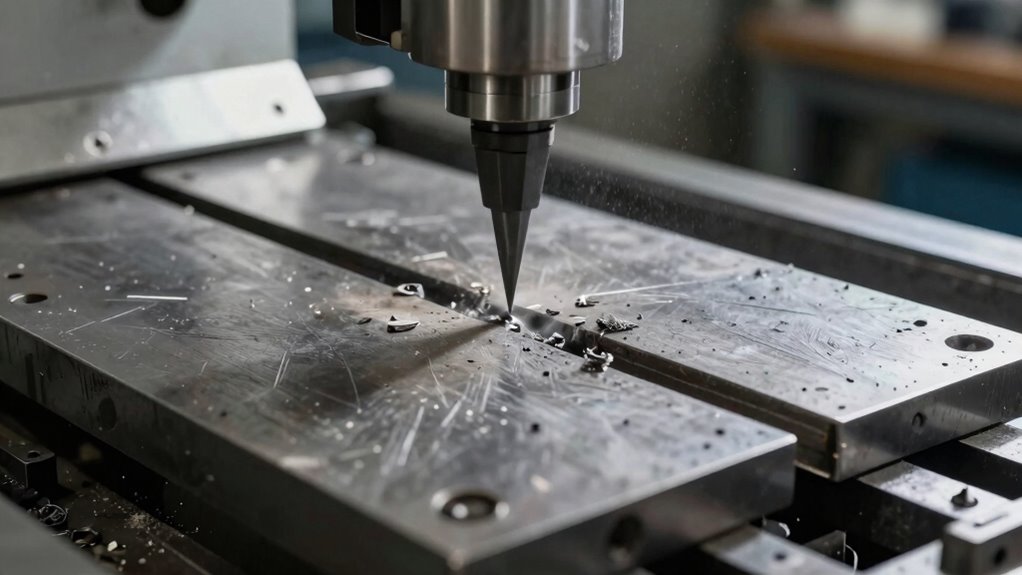

A spoilboard setup changes CNC results quickly because it guarantees precision and stability during machining. It supports your workpieces, absorbs cutting forces, and minimizes vibrations, which leads to a better finish quality. The right spoilboard material and proper leveling can dramatically enhance your machining efficiency and accuracy. Poor maintenance can lead to uneven surfaces, impacting your final product. If you want to boost your CNC results, there’s more to explore about spoilboard selections and maintenance techniques.

Get business pricing on tools and workshop supplies
- Business-only prices and quantity discounts
- Tax-exempt purchasing
- Multiple users, one account, clear invoices
Key Takeaways
- A well-set spoilboard absorbs cutting forces, reducing vibrations that can negatively impact finish quality.
- Proper leveling ensures consistent cutter height, leading to accurate and uniform cuts across the workpiece.
- Material choice affects machining performance; specific materials enhance stability and durability for various projects.
- Regular maintenance prevents wear and tear, ensuring a smooth surface for reliable cutting and minimizing unexpected results.
- A properly configured spoilboard enhances overall CNC operation efficiency, leading to quicker and better project outcomes.
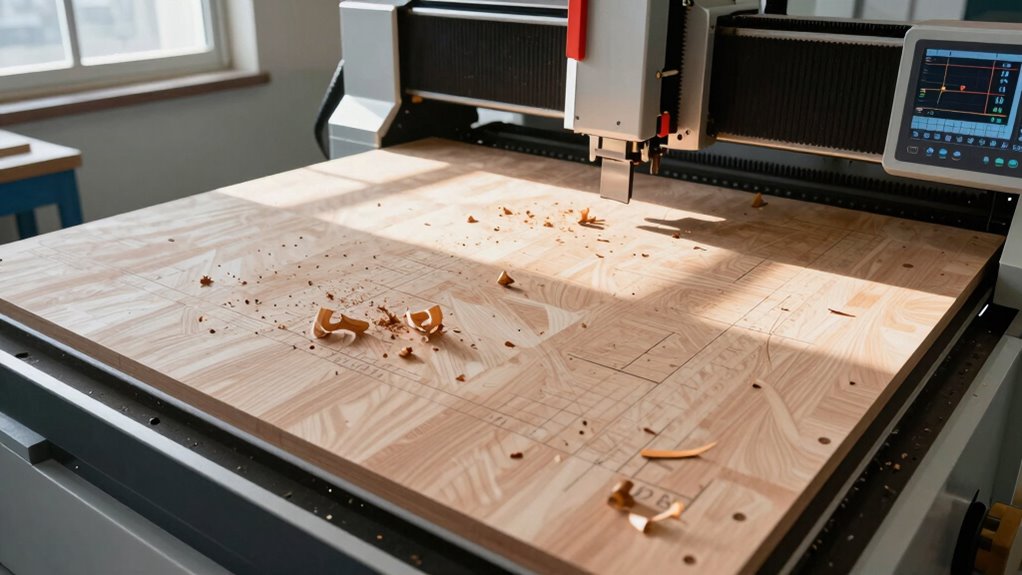
Setting up a spoilboard for your CNC machine is vital for achieving precision and consistency in your projects. A well-prepared spoilboard not only supports your workpieces but also absorbs some of the cutting forces, minimizing vibrations and improving the overall finish. When you choose the right spoilboard materials, you set the stage for better machining results. Common materials include MDF, plywood, or even phenolic boards, each offering unique benefits. MDF, for example, provides a smooth surface that can be easily machined, while plywood offers durability.
Spoilboard maintenance is another significant aspect that directly impacts your CNC results. Regularly checking your spoilboard for wear and tear can save you headaches down the line. If you notice grooves or uneven surfaces, it’s time to flatten the spoilboard and maintain its integrity. This not only prolongs the life of your spoilboard but also guarantees that you’re working with a reliable surface. A well-maintained spoilboard keeps your cuts accurate, preventing any unwanted surprises in your final product. Additionally, understanding the material properties of your spoilboard can help you select the best options for specific projects. Proper spoilboard setup ensures your CNC operates efficiently and produces high-quality results. Regularly checking for wear and maintaining your spoilboard also contributes to longer-lasting and more reliable machining. To ensure optimal results, it’s equally important to level your spoilboard carefully before beginning your work.
As an affiliate, we earn on qualifying purchases.
Frequently Asked Questions
How Often Should I Replace My Spoilboard?
You should replace your spoilboard every few months, depending on your usage and spoilboard type. For instance, a plywood spoilboard might wear out faster than a composite one. Regular spoilboard maintenance, like flipping or resurfacing, can extend its life, but keep an eye on any deep grooves or damage. If you notice inconsistency in your cuts, it’s probably time for a new spoilboard. Stay proactive to guarantee peak performance!
Can I Use Different Materials for Spoilboards?
Absolutely, you can use different materials for spoilboards. While MDF is popular for its smooth surface, plywood offers durability. However, material compatibility is key; mismatched materials can negatively affect CNC performance. Each spoilboard type has unique benefits, so consider what fits your projects best. Regular spoilboard maintenance, like sanding and replacing when needed, guarantees peak results. Experimenting with various materials can enhance your setup, leading to improved accuracy and efficiency in your CNC work.
What Is the Ideal Thickness for a Spoilboard?
The ideal thickness for a spoilboard is typically around 1 to 2 inches, depending on your CNC setup. Thicker spoilboard materials provide more stability and durability, which helps during machining. Regular spoilboard maintenance is essential; resurfacing your board keeps it flat and extends its lifespan. If you choose different materials, make sure they can withstand the forces from your cuts. This way, you’ll achieve consistent and accurate results every time.
How Do I Level My Spoilboard Accurately?
To level your spoilboard accurately, start by using a reliable leveling technique like a dial indicator or a straight edge. Place it across the spoilboard and adjust the height at various points until it’s even. Regular spoilboard maintenance is key; check for wear and tear, and resurface when necessary. This will guarantee your CNC machine produces precise results, keeping your projects consistent and high-quality every time you cut.
Can Spoilboard Damage Affect Tool Life?
Yes, spoilboard damage can wreak havoc on tool life! If your spoilboard isn’t properly maintained, it can create uneven surfaces that stress your tool material, leading to premature wear. Imagine your tools working overtime, fighting against the chaos of a damaged spoilboard. Regular spoilboard maintenance is essential; it guarantees your tools stay sharp and efficient, drastically extending their lifespan. Don’t let neglect cost you more in the long run!
Conclusion
In the world of CNC machining, a spoilboard setup isn’t just important—it’s downright revolutionary! It’s like giving your machine a magic wand that transforms mediocre cuts into masterpieces in the blink of an eye. One slight adjustment, and suddenly, you’re not just a hobbyist; you’re a woodworking wizard! So, don’t underestimate the power of that seemingly simple board—it’s the secret sauce that can catapult your projects from ordinary to extraordinary, leaving you breathless with every cut!
Fall yard work Picks
leaf blowers
As an affiliate, we earn on qualifying purchases.