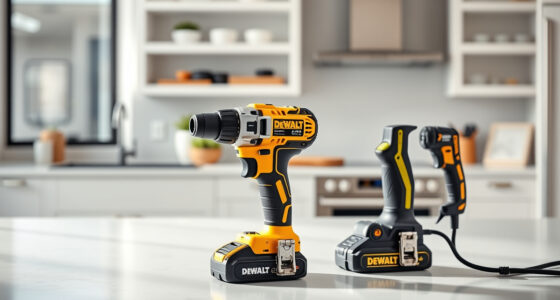
In a real shop, “flat, square, and straight” mean your workpieces are free of warps or bends, ensuring accurate assembly and reliable results. You use properly calibrated tools to measure and cut precisely, avoiding costly mistakes. Consistent materials and careful handling help maintain these qualities throughout your project. Mastering these fundamentals makes your craftsmanship strong and professional. If you want to discover how to consistently achieve these standards, keep exploring these essential techniques.

Get business pricing on tools and workshop supplies
- Business-only prices and quantity discounts
- Tax-exempt purchasing
- Multiple users, one account, clear invoices
Key Takeaways
- Flatness ensures surfaces are even, preventing gaps or misalignments during assembly.
- Squareness guarantees corners and edges meet at right angles for accurate fitting.
- Straightness maintains correct alignment along edges and surfaces, avoiding warping or curves.
- Proper calibration of tools is essential for measuring and verifying flat, square, and straight qualities.
- Consistent handling and material quality control are vital for achieving and maintaining these standards.
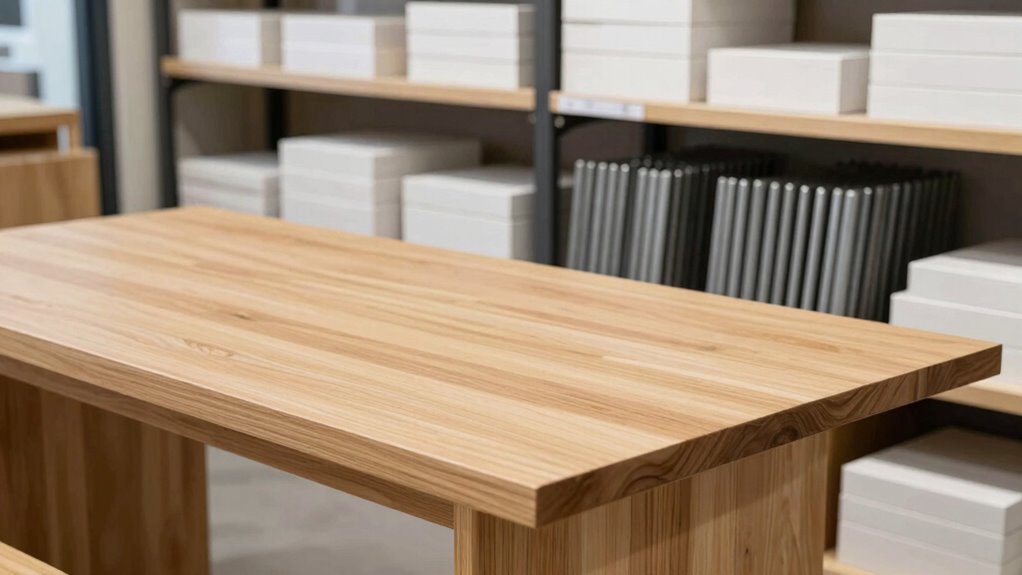
When you step into a real shop, you quickly notice that tools and materials often need to be flat, square, and straight to guarantee quality and precision. These qualities aren’t just about appearance—they’re fundamental to producing accurate, reliable work. To achieve this, you rely heavily on proper tool calibration, ensuring that your measuring instruments and cutting tools give correct readings and cuts every time. Without calibration, even the best tools become unreliable, leading to inaccuracies that can ruin projects. Regularly checking and adjusting your tools keeps them performing at their best, maintaining the necessary standards for precision work.
Material consistency is also key when aiming for flatness, squareness, and straightness. When materials like wood, metal, or plastic are uniform, it’s easier to achieve precise cuts and joints. Inconsistent materials, with warping, knots, or varying thickness, make it difficult to maintain these qualities. That’s why selecting high-quality, well-sorted materials is essential—so you can work with predictability and reduce waste. When materials are consistent, you spend less time correcting mistakes and more time focusing on the craftsmanship. Ensuring proper material quality control is crucial for reliable results in any project. Additionally, understanding the properties of different materials helps in choosing the right techniques for straightening or flattening them effectively.
Consistent, high-quality materials ensure precise work and minimize mistakes in craftsmanship.
In a real shop, measurements are only as good as your tools’ calibration. You routinely check your squares, levels, and measuring devices to guarantee they’re accurate. If a square is warped or a level is off, you risk building components that aren’t true, which compromises the entire project. Maintaining your tools through calibration guarantees that your measurements are trustworthy, and that your cuts and assemblies fit together perfectly. It’s a small step that pays off by preventing costly errors down the line. Proper tool calibration is an ongoing process that ensures your work remains consistent and precise over time.
Straightness and flatness also involve how you handle materials during processing. You might need to flatten a warped board or straighten a bent piece of metal. This often requires careful planing, sanding, or straightening techniques, combined with the right tools calibrated for accuracy. When your tools are properly calibrated, you can confidently make adjustments knowing that your measurements and cuts are correct. This process ensures that each piece aligns perfectly, reinforcing the importance of tool calibration and material consistency in achieving high-quality results. Moreover, proper handling techniques can prevent damage that might compromise these qualities before processing even begins.
Ultimately, “flat, square, and straight” in a real shop aren’t just ideals—they’re standards rooted in meticulous tool calibration and careful material selection. When you pay close attention to these elements, you set yourself up for success. Your work becomes more precise, dependable, and professional. It’s these small but essential details that turn good craftsmanship into great craftsmanship, where every piece fits perfectly and every project stands the test of time.
As an affiliate, we earn on qualifying purchases.
Frequently Asked Questions
How Often Should Tools Be Calibrated for Accuracy?
You should calibrate your tools regularly to maintain accuracy, typically every 3 to 6 months, depending on usage and manufacturer guidelines. Consistent tool maintenance is essential, especially for precision equipment. If your tools are used daily or for critical measurements, consider more frequent calibration. Always track calibration schedules and perform checks before important jobs to verify your tools stay flat, square, and straight, guaranteeing quality and safety in your work.
What Are Common Mistakes When Measuring Flatness?
You might think measuring flatness is easy, but even tiny surface deviations can cause big issues. Common mistakes include ignoring calibration, using improper measurement techniques, or applying too much pressure with tools. You may also overlook environmental factors like temperature. To avoid errors, make sure your tools are calibrated, use consistent measurement techniques, and handle surfaces carefully. This way, your measurements stay accurate and reliable, preventing costly mistakes down the line.
Can These Standards Vary by Industry?
Yes, these standards can vary by industry. You need to take into account industry-specific tolerances, which dictate acceptable flatness, squareness, and straightness levels. Additionally, measurement technique variations can impact how you assess these qualities. For example, aerospace might demand tighter tolerances than general manufacturing. Always make sure you’re familiar with industry standards and adapt your measurement methods accordingly to meet the specific requirements of your field.
What Materials Are Most Challenging to Achieve Flatness?
Achieving flatness is like trying to tame a wild stallion—challenging and unpredictable. Materials with high hardness, like hardened steel or ceramics, are most difficult, as their surface finish resists shaping and grinding. Their innate toughness causes warping or uneven surfaces during machining. These materials demand meticulous control, precise tools, and patience, making it tough to attain the perfect flatness you’re aiming for in your project.
How Do Temperature Changes Affect Measurements?
Temperature changes impact your measurements because of thermal expansion. As temperatures fluctuate, materials expand or contract, causing slight variations in size. This affects measurement consistency, especially with precision tools. To maintain accuracy, you should regulate your shop’s temperature or account for thermal expansion when measuring. By understanding how temperature influences materials, you guarantee your measurements stay reliable, even in changing conditions, leading to better, more precise results in your work.
Conclusion
In a real shop, “flat, square, and straight” aren’t just ideals—they’re practical standards that guarantee quality and precision. When you understand these concepts, you’ll see how they shape every cut and joint, making your projects stronger and more accurate. Don’t just accept these terms blindly; test and trust your tools and measurements. Embracing their true meaning helps you enjoy crafting with confidence, knowing your work will stand the test of time and usage.
Evergreen bestsellers Picks
bestsellers
As an affiliate, we earn on qualifying purchases.