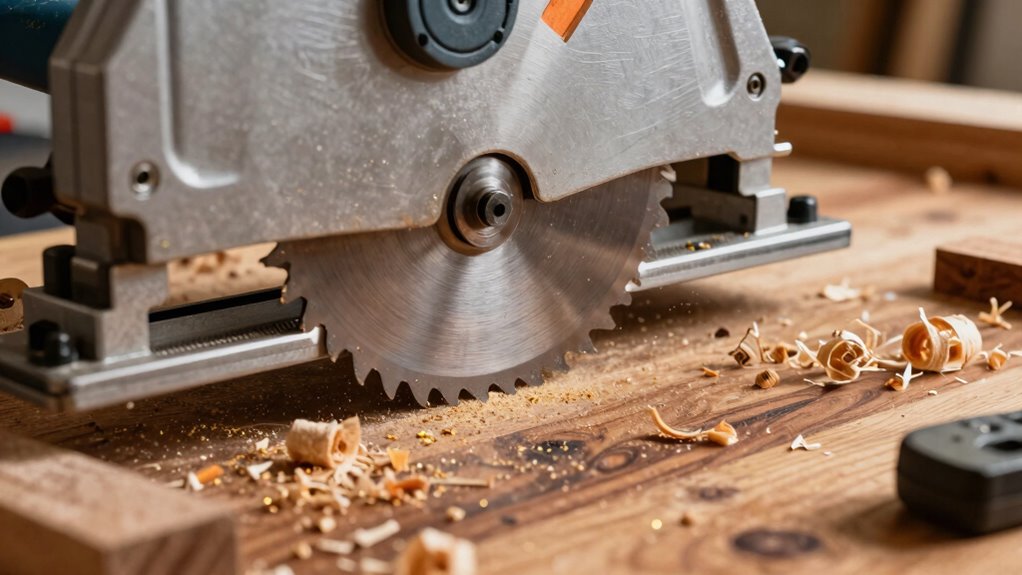

Choosing the right blade for your table saw is the first step in achieving quality cuts. You’ll want to evaluate the type of cuts you’ll be making, whether it’s ripping or crosscutting. Ripping blades are great for cutting along the grain, while crosscut blades provide a smoother finish. Each blade impacts your efficiency and the noise level in your workshop. Understanding this is essential. Stick around to discover more about optimizing your blade choices.

Get business pricing on tools and workshop supplies
- Business-only prices and quantity discounts
- Tax-exempt purchasing
- Multiple users, one account, clear invoices
Key Takeaways
- Choosing the right blade type affects the quality of cuts and overall woodworking efficiency.
- Ripping blades are best for cutting along the grain, speeding up ripping tasks.
- Crosscut blades feature higher tooth counts for clean, precise cuts across the grain.
- Dado blades are essential for creating grooves and saving time on joinery projects.
- Specialty blades are optimized for specific materials, enhancing durability and reducing waste.
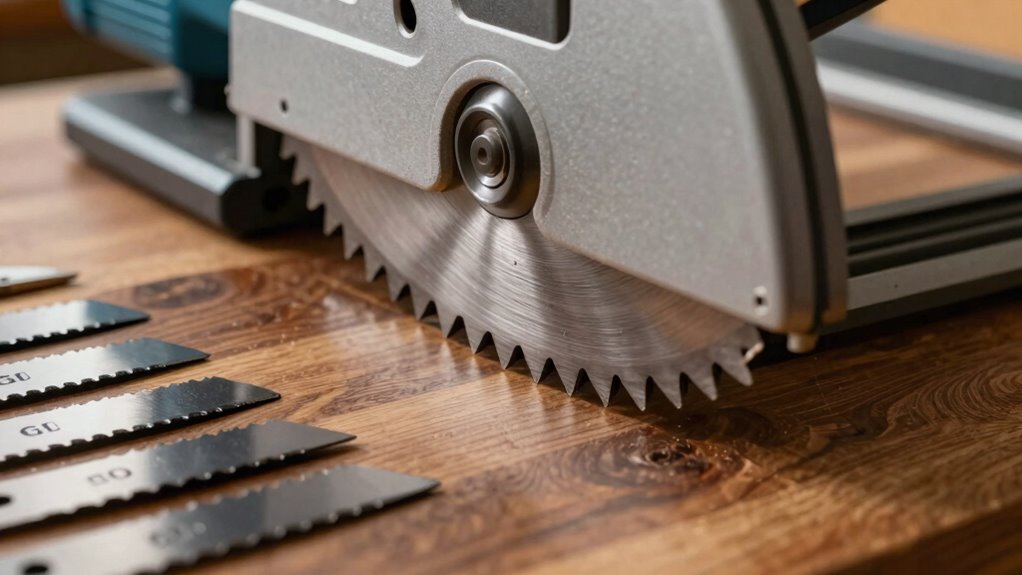
Choosing the right blade for your table saw can make all the difference in your woodworking projects. The blade you select directly affects the quality of your cuts, the efficiency of your work, and even the noise level in your shop. When you’re considering blade choice, think about the specific cuts you’ll be making. Ripping blades, for instance, are designed for cutting along the grain of the wood. They typically have fewer teeth, which means they remove more material with each pass. If you’re looking to speed up your ripping tasks, going for a ripping blade can be a smart move.
Choosing the right table saw blade is crucial for achieving quality cuts and enhancing your woodworking efficiency.
On the other hand, if you’re working on crosscuts, you’ll want to opt for crosscut blades. These blades have a higher tooth count and a different angle to guarantee a clean, smooth finish across the grain. Choosing the right tooth count is crucial here; more teeth generally lead to finer cuts, but they can also slow down the cutting process. Consider the balance between speed and finish quality based on your project needs.
Dado blades are another key option when you need to create grooves or cut wider slots. These blades come as a set, allowing you to customize the width of the cut by adjusting the number of blades you stack. If you’re tackling joinery or making shelving, dado blades can save you time and enhance accuracy.
For specialized tasks, you might want to explore specialty blades. These can include blades for laminate, aluminum, or other unique materials. Specialty blades often feature unique configurations and materials that optimize performance for specific applications. Pay attention to the blade materials, too—carbide tips are a popular choice due to their durability and ability to maintain sharpness longer than standard steel.
Kerf width is another important factor. A thinner kerf reduces waste and requires less power from your table saw, making it an efficient choice for many projects. If you’re concerned about noise, consider using blade stabilizers. These can help reduce vibration, leading to quieter operation and improved cut quality. Additionally, understanding the blade materials can help you select a more durable and effective option for your needs.
Ultimately, selecting the right blade for your table saw isn’t just about the cut; it’s about enhancing your overall woodworking experience. By understanding the nuances of ripping blades, crosscut blades, dado blades, and specialty options, you’ll be well-equipped to make informed decisions that elevate your projects.
As an affiliate, we earn on qualifying purchases.
Frequently Asked Questions
How Often Should I Change My Table Saw Blade?
You should change your table saw blade every 20 to 50 hours of cutting, depending on your cutting frequency and the materials you’re working with. If you notice reduced performance or ragged edges, it’s definitely time for a change. A blade’s lifespan varies, but regular checks can help you maintain efficiency. Keep an eye on the blade’s condition, and don’t hesitate to swap it out when it shows signs of wear.
Can I Use a Blade From Another Brand?
Yes, you can use a blade from another brand, but be mindful of compatibility concerns. Not all blades fit every table saw, so check the arbor size and mounting style. It’s often recommended to stick with reputable brands like Freud or DeWalt for consistent performance and durability. If you’re unsure, consult your table saw’s manual or manufacturer for guidance to guarantee you’re making a smart choice.
What Is the Best Blade for Cutting Hardwood?
For cutting hardwood, a high-quality carbide-tipped blade is your best bet. Did you know that carbide blades can last up to 50 times longer than steel blades? They effortlessly slice through hardwood grain, ensuring clean cuts without splintering. Look for a blade with a higher tooth count, around 40 to 60, to achieve smoother finishes. The right blade material not only enhances performance but also prolongs the life of your table saw.
How Do I Properly Clean a Table Saw Blade?
To properly clean your table saw blade, start by removing it from the saw. Use a soft brush to remove any dust and debris. Then, soak the blade in a cleaning solution designed for blade maintenance. After a few minutes, scrub any stubborn pitch or resin with a non-abrasive pad. Rinse the blade thoroughly and dry it completely before reattaching. Regular cleaning keeps your blade sharp and guarantees smoother cuts.
Does Blade Thickness Affect Cutting Performance?
Yes, blade thickness definitely affects cutting performance. Thicker blades typically have a wider kerf width, which means they remove more material during cutting. This can lead to a rougher edge and increased resistance. On the other hand, thinner blades, often made from high-quality materials, can provide cleaner cuts and reduce waste. Choosing the right blade material and thickness is essential for achieving the best results in your woodworking projects.
Conclusion
Choosing the right blade for your table saw is like selecting the right tool for a craftsman; it can transform your project. Whether you need a rip blade for cutting along the grain or a crosscut blade for smooth edges, your choice impacts both precision and finish. Don’t underestimate how a simple switch can elevate your work. So, next time you’re ready to cut, remember: the right blade is your ticket to woodworking success!
Fall yard work Picks
leaf blowers
As an affiliate, we earn on qualifying purchases.