Good woodworkers slow down before big cuts to guarantee they maintain control, accuracy, and safety. Rushing can lead to mistakes, uneven cuts, or even accidents, so they take their time to double-check how the wood is positioned, whether their tools are sharp, and if everything is aligned properly. This mindful approach helps prevent splintering and tear-out while improving craftsmanship. If you continue exploring, you’ll discover even more reasons why patience makes all the difference.
Key Takeaways
- Slowing down ensures accuracy and safety by allowing proper grain alignment and mistake prevention.
- Reduced speed helps assess tool condition and maintain control for smoother, precise cuts.
- Carefully approaching big cuts minimizes vibrations and enables micro-adjustments for a cleaner finish.
- Taking time to double-check setup and material stability prevents errors and potential injuries.
- Patience and deliberate movement reflect craftsmanship, leading to higher quality and safer woodworking.
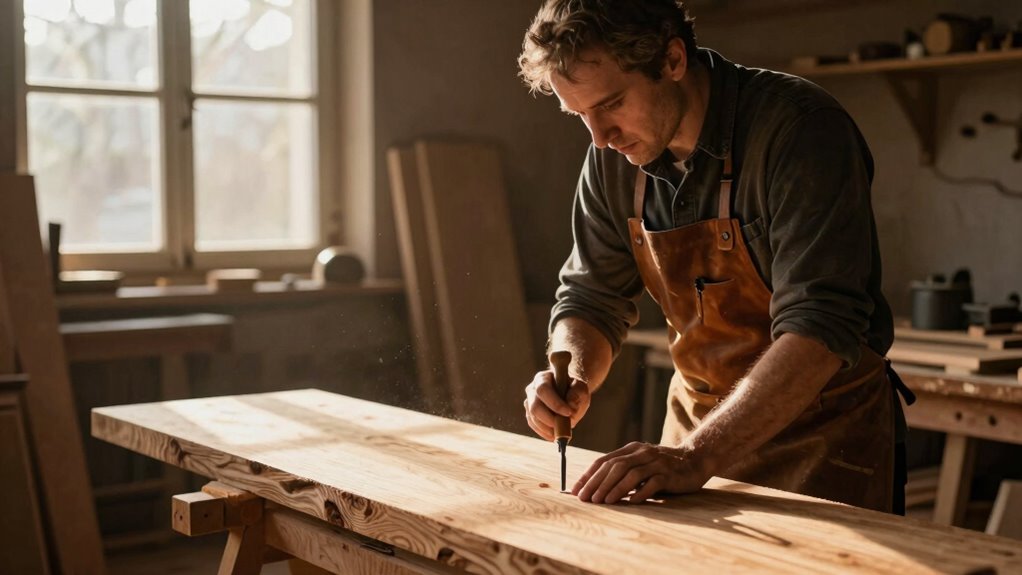
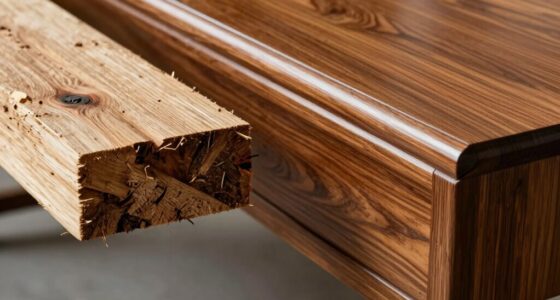
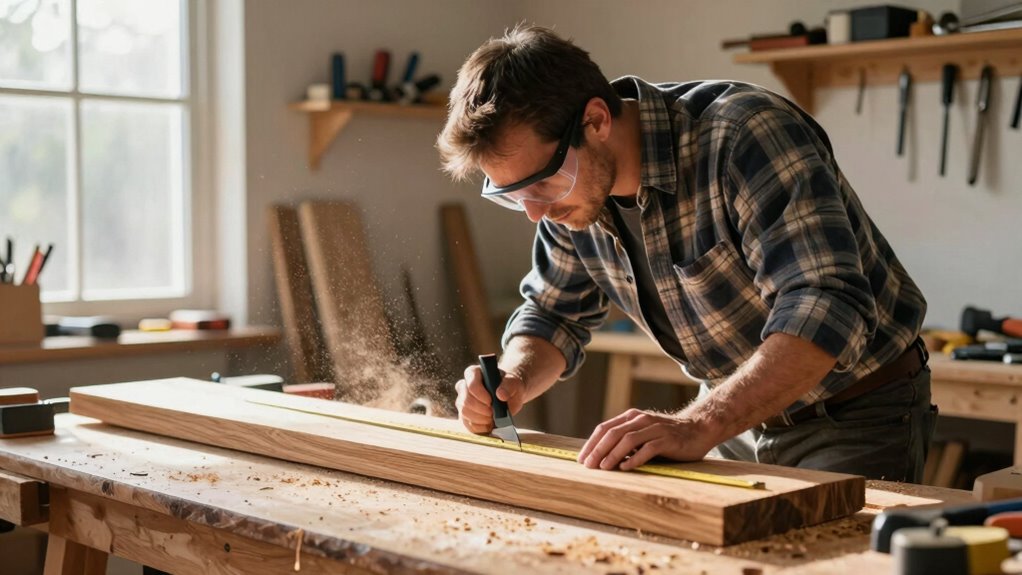
Many skilled woodworkers slow down before making a big cut, and it’s not just about being cautious—it’s a deliberate technique that guarantees precision and safety. When you approach a significant cut, you instinctively reduce your speed to verify every detail is perfect. This slowdown allows you to double-check the grain alignment, which is essential for a clean, professional finish. Proper grain alignment means positioning your wood so the cut follows the natural direction of the fibers, preventing splintering or tear-out. Rushing through this step risks damaging the material, especially during large cuts where mistakes are more costly.
Slowing down ensures precision, safety, and proper grain alignment for a clean, professional finish.
Slowing down also gives you a moment to assess your tools. Tool maintenance plays a critical role here; dull blades, dull saws, or misaligned blades can cause uneven cuts or dangerous kickbacks. When you take your time, you can double-check that your tools are sharp, clean, and properly adjusted. Sharp tools cut more smoothly, requiring less force and reducing the chance of slips. Proper tool maintenance isn’t just about safety—it’s about achieving the highest quality work. A well-maintained tool responds predictably, giving you greater control over your cut and allowing you to follow your marked lines accurately.
This deliberate slowing isn’t just a matter of caution but a strategic move to improve your craftsmanship. When you reduce your speed, you gain better control over the saw or cutting instrument. This control helps you stay aligned with your grain and follow your measurements precisely. It also minimizes the vibrations that can cause slight deviations, especially when working with thick or difficult woods. By moving deliberately, you can make micro-adjustments as needed, ensuring the cut is flawless. Additionally, mindful techniques can help you develop better focus and precision, which are essential for high-quality woodworking. Incorporating proper workspace organization can also enhance safety and efficiency during your projects. Recognizing the importance of sustainable practices can further contribute to a more eco-conscious and responsible craftsmanship.
Furthermore, taking your time before a big cut allows you to confirm your setup. You can double-check the placement of your wood, the alignment of your saw blade to your markings, and the stability of your workpiece. This preparation reduces the risk of errors that might ruin your piece or cause injury. In essence, slowing down is about respecting the process—acknowledging that patience often results in better results than rushing. When you prioritize proper grain alignment and keep your tools in top shape, your big cuts become safer, cleaner, and more precise, reflecting the skill and care that define a master woodworker. Incorporating biodiversity principles into your workspace can also foster a more sustainable and eco-friendly environment for your craftsmanship.

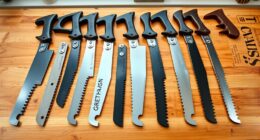
18 Pcs Coping Saw Blades 6-1/2 Inch Long Between Pins 15/18 / 24 TPI High Carbon Steel Scroll Saw Blade Set Wood Cutting Jig Saws Blades Replacement Pin End Saws Blade for Wood Plastic Cutting
- Precision serrated blades: Sharp serration for accurate cuts
- User-friendly design: Easy to use and replace
- Durable high-carbon steel: Long-lasting and reliable
As an affiliate, we earn on qualifying purchases.
As an affiliate, we earn on qualifying purchases.
Frequently Asked Questions
Do All Skilled Woodworkers Slow Down Before Large Cuts?
Not all skilled woodworkers slow down before large cuts, but many do as a safety precaution. They take extra time to double-check tool calibration and guarantee everything’s aligned perfectly. This slowdown helps prevent mistakes and accidents, especially with big, risky cuts. By slowing down, they prioritize precision and safety, reducing the chance of errors that could ruin the project or cause injury. Safety always comes first for experienced woodworkers.
How Can Slowing Down Improve the Quality of the Cut?
Think of slowing down as hitting the pause button in a delicate dance. When you reduce your pace, you gain better control, allowing for finer adjustments that improve finish precision. This careful approach minimizes slips or mistakes, enhancing safety and ensuring a cleaner cut. By taking your time, you turn a potentially rough cut into a smooth, precise masterpiece, ultimately elevating both the quality and safety of your woodworking project.
Is Slowing Down a Universally Recommended Practice?
Slowing down isn’t universally recommended, but it’s a wise technique for maintaining consistency and safety precautions. When you reduce your speed, you gain better control, leading to cleaner, more precise cuts. This approach minimizes mistakes and accidents, especially on big or tricky cuts. While some tasks may need quick work, adopting a slower pace often results in higher quality and safer woodworking, making it a valuable practice for most projects.
What Tools Benefit Most From Slowing Down?
You’ll find that power saws and routers benefit most from slowing down, as it enhances tool precision and safety margins. By reducing speed, you gain better control, reducing the risk of mistakes or accidents. Some might think rushing is faster, but decelerating ensures cleaner cuts and safer operation. This deliberate approach helps you maintain accuracy, especially on complex or larger projects, ultimately saving time and materials in the long run.
How Does Experience Influence the Need to Slow Down?
Your experience shapes how much you need to slow down, as it enhances your precision focus and safety mindfulness. With time, you naturally develop better control and awareness, allowing you to anticipate potential hazards and make deliberate, careful cuts. Less experienced woodworkers might rush, risking mistakes or injury. But as you gain expertise, slowing down becomes instinctive, ensuring each cut is accurate and safe, ultimately improving your craftsmanship.
Conclusion
So, next time you’re about to make a big cut, remember that slowing down isn’t hesitation—it’s a secret weapon. Like a skilled dancer easing into a move, good woodworkers temper their pace to guarantee precision and safety. By embracing this mindful pause, you’ll turn a simple cut into a masterpiece of control. After all, sometimes the quietest moments before a big step are what make the final result truly shine.