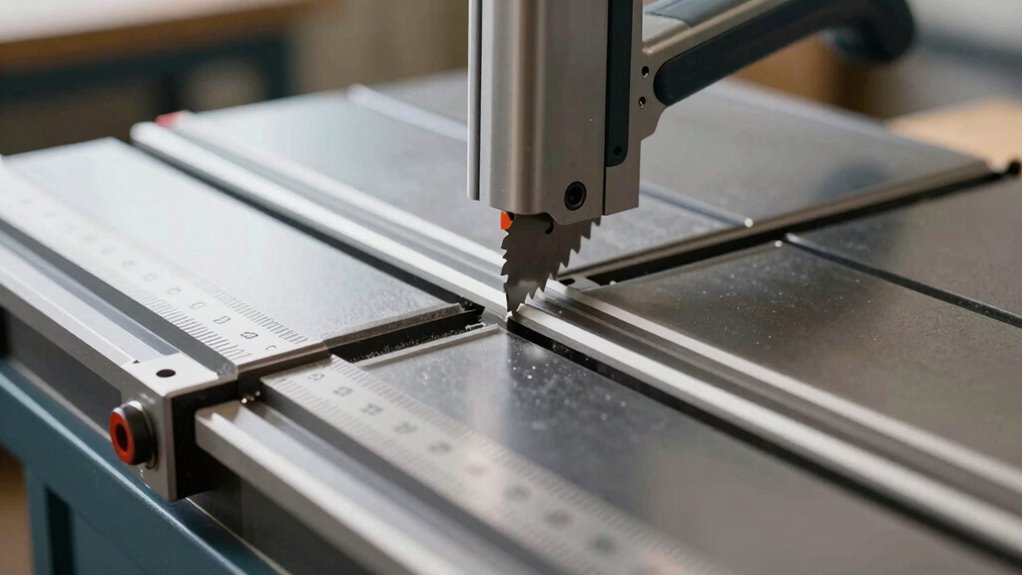

Don’t focus solely on fence alignment when predicting your table saw’s accuracy. Instead, invest in a high-quality, sharp, and well-aligned blade—this is the most overlooked factor that truly influences your cuts. A precise blade minimizes wandering and ensures cleaner, more consistent results, regardless of minor fence tweaks. If you keep these tips in mind, you’ll avoid common pitfalls and achieve better results every time. Keep going to discover the key details that make all the difference.

Get tools and workshop supplies delivered free — and shop member deals
- Fast, free delivery on millions of items
- Access to Prime Big Deal Days deals on October 6–7
- Prime Video, Amazon Music and more included
Key Takeaways
- Fence alignment alone is not a reliable predictor of overall table saw accuracy.
- Blade quality and sharpness are more critical for precise cuts than fence adjustments.
- Motor power and stability significantly impact cut accuracy, often more than fence tweaks.
- Overemphasizing fence alignment can lead to neglecting blade maintenance and motor performance.
- Prioritizing blade and motor specifications ensures consistent, high-quality results over fence adjustments.
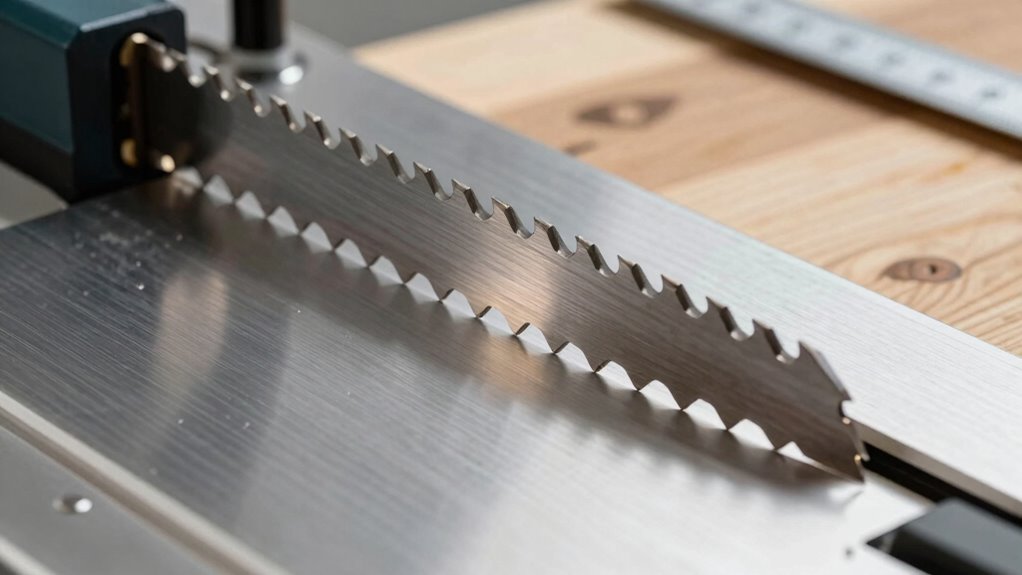
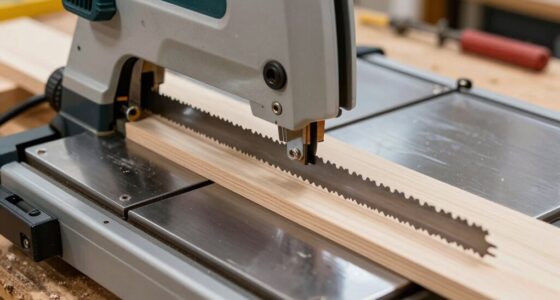
When choosing a table saw, many woodworkers focus on the blade’s precision, but there’s one spec you can safely ignore: the saw’s fence alignment. While a good fence ensures straight cuts, it’s not the best indicator of overall accuracy. Instead, your attention should be on blade precision and motor power. These two factors have a more direct impact on the accuracy and quality of your cuts. Proper blade maintenance is also crucial because even the best saw can produce inaccurate results if the blade is dull or poorly cared for. Blade precision is essential because it determines how true your cuts will be. A high-quality blade with sharp teeth and proper alignment ensures minimal wandering and cleaner cuts. When the blade is precise, even a slightly imperfect fence can yield excellent results. Conversely, a poorly manufactured or dull blade will produce inaccuracies, regardless of how perfectly the fence is aligned. So, investing in a blade known for its precision can markedly improve your work, especially if you’re doing fine woodworking or detailed joinery. Motor power also plays a critical role. A more powerful motor provides consistent torque, reducing the risk of the blade bogging down under load. When your saw has sufficient power, it maintains blade speed, resulting in cleaner cuts with fewer deviations. A weak motor may cause the blade to slow unexpectedly, leading to inaccurate cuts and rough edges. Additionally, a powerful motor can handle thicker or denser hardwoods without sacrificing accuracy, which is essential for versatile projects. Many woodworkers get caught up in fence alignment because it appears to be a straightforward way to improve accuracy. However, even the best-aligned fence cannot compensate for a dull blade or an underpowered motor. The fence’s alignment might be slightly off due to manufacturing tolerances or minor adjustments, but these discrepancies are often negligible compared to the impact of blade quality and motor strength. If your goal is precision, prioritize a sharp, accurate blade and a motor that can sustain consistent performance, rather than obsessing over minute fence adjustments. In the end, ignoring fence alignment in favor of focusing on blade precision and motor power saves you time and money. It’s a smarter approach because these specs directly influence the cut’s accuracy and finish. When you understand this, you’ll see that the fence’s alignment is just a small piece of the puzzle. The real game-changers are the blade’s quality and the saw’s ability to maintain steady power throughout your project. Neglecting these can lead to costly mistakes and frustration, whereas investing in the right blade and a powerful motor ensures your cuts are precise, clean, and reliable every time.
As an affiliate, we earn on qualifying purchases.
Frequently Asked Questions
How Does Blade Height Affect Table Saw Accuracy?
Blade height impacts your table saw accuracy by influencing blade alignment and cut precision. When you adjust the blade height, make sure it’s properly aligned with the fence to prevent wobbling or uneven cuts. A stable fence combined with correct blade height guarantees consistent, accurate results. If the blade is too high or too low, it can compromise your cuts, so always double-check alignment and fence stability before starting your project.
What Safety Features Are Most Important for Precision?
You should prioritize safety features like safety gear and an emergency stop to guarantee precision and protection. Wearing proper safety gear, such as goggles and hearing protection, keeps you safe while working. An emergency stop allows you to quickly halt the saw if something goes wrong, preventing accidents and maintaining control. These features help you work confidently and accurately, reducing risks and improving your overall cutting precision.
Can a Budget Table Saw Deliver Professional Accuracy?
Think of your budget table saw as a trusty steed. While it may not be a racehorse, with proper blade alignment and fence stability, it can still deliver professional accuracy. If you maintain these key features, your cuts stay true, and your projects turn out precise. Don’t underestimate a budget saw—focus on keeping the blade aligned and fence steady, and you’ll achieve great results without overspending.
How Often Should I Calibrate My Table Saw?
You should calibrate your table saw whenever you notice inaccuracies or after heavy use, ideally every few months. Focus on checking blade alignment regularly to ensure precise cuts. Keep dust collection in mind, as buildup can affect performance and calibration. Maintaining proper blade alignment and clear dust pathways helps you achieve consistent accuracy, reducing the need for frequent recalibrations and keeping your cuts precise and safe.
Does Motor Power Impact Cutting Precision?
A stitch in time saves nine, and in your case, motor power directly influences cutting precision. Stronger motors provide better power consistency, reducing chances of blade wobble or uneven cuts. If your motor lacks strength, it can struggle with tougher materials, compromising accuracy. Thus, choosing a saw with ample motor strength ensures steady performance, helping you achieve precise, clean cuts every time without sacrificing consistency or quality.
Conclusion
So, don’t fall for the hype of obsessing over a single spec. Like trusting a pocket watch in a digital age, it’s bound to mislead you. Focus on the whole package—blade quality, fence alignment, and sturdiness—and trust your instincts. Remember, even the greatest artisans of the Renaissance knew that mastery came from experience, not just specs. Cut wisely, and don’t let one number turn you into a woodshop Don Quixote.
Fall yard work Picks
leaf blowers
As an affiliate, we earn on qualifying purchases.