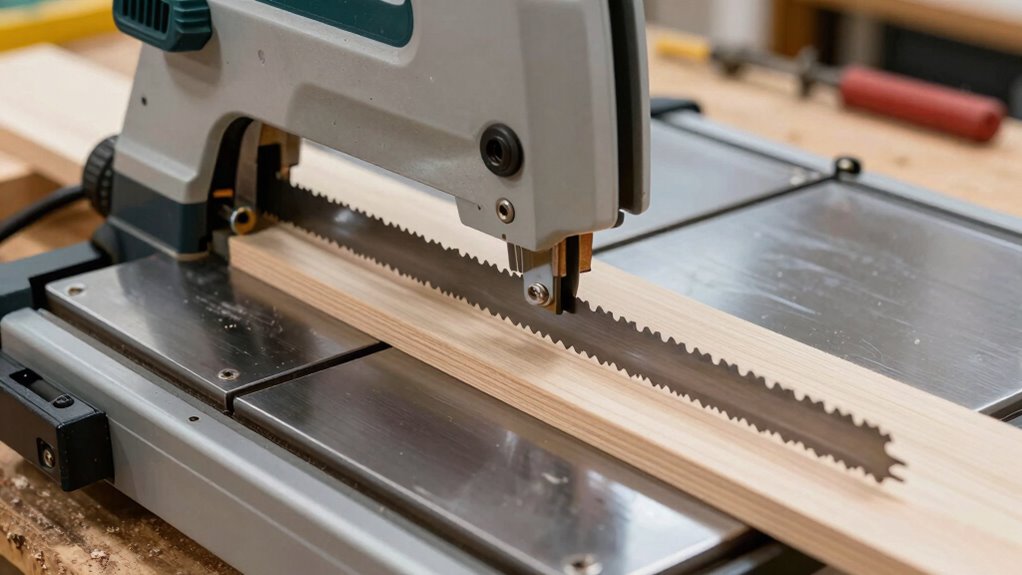
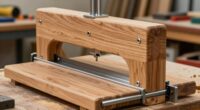
To prevent drift and wavy cuts on your bandsaw, start by properly setting blade tension according to the manufacturer’s guidelines; too loose or tight can cause issues. Next, verify the wheels are well aligned and tracking correctly so the blade runs straight. Use a fence or guide for straight cuts and keep your blade sharp. Regularly check and adjust tension, alignment, and tracking to maintain peak performance—stay tuned for tips on fine-tuning your setup for perfect resawing.

Get business pricing on tools and workshop supplies
- Business-only prices and quantity discounts
- Tax-exempt purchasing
- Multiple users, one account, clear invoices
Key Takeaways
- Ensure proper blade tension according to manufacturer guidelines to prevent wobble and drift during resawing.
- Regularly check and align the wheels to keep the blade tracking straight and reduce wandering.
- Maintain correct blade tracking by adjusting the saw’s mechanisms and keep the blade centered on the wheels.
- Use a fence or resaw guide for straight cuts and apply gentle, steady pressure while cutting.
- Keep the blade sharp and clean to minimize waviness and ensure smooth, accurate cuts.
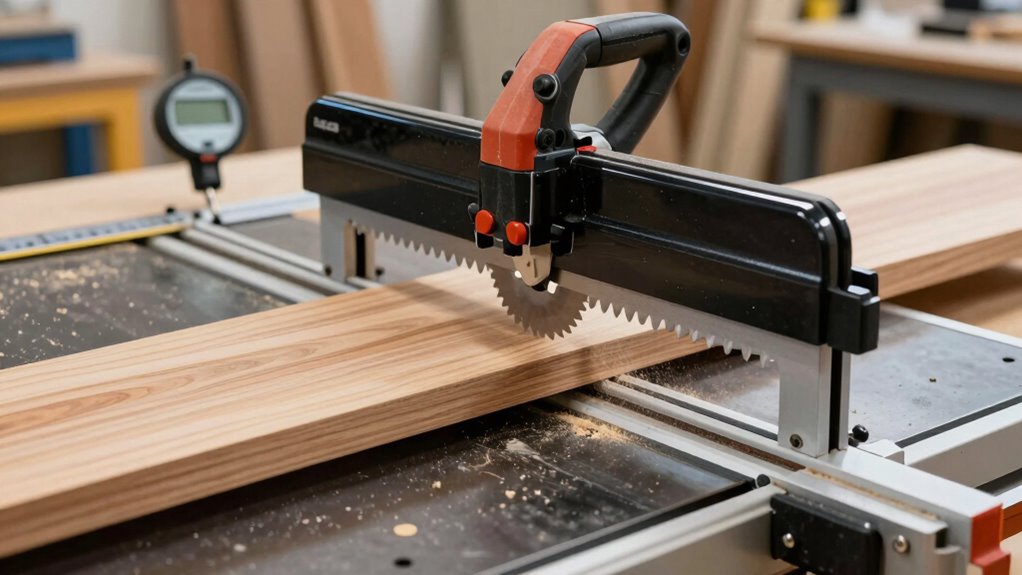
Resawing with a bandsaw is a powerful technique that allows you to cut thick lumber into thinner, more manageable pieces. To achieve clean, straight cuts and minimize drift or waviness, you need to pay close attention to your saw’s setup. The first step involves properly setting your blade tension. If the blade isn’t tensioned correctly, it will wobble or bend during cuts, leading to inaccuracies. Generally, you should tighten the blade until it reaches the manufacturer’s recommended tension, which is often indicated on the saw or in the manual. Too loose, and the blade will deflect, causing drift; too tight, and it can stress the saw and reduce blade life. Check tension regularly, especially when switching blades or after prolonged use, to keep your cuts precise.
Wheel alignment is equally critical in preventing drift and ensuring smooth, straight cuts. If the wheels are misaligned, the blade won’t track properly, causing it to wander during resawing. You should periodically check that the wheels are perfectly parallel and aligned with each other. Many bandsaws have adjustment screws or tracking mechanisms to fine-tune wheel alignment. When aligning, ensure the wheels are square to the table and that the blade sits securely in the center of the wheels’ tires. Proper wheel alignment not only improves cut accuracy but also reduces blade wear and vibration, making your resawing process safer and more efficient. Additionally, maintaining proper blade tracking helps keep the cut straight and reduces the likelihood of drift.
Once you’ve set your blade tension and aligned the wheels, focus on guiding the wood properly. Use a fence or a resaw guide to keep your cut straight and consistent. Apply gentle, steady pressure forward, avoiding force that might cause the blade to drift or wobble. Also, make sure your blade is sharp; dull blades tend to wander and produce wavy cuts. Keep the blade clean from pitch and resin buildup, which can affect tracking and tension. Adjust the tension and alignment whenever you notice irregularities, even if they seem minor. These small adjustments have a big impact on cut quality.
As an affiliate, we earn on qualifying purchases.
Frequently Asked Questions
How Do I Choose the Right Blade Tension for Resawing?
To choose the right blade tension for resawing, start by consulting your bandsaw’s manual for recommended tension settings. Use a tension gauge to guarantee precision—tighten the blade until the gauge indicates the correct tension, usually around 15,000 to 20,000 psi for resawing. Proper tension prevents drift and waviness, giving you cleaner cuts. Regularly check the tension gauge to maintain ideal blade tension as you work.
What Safety Precautions Are Essential During Bandsaw Resawing?
Did you know that almost 30% of woodworking accidents involve bandsaws? To stay safe during resawing, always wear proper safety gear like eye protection, hearing protection, and gloves. Keep your hands clear of the blade, and never force the cut. Familiarize yourself with emergency procedures, such as how to quickly turn off the saw. Staying alert and prepared minimizes risk and keeps your workspace safe.
How Does Blade Width Affect Cut Accuracy and Drift?
A wider blade improves blade stability, reducing drift and enhancing cut precision. When you choose a narrow blade, it’s more prone to wobbling and wandering, which compromises accuracy. To get precise, straight cuts, opt for a wider blade that offers better stability, especially for resawing thick stock. This helps you maintain control, minimize drift, and achieve cleaner, more accurate results in your woodworking projects.
Can I Resaw Hardwoods Without a Specialized Blade?
You can resaw hardwoods without a specialized blade, but don’t expect perfect results. Standard blades often lack the compatibility needed to handle the dense, tough characteristics of hardwoods, leading to more drift and wavy cuts. Ironically, trying to save a few bucks by skipping the right blade can turn into extra sanding and frustration. For best results, use a blade designed for hardwoods, ensuring cleaner cuts and less hassle.
What Maintenance Routines Optimize Bandsaw Performance During Resawing?
You should regularly check blade lubrication and keep the bandsaw’s wheels properly aligned to optimize performance during resawing. Apply appropriate blade lubricant to reduce friction and prevent overheating, which enhances blade life and cut quality. Additionally, verify wheel alignment is precise to minimize drift and wavy cuts. Regular maintenance like cleaning dust buildup and inspecting the blade tension also helps maintain consistent, smooth cuts, making your resawing safer and more efficient.
Conclusion
Mastering bandsaw resawing means perfecting your setup to prevent drift and wavy cuts. With careful calibration, consistent checks, and confident control, you’ll create clean, crisp cuts every time. Remember, patience and precision promote professional results. So, stay focused, fine-tune your technique, and forge flawless slabs with finesse. Your dedication to detail transforms raw wood into refined, radiant pieces, proving that proper setup prevents problems and produces pristine, polished panels.
Fall yard work Picks
leaf blowers
As an affiliate, we earn on qualifying purchases.