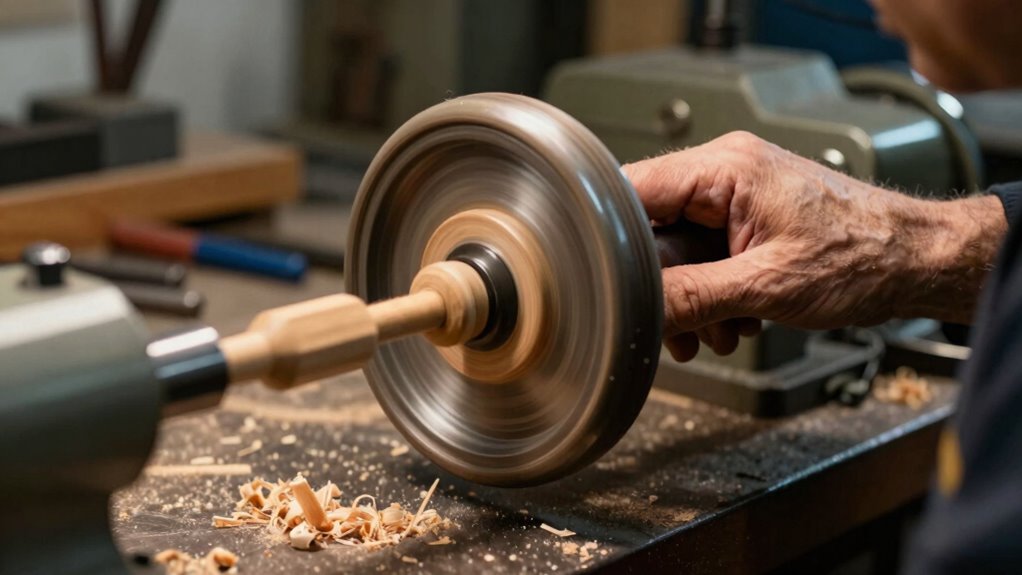

To stop fighting the tool, start by setting your lathe to the correct speed based on your material and workpiece diameter. Use manufacturer guidelines and adjust gradually, paying attention to vibrations and chatter. Secure the workpiece and guarantee your tools are sharp and well-aligned. Slow speeds give you better control for delicate cuts, while higher speeds boost efficiency. Mastering these adjustments helps create smooth results and boosts your confidence—keep going, and you’ll discover even more ways to improve your skills.

Get business pricing on tools and workshop supplies
- Business-only prices and quantity discounts
- Tax-exempt purchasing
- Multiple users, one account, clear invoices
Key Takeaways
- Understand and select the correct spindle speed based on material, diameter, and cut type to prevent tool chatter and workpiece damage.
- Always start with manufacturer-recommended speeds and adjust gradually for better control and safety.
- Securely clamp the workpiece and ensure tools are sharp and properly aligned before starting the lathe.
- Monitor vibrations and unusual sounds to detect issues early and avoid fighting the tool during operation.
- Use appropriate safety gear, like safety glasses, and avoid loose clothing to maintain control and prevent accidents.
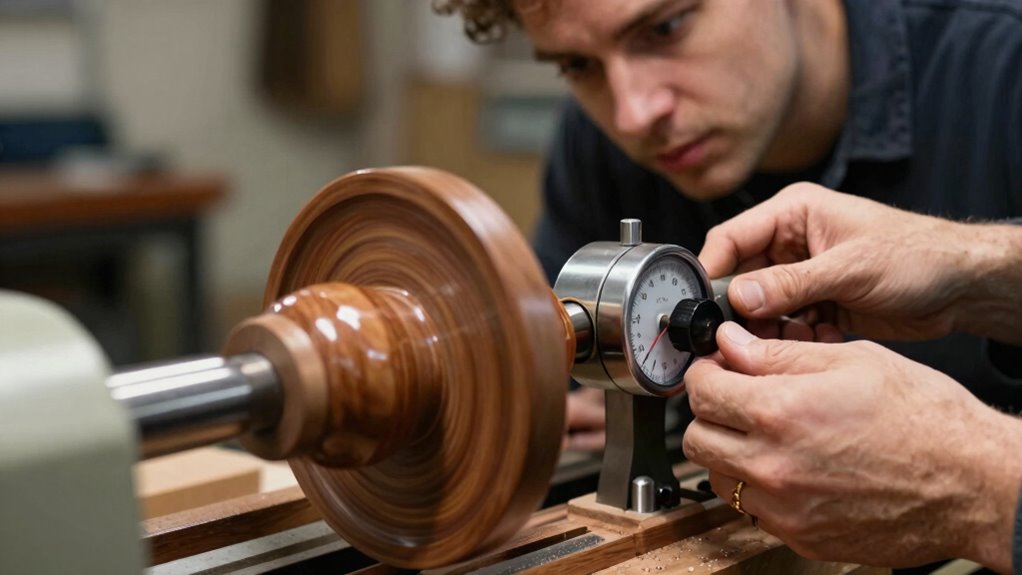
Ever wondered how to determine the ideal speed for your lathe? It’s a question that trips up many beginners, but understanding how to set the right speed is vital for both quality work and safety. The key lies in grasping cutting parameters, which include factors like the material you’re working with, the diameter of the piece, and the type of cut you’re making. Different materials require different speeds; for instance, soft woods need a much lower RPM compared to metals. Once you get familiar with these parameters, you’ll discover that choosing the right speed isn’t a guessing game but a calculated decision. Paying attention to workpiece stability can also influence your choice of speed and safety. Safety precautions are equally important when it comes to lathe work. Operating a lathe at an improper speed can cause the tool to grab or chatter, which can lead to accidents or damage to your workpiece. Before you even turn on the machine, make certain that your workpiece is securely clamped and that your tools are sharp and properly aligned. Always wear safety glasses to protect your eyes from flying debris, and avoid loose clothing or jewelry that could get caught in the spinning parts. As you adjust the speed, double-check that the lathe is running smoothly and that no unusual vibrations occur—these can be signs that the speed isn’t appropriate for your current task. Additionally, understanding cutting parameters helps you optimize your machining process for better results. Recognizing the importance of material properties can further guide your choice of speed and tooling. It’s also beneficial to be familiar with your lathe’s manufacturer recommendations, as they often provide valuable guidelines tailored to specific tools and materials. Moreover, becoming familiar with safety standards can help you implement best practices to prevent accidents and ensure a safer working environment.
Choosing the right lathe speed depends on material, diameter, and cut type for safe, quality results.
Understanding the relationship between cutting parameters and safety precautions helps you work efficiently and confidently. When you select a speed aligned with the material and the operation, you minimize the risk of tool chatter, workpiece damage, and personal injury. Start with the manufacturer’s recommended settings for your specific material and type of cut, then fine-tune as you gain experience. Remember, the slower the speed, the easier it is to control your cut, especially when working on delicate or detailed projects. Conversely, higher speeds can improve efficiency but require more precise control and a solid understanding of safety measures.
Ultimately, mastering lathe speed isn’t about rushing; it’s about making informed choices. By paying attention to cutting parameters and always prioritizing safety precautions, you’ll find yourself fighting less with the tool and producing cleaner, more consistent work. This approach not only safeguards you but also boosts your confidence, turning what once felt like a challenge into a skill you can trust. With practice, selecting the right speed will become second nature, allowing you to focus on your craftsmanship instead of worrying about safety or tool control.
Products Worth Considering

Shark Clean & Empty Cordless Stick Vacuum with Auto-Empty System, BU3521

Shark PowerPro Reveal Plus Cordless Vacuum Cleaner, Charcoal, IZ376H

Coway Mighty AP-1512HH(W) Air Purifier, White
As an affiliate, we earn on qualifying purchases.
Frequently Asked Questions
How Do I Determine the Correct Lathe Speed for Different Materials?
To determine the correct lathe speed, consider the material density—lighter materials need higher speeds, while denser ones require slower speeds. Use speed charts as a guide; these charts list recommended RPMs for different materials. Always start at the lower end of the range, then adjust based on how the material responds. This approach helps you prevent tool chatter and guarantees smoother cuts, making your work safer and more precise.
What Safety Precautions Should I Take When Adjusting Lathe Speed?
When fine-tuning your lathe, it’s wise to approach safety with careful tool maintenance and precise speed calibration. Always wear protective gear, keep hands clear of the spinning parts, and double-check that the machine is off before adjusting. Confirm the lathe is properly secured and the workpiece is firmly mounted. Regularly inspect the controls and speed settings to prevent surprises, maintaining a safe environment for your craftsmanship to flourish.
How Does Tool Type Influence the Ideal Lathe Speed?
Your tool type influences the ideal lathe speed because different tool materials require specific spindle RPMs for effective cutting. For instance, carbide tools handle higher speeds, while high-speed steel needs lower RPMs to prevent overheating. Adjust your spindle RPM based on your tool material and the workpiece, ensuring best control and safety. Always refer to manufacturer guidelines for precise speed recommendations to avoid tool damage or accidents.
Can Changing Lathe Speed Affect the Finish Quality?
Did you know that adjusting lathe speed can improve your finish quality by up to 25%? When you change the speed, it directly influences the feed rate and how smoothly your tool interacts with the material. A higher speed with a sharp tool ensures a finer surface, while too slow can cause roughness. Always match your speed to your tool’s sharpness and desired finish for the best results.
What Signs Indicate I Need to Adjust the Lathe Speed During Operation?
You should adjust the lathe speed if you notice tool instability or excessive noise. When the tool vibrates or wobbles, it signals you need to slow down for better control. Likewise, if you hear loud, irregular noises, it indicates the speed is too high. Keeping an eye on these noise indicators and maintaining tool stability helps guarantee smoother operation and a better finish. Always listen and watch carefully during your work.
Conclusion
Mastering lathe speed isn’t just a small detail—it’s the secret weapon that transforms your craftsmanship from amateur to artisan. When you understand how to control your speed, you’ll glide through projects with the finesse of a virtuoso, avoiding disastrous mishaps that could ruin hours of work. Remember, tweaking your speed is like tuning a fine instrument—it makes all the difference between chaos and harmony. Embrace this lesson, and watch your skills soar to legendary heights.