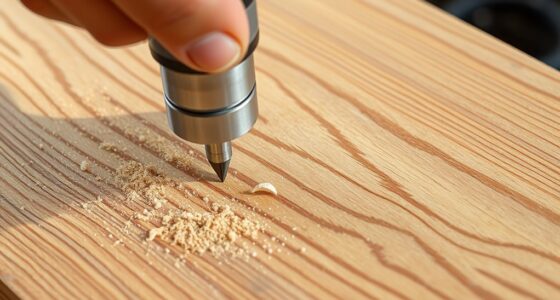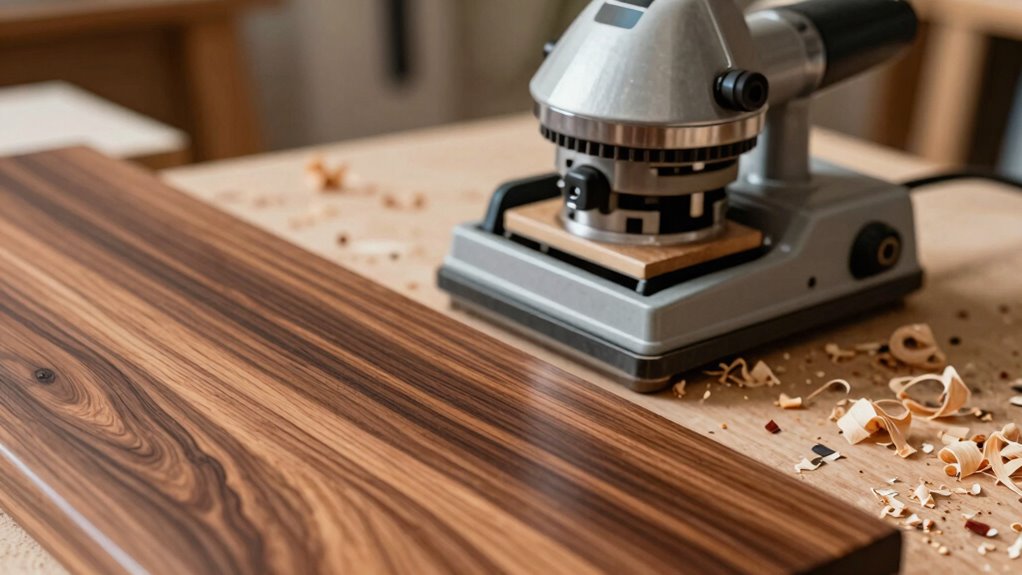

Using a drum sander saves your handmade panels by ensuring uniform thickness, which is essential for seamless fits in your projects. It quickly levels surfaces, eliminating imperfections that can distract from the overall beauty of your work. Plus, it helps you maintain a smooth finish without the risk of damage. This tool boosts your efficiency, letting you focus on finer details instead. Stick around to discover more benefits that can elevate your woodworking game.

Get business pricing on tools and workshop supplies
- Business-only prices and quantity discounts
- Tax-exempt purchasing
- Multiple users, one account, clear invoices
Key Takeaways
- Drum sanders ensure uniform thickness across handmade panels, preventing issues with fitting and assembly.
- They quickly level surfaces, saving time compared to traditional sanding methods.
- The smooth finish achieved with drum sanders enhances the overall appearance of handmade projects.
- They remove imperfections efficiently, allowing artisans to focus on finer details.
- Drum sanders minimize the risk of damaging delicate work during the sanding process.
If you’re looking to achieve a smooth, professional finish on your woodworking projects, a drum sander might be just what you need. This powerful tool offers a range of benefits that can greatly enhance your woodworking experience, especially when it comes to saving handmade panels. You’ll find that the efficiency and precision of a drum sander can make all the difference in your wood finishing process.
When working on panels, you often face the challenge of achieving a uniform thickness. Traditional sanding techniques can be time-consuming and may lead to uneven surfaces. With a drum sander, you can quickly and accurately level your panels, guaranteeing a consistent finish. This is vital, especially if you’re creating pieces that need to fit together seamlessly, like tabletops or cabinetry. You’ll appreciate how easily the drum sander removes imperfections, allowing you to focus on the finer details of your project.
Achieve uniform thickness effortlessly with a drum sander, ensuring seamless fits and a flawless finish for your woodworking projects.
One of the standout benefits of a drum sander is its ability to handle large surfaces efficiently. Unlike handheld sanders, which can leave swirl marks or uneven spots, a drum sander glides over the wood, producing a flat, smooth surface. This is particularly important for handmade panels, where you want to highlight the natural beauty of the wood grain without any distractions. By using a drum sander, you minimize the risk of damaging your work and guarantee that the final product looks polished and professional.
Another key advantage is the versatility it offers. Whether you’re working with hardwoods, softwoods, or even engineered materials, the drum sander can adapt to your needs. You can easily adjust the grit of the sanding paper to achieve different finishes, from rough shaping to fine polishing. This flexibility allows you to explore various wood finishing techniques, giving you the creative freedom to experiment with different looks and feels.
Moreover, using a drum sander can save you time and effort in your woodworking projects. Instead of spending hours sanding manually, you can set up the drum sander and let it do the heavy lifting. This not only speeds up your workflow but also allows you to take on more projects, boosting your productivity. Additionally, understanding the efficiency of a drum sander can help you make smarter choices about your woodworking tools and techniques. Recognizing the importance of workshop equipment can further improve your overall woodworking setup and outcomes. Investing in quality power tools like a drum sander ensures your projects are completed with precision and ease. Proper maintenance and understanding of sanding techniques can also extend the lifespan of your equipment, making your investment even more worthwhile.
As an affiliate, we earn on qualifying purchases.
Frequently Asked Questions
How Does a Drum Sander Differ From a Belt Sander?
A drum sander differs from a belt sander mainly in its sanding techniques and efficiency. While a belt sander uses a continuous loop of abrasive material for a more aggressive approach, a drum sander employs a rotating drum, offering smoother finishes. For panel preparation, the drum sander excels in flattening large surfaces evenly, making it ideal for projects requiring precision. You’ll find it delivers better results for your handmade panels than a traditional belt sander.
Can a Drum Sander Handle Large Panel Sizes?
Absolutely, a drum sander can handle large panel sizes effectively. In fact, many models can accommodate panels up to 38 inches wide. With adjustable panel thickness settings, you can achieve a smooth finish at varying sanding speeds, making it versatile for different projects. This means you won’t have to worry about uneven surfaces or excessive material removal. You’ll find it’s a fantastic tool for tackling those larger pieces with precision and ease.
What Types of Wood Are Best for Drum Sanding?
When drum sanding, you’ll find hardwood choices like oak, maple, and cherry work best due to their density and stability. These woods produce smooth finishes without excessive tear-out. If you’re considering plywood options, look for high-quality sheets like Baltic birch, which sands well and maintains a flat surface. Avoid low-grade plywoods, as they can splinter and cause issues during the sanding process. Your results will reflect the quality of your materials.
How Often Should I Change the Drum Sander’s Sandpaper?
You should change your drum sander’s sandpaper every 2 to 4 hours of use, especially if you’re working with different sandpaper types. This keeps your sanding techniques effective and guarantees a smooth finish. Worn sandpaper can cause uneven surfaces and increase the risk of damage. Regularly checking the condition of your sandpaper helps you maintain the quality of your work and prevents unnecessary frustration during your projects. Keep your sander in top shape!
Are Drum Sanders Easy to Maintain?
Yes, drum sanders are relatively easy to maintain. To keep yours in top shape, follow some drum sander maintenance tips like regularly checking the sandpaper and cleaning the drum. Watch out for common drum sander issues such as uneven sanding or excessive noise—these can signal the need for adjustment. By staying on top of these tasks, you’ll guarantee your sander runs smoothly and lasts longer, making your projects more enjoyable.
Conclusion
Incorporating a drum sander into your woodworking routine can save you time and effort, letting you focus on creating beautiful handmade panels. Did you know that using a drum sander can reduce sanding time by up to 50%? That means you can spend more time perfecting your craft and less time on tedious prep work. Embrace this powerful tool, and watch your projects transform with smoother finishes and enhanced efficiency. Your handmade creations deserve it!
Halloween Picks
halloween
As an affiliate, we earn on qualifying purchases.