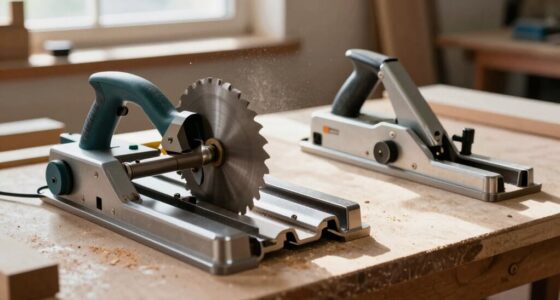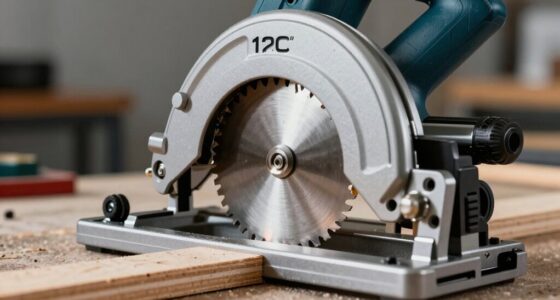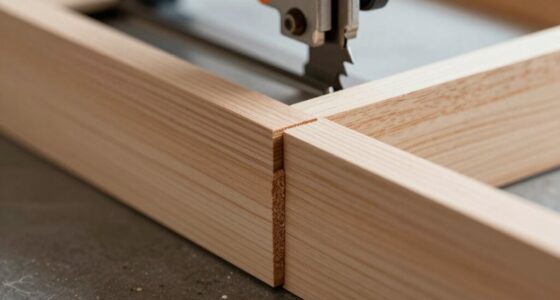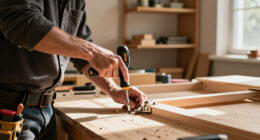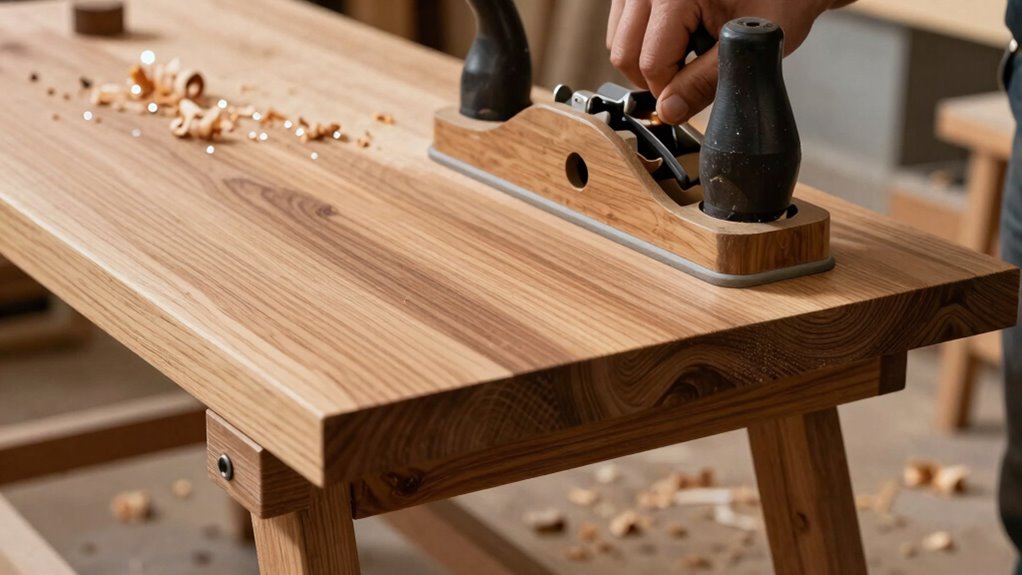

A stable planer stand is essential for your woodworking projects. It keeps the planer firmly in place, minimizing unwanted movement during operation. This stability prevents dips and imperfections in your cuts, directly enhancing surface quality. You’ll find it easier to focus on your work without distractions, leading to more consistent results. Plus, a solid setup tailors to your project needs. Discover how the right choices can further elevate your woodworking experience.

Get business pricing on tools and workshop supplies
- Business-only prices and quantity discounts
- Tax-exempt purchasing
- Multiple users, one account, clear invoices
Key Takeaways
- A stable planer stand ensures precise cuts, directly enhancing the surface quality of the project.
- Instability leads to imperfections like dips and ridges, compromising overall finish.
- Consistent alignment achieved through stability minimizes the need for repeated adjustments.
- A solid stand allows focus on craftsmanship, reducing frustration and improving results.
- Proper material choice for the stand reinforces stability and durability, impacting the final surface quality.

When you’re working with a planer, ensuring stability is essential for both safety and precision. A sturdy stand is fundamental for proper planer construction, as it directly affects the quality of the surface you’re working on. If your planer isn’t stable, you’re likely to experience uneven cuts, which can compromise your entire project. It’s not just about getting the job done; it’s about achieving the best results possible.
Imagine trying to align a piece of wood on an unstable surface. You’d probably find yourself adjusting the wood repeatedly, struggling to maintain the correct position. This instability can lead to poor surface alignment, creating dips, ridges, or other imperfections. When you invest in a solid planer stand, you’re safeguarding against these issues. A well-constructed stand keeps the planer firmly in place, letting you focus on the task at hand without worrying about movement or wobbling.
Stability is key; a solid planer stand prevents misalignments, ensuring a smooth, flawless finish on your woodworking projects.
Moreover, a stable planer stand helps you maintain the correct height and angle for your cuts. This precision is crucial when you’re aiming for that flawless finish. If your planer shifts even slightly during operation, you could end up with a surface that doesn’t meet your standards. By ensuring your stand is robust and secure, you’re minimizing the risk of these frustrating setbacks. Proper furniture stability is essential for consistent results. Additionally, choosing a stand with adjustable features can help you tailor the setup to your specific project needs, further enhancing stability.
You should also consider the material of the stand. A heavy-duty metal frame can provide the necessary weight and stability, preventing any unwanted movement. On the other hand, lightweight materials may not hold up, especially if you’re working with larger boards. Investing in a quality stand can save you time and effort in the long run. You’ll find that the improved surface alignment and consistency make your woodworking projects much more enjoyable. Ensuring your workspace is ergonomically designed can also contribute to better stability and comfort during long sessions. Moreover, understanding the importance of workplace ergonomics can enhance both your safety and efficiency while working. Additionally, a stable setup supports long-term safety by reducing the risk of accidents caused by equipment shifting unexpectedly.
planer stand with adjustable height
As an affiliate, we earn on qualifying purchases.
As an affiliate, we earn on qualifying purchases.
Frequently Asked Questions
How Do I Choose the Right Planer for My Needs?
To choose the right planer for your needs, consider the planer features that matter most to you. Look for one with adjustable depth settings to handle various wood thicknesses effectively. If you’re working with harder woods, a more powerful motor will help. Think about portability, too—if you’re moving it frequently, a lightweight model might be best. Always check user reviews to see how well it performs in real-world scenarios.
What Types of Wood Are Best for Planing?
When it comes to planing wood, think of it as sculpting a masterpiece. Dense hardwoods like maple, oak, and cherry are your best friends; their tight grain orientation makes for smooth, even surfaces. Softer woods, like pine, can splinter easily, so be cautious. Remember, the right wood density matters—too soft, and you’ll struggle; too hard, and you might dull your blades. Choose wisely, and your projects will shine!
How Often Should I Sharpen Planer Blades?
You should sharpen your planer blades every 20 to 30 board feet of wood you process, depending on the type of wood and its density. For effective blade maintenance, use proper sharpening techniques like honing and grinding to keep the edges crisp. Regularly checking for dullness not only improves your results but also extends the life of your blades. Staying on top of this will guarantee smooth, clean cuts every time.
What Safety Equipment Is Recommended While Using a Planer?
When using a planer, you should wear proper safety equipment to guarantee your protection. Use safety glasses to shield your eyes from flying debris, and a dust mask to avoid inhaling wood particles. Hearing protection is also essential due to the loud noise. Follow equipment guidelines by keeping loose clothing and hair away from moving parts. Always make certain your workspace is clear to prevent accidents. Stay safe and enjoy your woodworking projects!
Can I Use a Planer for Reclaimed Wood Projects?
Yes, you can definitely use a planer for reclaimed wood projects! Just make certain you check the wood for nails or other debris before you start. Regular tool maintenance is essential; keep your planer’s blades sharp to guarantee a clean cut. This will help you achieve a smooth finish on the rustic surfaces of reclaimed wood. Enjoy the process and create some beautiful pieces with your reclaimed materials!
Conclusion
In the world of woodworking, a sturdy planer stand is your foundation, much like a solid rock in a flowing river. When your stand wobbles, it can turn a smooth surface into a rough landscape. By ensuring your planer stand is stable, you’re not just investing in your tools; you’re crafting quality. So, remember, a reliable stand is the unsung hero behind every flawless finish, helping your projects shine like a beacon of precision.
Halloween Picks
halloween
As an affiliate, we earn on qualifying purchases.