
When choosing between benchtop and floor drill presses, think about your workspace and project needs. If you’re short on space or work on small tasks, a benchtop model‘s compact design is perfect. For larger projects requiring stability and power, a floor model is the way to go. Consider the materials you’ll use and the height requirements of your projects. Evaluating these aspects will guide your decision, and there’s more to uncover about each option.

Get tools and workshop supplies delivered free — and shop member deals
- Fast, free delivery on millions of items
- Access to Prime Big Deal Days deals on October 6–7
- Prime Video, Amazon Music and more included
Key Takeaways
- Consider space availability: benchtop models save floor space, while floor models provide a larger work surface for complex projects.
- Evaluate weight and mobility: benchtop presses are lighter and easier to move, whereas floor models offer increased stability during operation.
- Assess power and performance needs: choose benchtop drills for lighter tasks and floor models for heavy-duty applications requiring robust motors.
- Check height and reach: floor models typically allow for greater height adjustments, accommodating larger workpieces than benchtop versions.
- Determine project suitability: select benchtop drills for small-scale tasks and floor models for larger, more demanding projects.
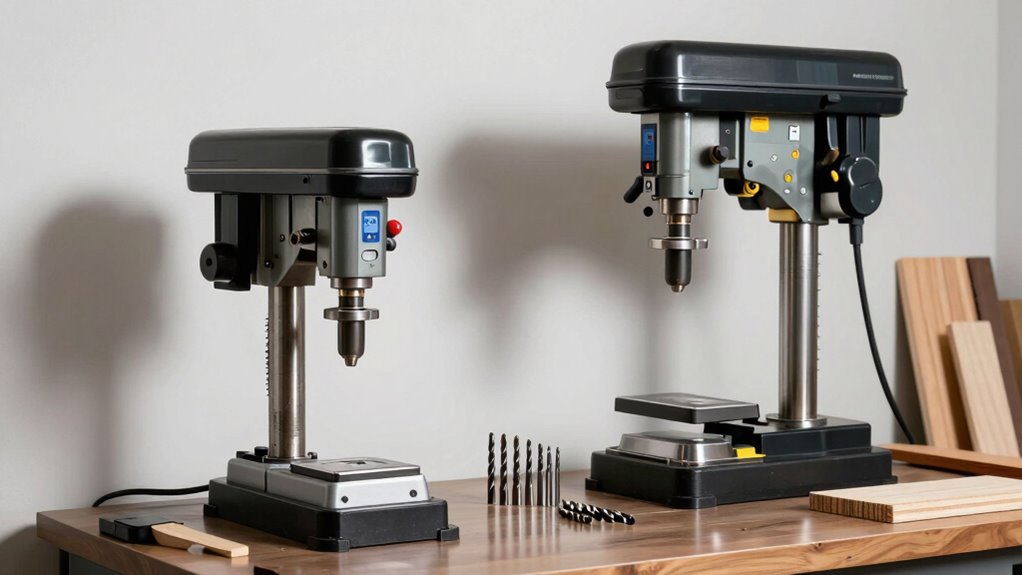
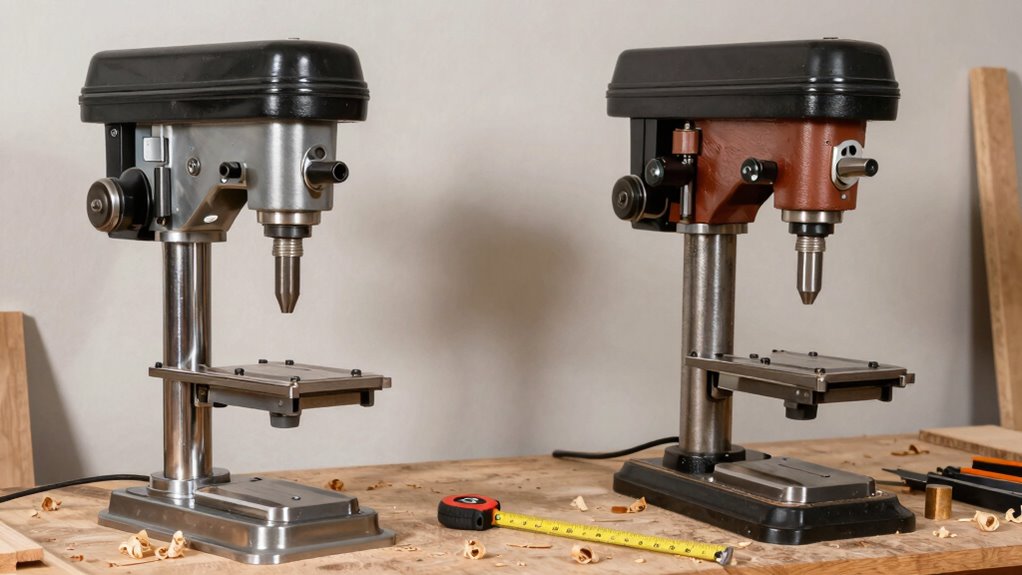
When you’re deciding between a benchtop and a floor drill press, it’s essential to evaluate your specific needs and workspace. The choice between these two types of drill presses can notably affect your projects, so understanding the unique features each offers can help you make a more informed decision.
Benchtop drill presses are compact, making them ideal for small workshops or garages. If space is at a premium for you, the benchtop advantages are hard to ignore. These machines can fit easily on a workbench, allowing you to save floor space while still providing the precision and power needed for various tasks. They’re also generally lighter, which can make moving them around your workspace easier if you need to rearrange or store them away. Benchtop models often come with adjustable speed settings, which can be beneficial when working with different materials, from wood to metal.
Benchtop drill presses offer compact design and adjustable speeds, making them perfect for small spaces and versatile tasks.
On the other hand, if you’re working on larger projects or frequently drilling through thicker materials, you might want to contemplate a floor drill press. The floor press benefits include increased stability and power due to their larger size and weight. This stability can lead to more accurate drilling, especially when handling heavy-duty tasks. Additionally, floor models often feature a greater range of speeds and more robust motors, enabling you to tackle a wider variety of drilling applications without sacrificing performance. A larger work surface can also be a significant advantage for complex or sizeable projects.
Another aspect to think about is the height and reach of your drill press. Benchtop models usually have a limited vertical capacity, which can restrict your ability to work with larger workpieces. Conversely, floor drill presses typically offer extended height adjustment, allowing you to drill deeper or manage bigger items without hassle. For those who frequently work on diverse projects, the adjustable height feature of floor models can be particularly advantageous. Moreover, the ease of access to controls and the workspace in floor models can improve workflow for intensive tasks.
As an affiliate, we earn on qualifying purchases.
Frequently Asked Questions
What Materials Can I Drill With Both Types of Presses?
You can drill a variety of materials with both benchtop and floor drill presses. They’re great for wood, plastics, and soft metals like aluminum. For harder metals, you might need specialized drill bits and techniques. Make sure you adjust your speed and pressure according to the material compatibility. Using the right drilling techniques will help you achieve cleaner holes and extend the life of your tools, regardless of which press you choose.
How Much Maintenance Do Drill Presses Typically Require?
Drill presses don’t need a lot of maintenance, but keeping them in top shape boosts longevity. You’ll want to clean the chuck and table often, checking for any debris that could affect performance. Lubricating moving parts every few months is a smart move, too. Regularly inspect belts and pulleys for wear. By following these maintenance tips, you’ll guarantee your drill press runs smoothly and lasts longer, giving you the best results.
Can I Use a Benchtop Press for Larger Projects?
Yes, you can use a benchtop press for larger projects, but you’ll face some project limitations. Size considerations are essential; if your workpiece fits comfortably under the drill’s throat depth, it’s doable. However, if you’re tackling bigger materials or need more power, a floor model might be a better choice. Always assess your specific project needs to guarantee you get the desired results without compromising on quality or safety.
What Safety Features Should I Look for in Drill Presses?
You wouldn’t want your drill press to double as a modern art installation, right? When considering drill press safety, look for essential features like a sturdy base, built-in work lights, and emergency shut-off switches. A depth stop and adjustable speed settings are also vital. These features not only protect you but also keep your projects on track—because who wants to explain a trip to the ER to their friends?
Are There Any Recommended Brands for Drill Presses?
For drill presses, you can’t go wrong with brands like Delta, Jet, and WEN. They consistently receive positive user reviews, highlighting durability and performance. When doing brand comparisons, look for features that match your needs, such as speed settings and power. Don’t forget to check online reviews to see real user experiences, which can help you make an informed choice. Trustworthy brands often stand out for their customer support and warranty options.
Conclusion
When choosing between a benchtop and floor drill press, consider your workspace and project needs. While some might worry that a benchtop model lacks power, many are surprisingly robust and perfect for smaller projects. Ultimately, it’s about finding the right fit for your tasks. Whether you need portability or a sturdy floor model, you can confidently select a drill press that meets your requirements and helps you tackle any project with ease.
Fall Picks
fall essentials
As an affiliate, we earn on qualifying purchases.