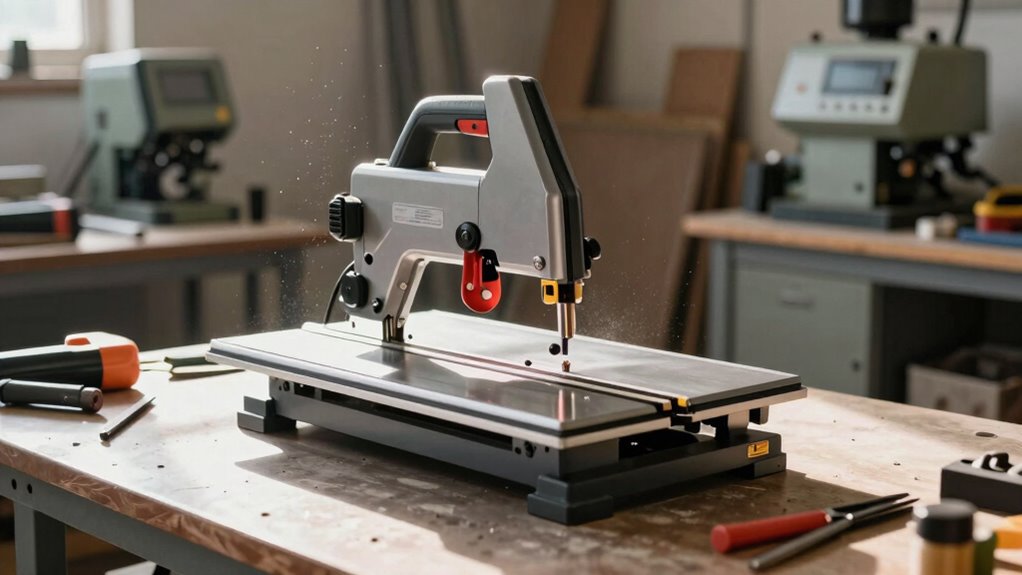

Benchtop bandsaws are perfect for your workshop if you’re short on space and budget. They’re compact, easy to move, and great for smaller projects. However, if your work involves thicker materials or demanding cuts, their limitations can slow you down. You also need to evaluate motor power; insufficient strength can lead to frustration. Understanding these factors helps you choose the right model for your needs, so keep exploring to find the best fit for your workshop!

Get tools and workshop supplies delivered free — and shop member deals
- Fast, free delivery on millions of items
- Access to Prime Big Deal Days deals on October 6–7
- Prime Video, Amazon Music and more included
Key Takeaways
- Benchtop bandsaws are ideal for small workshops due to their compact design, maximizing workspace efficiency without sacrificing functionality.
- They are budget-friendly, making them attractive for hobbyists and beginners who need solid performance without a high investment.
- Cutting capacity limitations can hinder workflow, especially for demanding projects requiring thicker materials beyond the capabilities of benchtop models.
- Regular maintenance is essential for optimal performance, and neglecting it can lead to decreased efficiency, impacting project outcomes.
- Motor power is crucial; insufficient power in benchtop models can frustrate users, particularly for demanding cuts, influencing the choice of model.
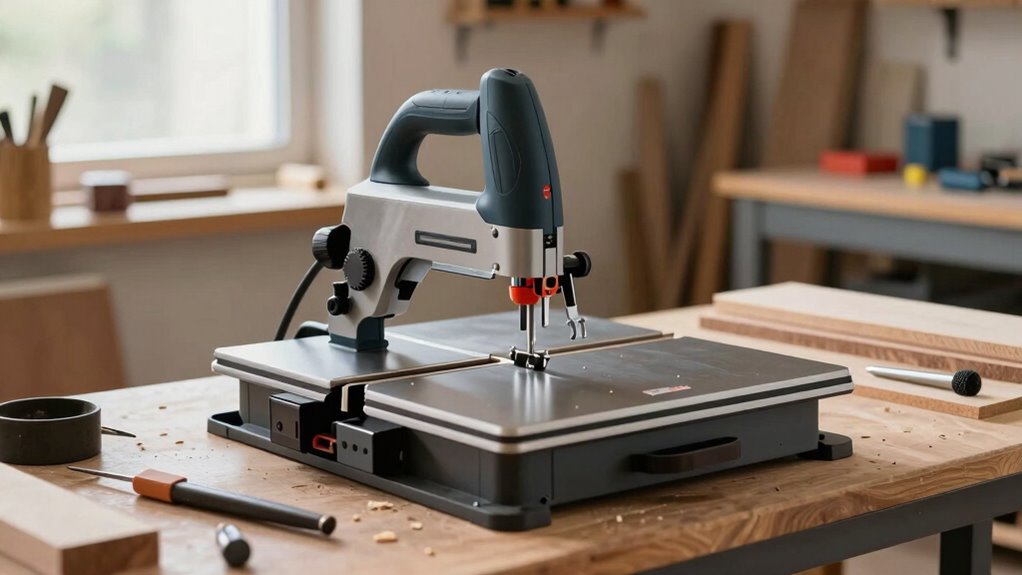
When you’re looking to elevate your woodworking projects, benchtop bandsaws can be a game-changer. They offer a blend of portability advantages and cutting precision that makes them appealing for many hobbyists and professionals alike. However, whether they make sense for your workshop depends on various factors. Understanding these nuances will help you make an informed decision.
First off, let’s talk about space efficiency. If you’re working in a smaller workshop or a cramped garage, benchtop bandsaws can fit seamlessly into your setup. Their compact design allows you to maximize your workspace without sacrificing functionality. You can easily move them as needed, clearing space for other projects. On the flip side, if you have a larger workshop, you might find that floor-standing models offer more power and cutting capacity, making them a better fit for your needs.
Cost considerations also play a significant role. Benchtop bandsaws are generally more affordable than their larger counterparts, making them an attractive option if you’re on a budget. They deliver solid performance for the price, which is appealing for beginners or those who don’t require heavy-duty equipment. However, if you’re a seasoned woodworker with specific cutting needs, investing in a more robust model might be worthwhile. Additionally, understanding cutting capacity is crucial for choosing the right model to match your project requirements. Selecting a bandsaw with appropriate blade tensioning features can also improve your cutting accuracy and extend the tool’s lifespan. For demanding cuts or thicker materials, you may find that the limitations of a benchtop model could hinder your workflow. Proper maintenance can help mitigate some of these limitations and keep your saw performing optimally over time. Regularly assessing your workload and the types of projects you plan to undertake can help determine if a benchtop bandsaw is sufficient or if an upgrade is necessary. Furthermore, evaluating the motor power can ensure the saw can handle the materials you intend to work with, preventing frustration during use.
benchtop bandsaw for woodworking
As an affiliate, we earn on qualifying purchases.
As an affiliate, we earn on qualifying purchases.
Frequently Asked Questions
How Do Benchtop Bandsaws Compare to Floor Models?
Benchtop bandsaws typically have a smaller cutting capacity compared to floor models, making them less suitable for larger projects. However, their portability benefits are significant; you can easily move them around your workshop. If space is tight or you need to transport your saw, a benchtop model might be ideal. For heavy-duty tasks, though, floor models offer greater stability and power, allowing for more extensive cutting capabilities.
What Maintenance Do Benchtop Bandsaws Require?
Keeping your benchtop bandsaw in tip-top shape isn’t too challenging. You’ll want to check the blade tension regularly to guarantee smooth cuts, and don’t forget to inspect the wheel alignment—it’s essential for precision. Dust buildup can be a little sneaky, so give it a good cleaning often. Lubricate moving parts as needed, and remember to replace the blade when it shows signs of wear. A little maintenance goes a long way!
Can I Use a Benchtop Bandsaw for Metal Cutting?
You can use a benchtop bandsaw for metal cutting, but it’s essential to choose the right blade. Standard blades aren’t designed for metal, so invest in bi-metal or carbide-tipped blades for better performance. Keep the speed low to avoid overheating, and make sure your bandsaw can handle the thickness of the metal. With the right setup and care, you’ll find band saws effective for various metal cutting tasks in your workshop.
What Is the Average Lifespan of a Benchtop Bandsaw?
Think of a benchtop bandsaw as a trusty companion in your workshop. On average, you can expect one to last around 10 to 15 years with proper care. Its cutting capacity and the variety of blade types you use can impact its longevity. Regular maintenance, like blade changes and cleaning, keeps it in top shape, ensuring you get the most out of your investment while tackling your projects with ease.
Are There Specific Brands Known for Quality Benchtop Bandsaws?
Yes, several brands are known for quality benchtop bandsaws. Look into brands like Delta, Rikon, and Grizzly; they’ve built strong reputations through excellent user reviews. You’ll find that users often praise their durability and performance, which can make a big difference in your workshop. When choosing, consider the feedback from fellow woodworkers to guarantee you’re investing in a reliable tool that meets your needs.
Conclusion
In the grand tapestry of woodworking, benchtop bandsaws can be your silent ally or a bittersweet distraction, depending on your workshop’s needs. If space is at a premium and versatility is key, they shine brilliantly. However, for those who crave the grandeur of larger machines, their charm may be eclipsed. Ultimately, it’s about harmonizing your tools with your craft, ensuring that every cut resonates with purpose and precision in your creative journey.
Fall yard work Picks
leaf blowers
As an affiliate, we earn on qualifying purchases.