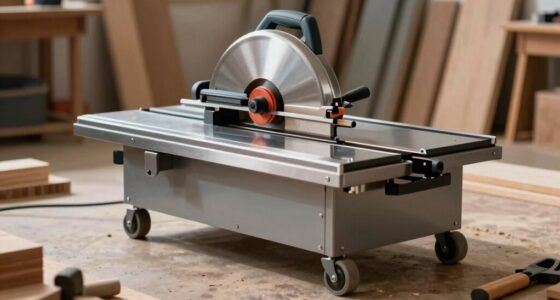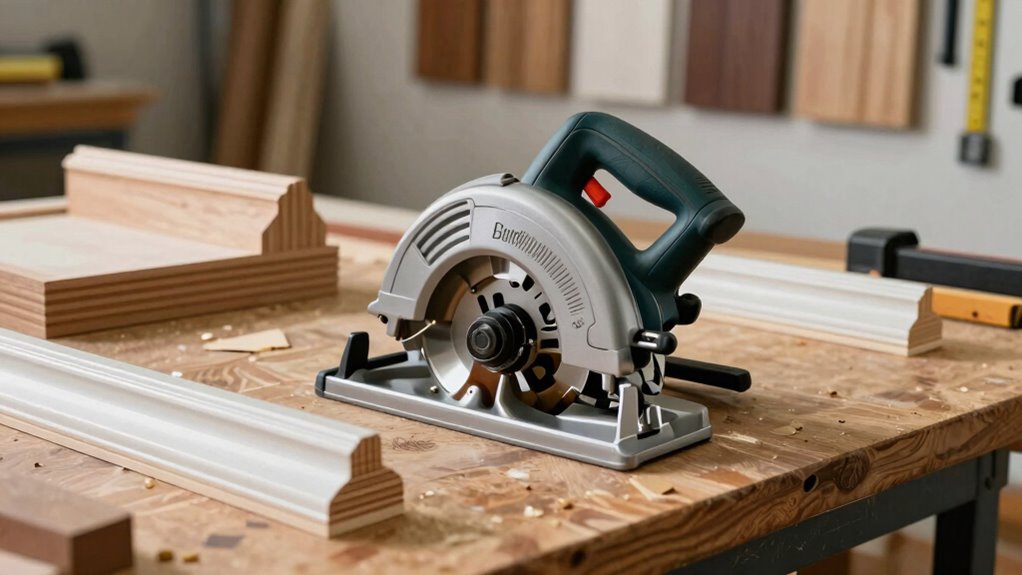

When you’re working with crown molding or baseboards, think of a miter saw as your go-to tool for precision. It lets you make accurate cuts at various angles, ensuring a snug fit. Always secure your workpiece with clamps for stability and safety. Familiarize yourself with miter and bevel adjustments to tackle unique shapes or furniture projects. With practice, you’ll build confidence and skill, leading to stunning results. There’s more to discover about maximizing your saw’s capabilities!

Get business pricing on tools and workshop supplies
- Business-only prices and quantity discounts
- Tax-exempt purchasing
- Multiple users, one account, clear invoices
Key Takeaways
- Miter saws are essential for precise cuts in crown molding, baseboards, and furniture, ensuring professional-quality results.
- Understand and utilize miter and bevel adjustments for versatile cutting angles tailored to specific project needs.
- Secure workpieces firmly with clamps and adopt a flat position for stability, especially when cutting crown molding.
- Always prioritize safety by wearing goggles and keeping hands clear of the blade during operation.
- Regular practice with various techniques enhances cutting skills and builds confidence for complex woodworking projects.
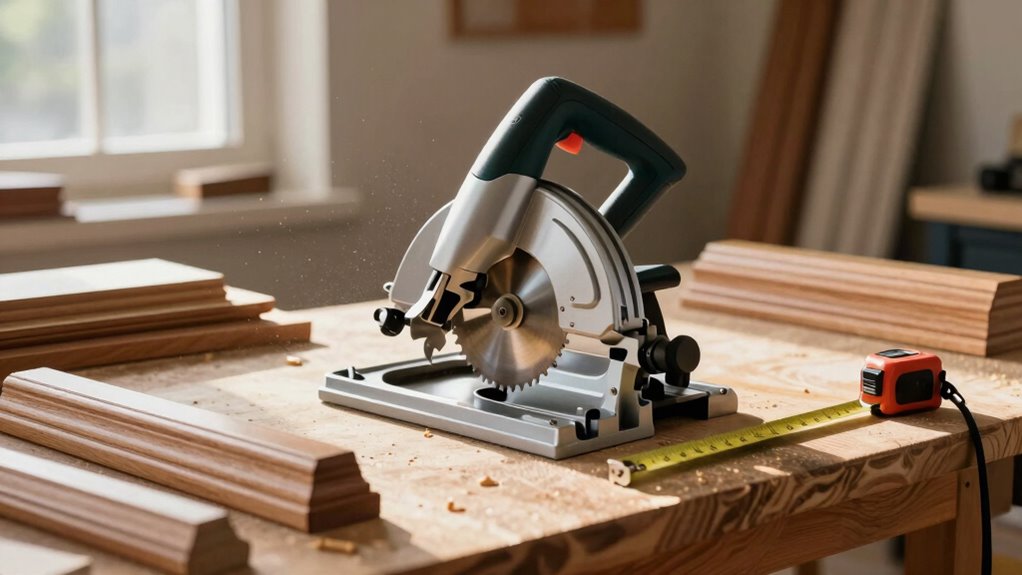
When you’re tackling crown molding or baseboards, a miter saw can be your best ally. It’s vital for achieving precise cuts that make your projects look professional. Understanding how to use this tool effectively can elevate your woodworking game. You’ll find that the right cutting techniques and bevel adjustments are essential for getting clean angles and seamless joints.
First, familiarize yourself with the miter saw’s features. Most models allow for both miter and bevel adjustments. Miter cuts are vital for corners, while bevel cuts help when you need to angle the cut for a perfect fit against the wall or ceiling. When you set up your saw, take a moment to check the angles. You want your miter saw to be set at 45 degrees for standard corners, but don’t hesitate to adjust if your project requires something different.
Familiarize yourself with your miter saw’s features; miter and bevel adjustments are key for precise cuts and perfect fits.
Practice the cutting techniques that work best for you. For crown molding, you’ll often want to use the “flat” position, laying the molding flat on the saw. This method provides better support and stability, reducing the risk of error. Don’t forget to secure your workpiece firmly; a clamp can be a lifesaver. If you’re cutting baseboards, you might need to tilt the saw to make those bevel adjustments. Remember, the goal is to achieve a snug fit against the wall and floor. Additionally, understanding the adjustments available on your miter saw can help you make more accurate cuts for complex angles. Being familiar with these features allows for greater precision and versatility in your projects. It’s also helpful to review the manual specific to your model to ensure you’re utilizing all the capabilities effectively. Recognizing the importance of proper safety precautions can also help prevent accidents and ensure a smooth woodworking experience.
Finally, don’t overlook safety. Always wear safety goggles and keep your fingers clear of the blade. A moment of distraction can lead to serious accidents. When you’re focused and prepared, your miter saw can help you create stunning finishes on crown molding, baseboards, and furniture. Gaining experience through practice will also help you develop the confidence needed for more intricate projects.
As an affiliate, we earn on qualifying purchases.
Frequently Asked Questions
What Types of Miter Saws Are Best for Furniture Making?
For furniture making, compound miter saws and sliding miter saws are your best options. Compound miter saws let you make precise angled cuts, which is essential for joints and trim. On the other hand, sliding miter saws offer extended cutting capacity, perfect for wider boards. Depending on your projects, choose the one that suits your needs best. Either way, both types will help you achieve clean, accurate cuts for your furniture pieces.
How Do I Maintain My Miter Saw for Longevity?
To keep your miter saw humming like a well-tuned orchestra, you’ve gotta embrace the sacred rituals of maintenance. First, sharpen that blade regularly; dull blades are like bad jokes—nobody wants them around. Next, invest in a solid dust collection system; dust bunnies may look cute, but they’ll ruin your saw’s vibe. Give it a good wipe down, check for loose screws, and voilà! Your miter saw’s ready for a long, productive life.
Can I Use a Miter Saw for Plywood?
Yes, you can use a miter saw for plywood. Just be mindful of the plywood thickness; thinner sheets can splinter easily. Use proper cutting techniques, like adjusting the blade speed and utilizing a fine-toothed blade for cleaner cuts. Make sure to support the plywood properly to prevent bending or breaking during cuts. With these tips, you’ll get smooth, accurate results every time you use your miter saw on plywood.
What Safety Gear Is Recommended When Using a Miter Saw?
When you’re using a miter saw, prioritize safety gear: wear eye protection, use hearing protection, put on a dust mask, and slip on work gloves. Eye protection shields your vision from flying debris, hearing protection guards against loud noise, a dust mask keeps harmful particles at bay, and work gloves provide grip and protect your hands. By equipping yourself with this gear, you’re ensuring a safer and more efficient working environment.
How Do I Choose the Right Blade for My Miter Saw?
To choose the right blade for your miter saw, consider the blade types available. For fine cuts on crown molding, use a carbide-tipped blade with a higher tooth count, boosting cutting efficiency. For rough cuts on thicker materials, opt for a lower tooth count blade. Always match the blade size to your saw and the material you’re working with. This’ll guarantee clean cuts and improve your overall project results.
Conclusion
When tackling crown molding or baseboards, think of your miter saw as a trusted compass guiding you through a woodworking journey. Just as a compass points north, the right angles guarantee your project stays on course. I once miscalculated a cut and ended up with a crooked line that felt more like a detour than a straight path. With practice and precision, you’ll find that perfect angle that makes your projects shine, turning every corner into a masterpiece.
Fall Picks
fall essentials
As an affiliate, we earn on qualifying purchases.