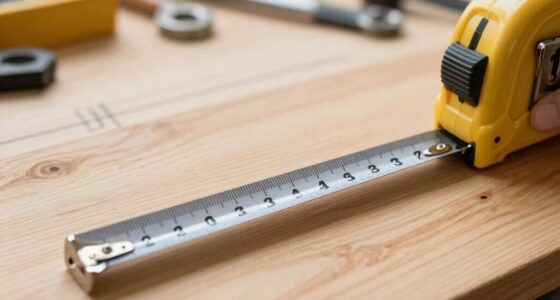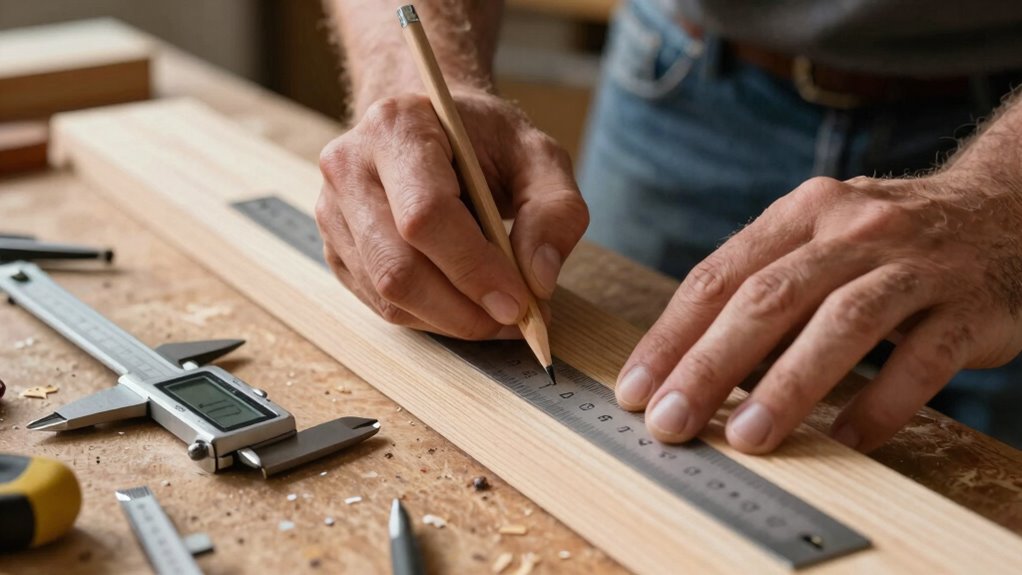
Measuring twice isn’t enough if you don’t verify your tools’ accuracy because even precise tools can become inaccurate from wear or mishandling. Without regular calibration and cross-checks, your measurements could be off, leading to wasted time, material, and flawed results. Understanding how materials respond to environmental factors helps improve accuracy too. Keep these checks in mind, and you’ll avoid surprises during assembly. If you want to learn more about keeping your measurements reliable, keep exploring.

Get business pricing on tools and workshop supplies
- Business-only prices and quantity discounts
- Tax-exempt purchasing
- Multiple users, one account, clear invoices
Key Takeaways
- Tool calibration ensures measurement accuracy beyond just double-checking, preventing errors from worn or misaligned tools.
- Verifying measurements on scrap material confirms tool reliability and detects calibration issues.
- Understanding material responses helps anticipate dimensional changes, reducing errors in measurement.
- Environmental factors like humidity can cause materials to expand or contract, requiring additional verification.
- Combining measurement, calibration, and material knowledge ensures more reliable, precise results.

Have you ever measured twice only to find your project still doesn’t fit? It’s frustrating, isn’t it? You double-check your measurements, think you’ve got everything right, but when you cut or assemble, things go awry. The problem often isn’t just about measuring twice; it’s about guaranteeing that every step, from measurement to final check, maintains the highest accuracy. Material accuracy plays a big role here. Different materials respond differently to measurement tools—wood can expand or contract with humidity, while metal stays relatively stable. If you ignore the specific characteristics of your materials, even perfect measurements can lead to mismatched parts. That’s why understanding and accounting for material accuracy is essential before you start cutting or assembling.
Accurate measurements depend on understanding your materials’ unique responses and accounting for their behavior before starting your project.
Along with material considerations, tool calibration becomes your best ally. Even the most precise measuring tools can become inaccurate over time due to wear or mishandling. If your tape measure, calipers, or laser distance meters aren’t properly calibrated, your measurements will be off, regardless of how many times you double-check. Regularly calibrating your tools ensures you’re working with true, reliable measurements. It’s a simple step that can save you hours of rework and material waste. When your tools are correctly calibrated, you eliminate one of the biggest sources of measurement errors, making your twice-measured values more trustworthy. Proper calibration is fundamental to maintaining measurement accuracy and avoiding costly mistakes.
But here’s the key: measuring twice isn’t enough if you don’t verify that your tools are accurate and your materials are responding as expected. After your initial measurements, take a moment to cross-check your tools’ calibration status. If they’re out of calibration, your measurements are already compromised. Additionally, consider performing a quick test measurement on a scrap piece of the same material. If your measurements don’t align with known standards or previous measurements, it’s a sign that your tools need calibration. This extra step ensures that your measurements reflect the true dimensions, reducing surprises during assembly or finishing. Regular calibration of your measuring tools is crucial to maintain measurement reliability over time.
Furthermore, understanding the behavior of different materials can help you anticipate and adjust for potential measurement discrepancies, ensuring more accurate results. Incorporating material responses into your planning allows for better adjustments and reduces errors caused by environmental factors. Ultimately, the extra check isn’t just about re-measuring—it’s about making sure the tools you rely on are accurate and that your materials haven’t introduced unforeseen variables. When you combine measurement diligence with regular tool calibration and an understanding of material behavior, you’re considerably more likely to get precise, consistent results. This approach minimizes errors, saves time, and boosts confidence in your craftsmanship. Remember, measuring twice is just the beginning—trustworthy measurements come from knowing your tools and materials are reliable every step of the way.
As an affiliate, we earn on qualifying purchases.
Frequently Asked Questions
What Is the Extra Check Recommended After Measuring Twice?
You should perform a calibration procedure after measuring twice to guarantee accuracy. This extra check accounts for environmental factors like temperature and humidity that can affect measurements. By calibrating your tools regularly, you prevent errors caused by environmental changes or equipment drift. This step guarantees your measurements remain precise over time, providing reliable results and avoiding costly mistakes in your projects.
How Often Do Measurement Errors Occur Despite Measuring Twice?
Measurement errors happen more often than you think, even after measuring twice. Like shadows lingering in the dark, inaccuracies can slip through if you’re not vigilant. To guarantee true measurement accuracy, error prevention must be continuous, not just a double-check. Regularly calibrate tools and cross-verify with a third measurement. This extra step acts as a safety net, catching mistakes before they turn into costly errors, keeping your work precise and reliable.
Can Digital Tools Replace the Need for This Extra Check?
Digital tools can’t fully replace this extra check because calibration accuracy and tool consistency still vary over time. Even high-tech devices may drift or lose precision, leading to errors if you rely solely on automation. That’s why you should double-check measurements manually. Combining digital tools with this extra verification guarantees greater accuracy, minimizes mistakes, and maintains confidence in your measurements, especially when precision truly matters.
What Are Common Mistakes Made During the Extra Check Process?
Like a lighthouse flickering in a storm, common mistakes during the extra check include overlooking calibration accuracy and relying solely on digital tools. You might rush through the process, skip human oversight, or misread measurements, leading to errors. Remember, even the best tools need careful human judgment. Double-check your calibration, stay attentive, and don’t assume automation catches every mistake—your vigilance keeps the process reliable.
Is This Extra Check Applicable to All Types of Measurements?
Yes, this extra check is applicable to all types of measurements because it enhances measurement accuracy across various tools and materials. You should always verify that your measurement tools are compatible with the specific task to avoid errors. By performing this extra check, you guarantee reliable results, regardless of whether you’re measuring wood, metal, or fabric. It’s a crucial step to maintain precision and prevent costly mistakes.
Conclusion
Remember, measuring twice isn’t just a good habit—it’s your secret weapon against costly mistakes. Without that extra check, you’re practically gambling with your project’s success, risking errors that could be as disastrous as a sinking ship. Don’t leave your work to chance; add that vital extra step, and you’ll save yourself hours, money, and frustration. Trust me, this tiny extra check can be the difference between a masterpiece and a mess—so don’t skip it!
Fall yard work Picks
leaf blowers
As an affiliate, we earn on qualifying purchases.