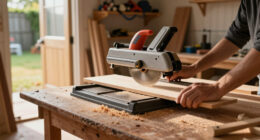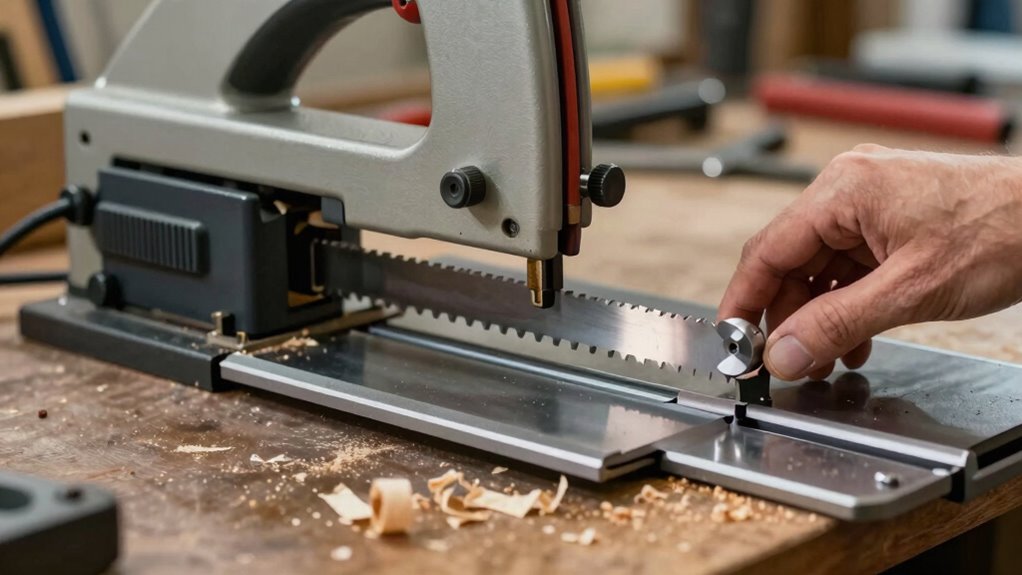
To keep your bandsaw performance consistent over time, regularly check the blade for wear and tear and replace it if damaged. Adjust the blade tension according to the manufacturer’s guidelines to prevent wandering. Make certain the wheels are clean and lubricate the bearings to reduce friction. Regularly inspect alignment to maintain even cuts and prolonged tool lifespan. With these maintenance steps, you’ll enhance your bandsaw’s efficiency and discover more tips to maximize its performance.

Get business pricing on tools and workshop supplies
- Business-only prices and quantity discounts
- Tax-exempt purchasing
- Multiple users, one account, clear invoices
Key Takeaways
- Regularly inspect and replace blades to prevent wear and ensure clean cuts for consistent performance.
- Maintain optimal blade tension to avoid wandering and stress on saw components.
- Clean and lubricate wheels to prevent dust accumulation and promote smooth operation.
- Periodically check and adjust blade alignment to maintain precise cuts and reduce wear.
- Keep the motor clean and inspect connections to avoid electrical issues that can hinder performance.
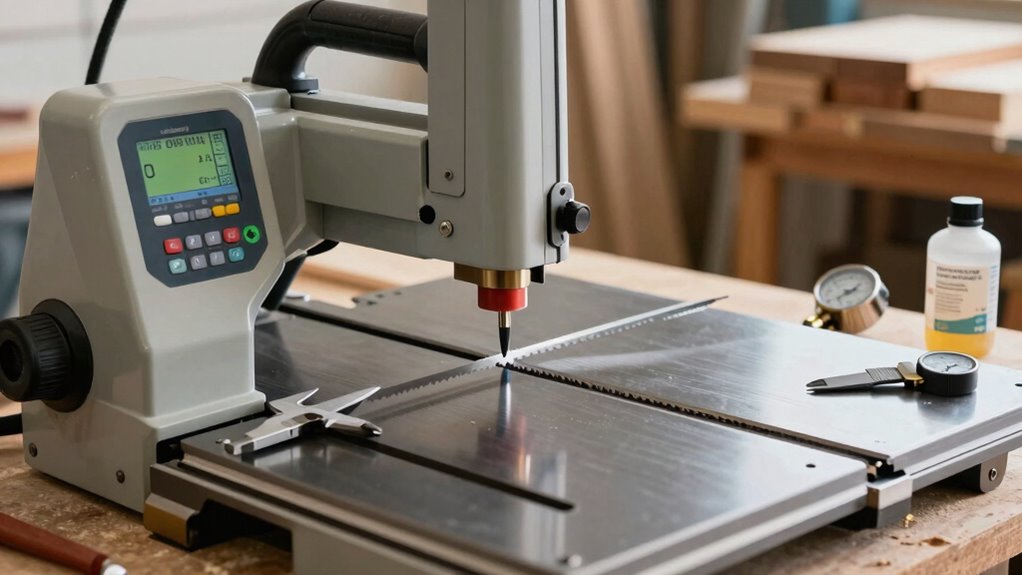
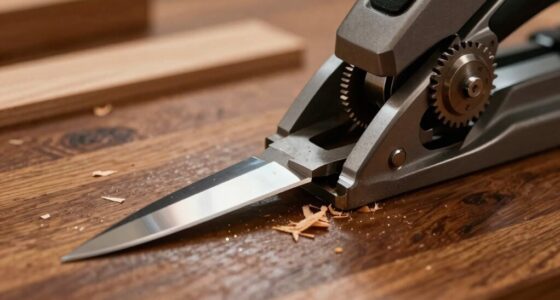
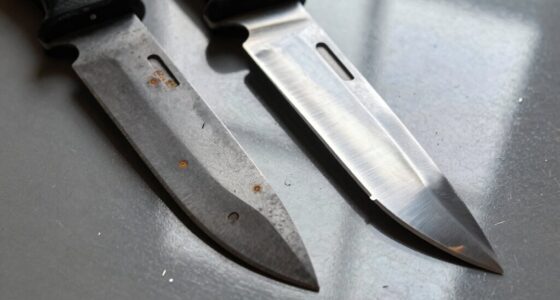
To keep your bandsaw running smoothly, regular maintenance is key. When you neglect this essential aspect, you risk compromising performance and precision. One of the most important areas to focus on is blade maintenance. Keeping your blade sharp and properly aligned guarantees clean cuts and extends the life of your bandsaw. Regularly check the blade for wear and tear, and replace it if you notice any signs of damage. A dull blade not only makes your work harder but can also lead to inaccurate cuts, wasting both materials and time.
Regular blade maintenance is essential for optimal performance and precision in your bandsaw, preventing inaccurate cuts and material waste.
In addition to keeping an eye on the blade, you should also incorporate tension adjustment techniques. Proper blade tension is critical for the performance and longevity of your bandsaw. When the blade is too loose, it can wander off track, leading to poor cuts and potential damage to both the blade and the saw itself. Conversely, if the blade is too tight, it can cause undue stress on the saw’s components. Check your manufacturer’s guidelines for the specific tension settings for your bandsaw and make adjustments as needed.
Another essential aspect of maintaining your bandsaw is verifying the wheels are clean and free of debris. Dust and sawdust can accumulate, causing the blade to slip or wear unevenly. Regularly cleaning the wheels will help keep everything running smoothly. You might also want to lubricate the bearings to reduce friction, which can affect the bandsaw’s overall performance. Keeping these components in check will help you avoid unnecessary repairs and downtime.
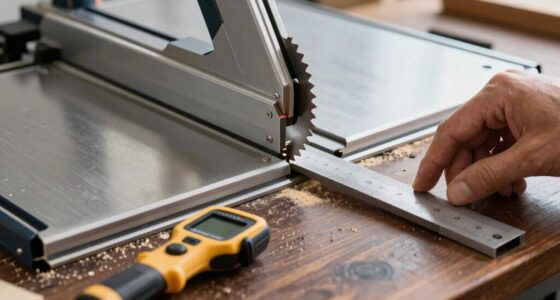
You can’t overlook the importance of checking alignment. Misalignment can lead to uneven cuts and increased wear on your bandsaw. Periodically, check the tracking of your blade to confirm it runs true on the wheels. If you notice any deviations, adjust the blade’s position accordingly to maintain peak cutting performance.
Lastly, don’t forget about your bandsaw’s motor. Keeping it clean and free from dust will guarantee it operates efficiently. Regularly inspect the wiring and connections to prevent any electrical issues that could affect your saw’s performance. Additionally, understanding gadget maintenance best practices can help extend the overall lifespan of your tools and ensure consistent results.
As an affiliate, we earn on qualifying purchases.
Frequently Asked Questions
What Is the Best Bandsaw Blade for Hardwood?
The best bandsaw blade for hardwood is typically a carbide-tipped blade. It offers durability and sharpness, making it ideal for cutting dense materials. When choosing, consider the tooth geometry; a hook or skip tooth design can enhance cutting efficiency. The right combination of blade material and tooth geometry guarantees smoother cuts and reduces the risk of burning. So, make certain to select a blade that suits your specific hardwood cutting needs.
How Often Should I Replace My Bandsaw Blade?
Think of your bandsaw blade like a trusty companion on a journey; it needs replacing when it starts to feel dull. Typically, you should replace your blade every 3 to 6 months, depending on usage and material. A worn blade reduces cutting efficiency and affects overall blade life. Keep an eye out for signs of wear—frayed edges or rough cuts—and don’t hesitate to swap it out for a fresh one when needed!
Can I Use a Bandsaw for Metal Cutting?
Yes, you can use a bandsaw for metal cutting, but you need the right bandsaw blade types. Opt for blades specifically designed for metal cutting techniques, like bi-metal or carbide-tipped blades. These blades handle tougher materials better, guaranteeing smoother cuts and longer life. Always check your bandsaw’s specifications to confirm it’s suitable for metal work, and adjust the speed and feed rates accordingly for peak performance.
What Maintenance Tools Do I Need for My Bandsaw?
What good’s a bandsaw if it isn’t well-maintained? To keep yours running smoothly, you’ll need a few essential tools. Check blade tension and wheel alignment regularly, and guarantee proper blade tracking. Use dust collection systems to keep your workspace clean, and apply lubrication techniques for moving parts. Don’t forget about bearing maintenance and cleaning procedures to prevent buildup. Finally, verify table flatness to guarantee precise cuts every time.
How Do I Troubleshoot Bandsaw Vibration Issues?
To troubleshoot bandsaw vibration issues, start by checking the blade tension; it should be firm but not overly tight. Next, inspect the wheel alignment; misaligned wheels can cause significant vibration. Adjust them as needed to guarantee they’re parallel. Also, examine the blade for any damage or wear. If you’ve done all this and the vibration persists, consider checking the bearings and the overall stability of the bandsaw setup.
Conclusion
To keep your bandsaw running smoothly, think of it like maintaining a sports car; regular check-ups and fine-tuning make all the difference. By staying on top of blade maintenance, tracking tension, and guaranteeing proper alignment, you’ll secure consistent performance over time. Don’t forget to clean the saw and lubricate moving parts! With a little effort, you can turn your bandsaw into a reliable workhorse, ready to tackle any project that comes your way.
Halloween Picks
halloween
As an affiliate, we earn on qualifying purchases.