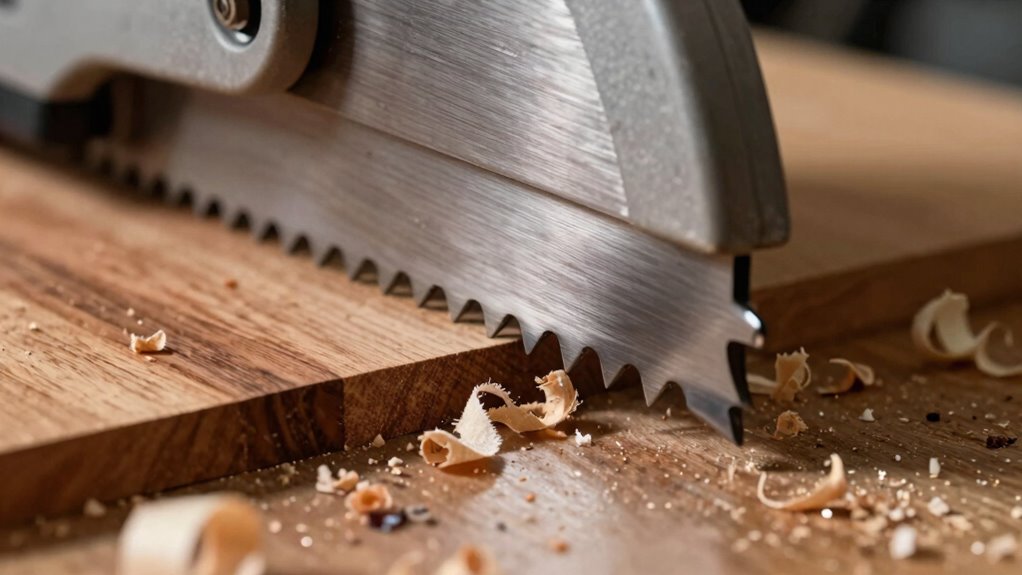

Improper blade tension is the main culprit behind wandering cuts on your bandsaw. If the tension’s too loose, the blade can bow and drift, resulting in uneven edges. Conversely, if it’s too tight, you risk damaging the blade itself. To avoid these issues, always adjust the tension gradually based on the manufacturer’s guidelines and observe how the blade behaves during operation. Getting this right is essential for clean, precise cuts, and there’s more to smooth operation than just tension.

Get business pricing on tools and workshop supplies
- Business-only prices and quantity discounts
- Tax-exempt purchasing
- Multiple users, one account, clear invoices
Key Takeaways
- Incorrect blade tension can lead to wandering cuts, making it crucial to adjust it based on manufacturer guidelines.
- Too loose tension causes blade bowing and drifting, resulting in uneven edges.
- Over-tightening the blade risks damaging both the blade and the bandsaw, impacting overall performance.
- Proper blade tracking ensures the blade runs true along the wheels, preventing misalignment.
- Regularly monitor blade behavior during operation and make adjustments as needed for optimal cutting results.

When you’re using a bandsaw, one of the most vital factors for achieving clean cuts is proper blade tension. If the tension’s off, you’ll often find your cuts wandering, leading to uneven edges and frustration. Getting the tension right is essential; too loose, and the blade can bow, causing it to drift. Too tight, and you risk damaging the blade or even the bandsaw itself. It’s all about finding that sweet spot, and that starts with understanding how to make effective tension adjustments.
To begin, check the manufacturer’s guidelines for the specific bandsaw you’re using. Each machine has its own recommendations regarding blade tension. Often, you’ll find a tension scale on the bandsaw, which indicates the correct tension for different blade widths. When you adjust the tension, do it gradually and keep an eye on the blade’s behavior. You’ll want to tighten it until it feels snug but not overly strained.
Once you’ve adjusted the tension, it’s time to pay attention to blade tracking. Blade tracking guarantees that the blade runs true along the wheels of the bandsaw. If it’s misaligned, it can cause the blade to wander, even if the tension is just right. To check the tracking, turn on the bandsaw and observe the blade as it runs. If it’s not centered on the wheel, you’ll need to adjust the tracking mechanism, which usually involves turning a knob or screw.
After making the tracking adjustment, run the bandsaw again and check how the blade behaves. It should stay centered and glide smoothly along the wheels. If you’re still experiencing wandering cuts, revisit the tension adjustment. Sometimes, it takes a couple of tweaks to get everything dialed in perfectly.
As an affiliate, we earn on qualifying purchases.
Frequently Asked Questions
How Do I Know if My Bandsaw Blade Is Dull?
You’ll know your bandsaw blade is dull when you notice a drop in blade performance and cutting accuracy. If it struggles to cut through material or produces rough edges, it’s time for a change. Also, listen for unusual sounds; a dull blade can create a distinct noise. Finally, if you’re applying extra pressure to achieve a cut, that’s a clear sign your blade needs sharpening or replacing. Keep an eye out for these indicators!
What Type of Blade Is Best for My Bandsaw?
The best blade for your bandsaw depends on your project. For general woodworking, a bi-metal blade offers durability and versatility. If you’re cutting metal, consider a carbide-tipped blade. Look at the blade tooth configuration, too; fewer teeth are great for thicker materials, while more teeth provide smoother cuts for thinner stock. By choosing the right blade material options and tooth design, you’ll achieve cleaner, more precise cuts every time.
How Often Should I Change the Bandsaw Blade?
You should change your bandsaw blade every 3 to 6 months, depending on usage. If you notice signs of wear, like dullness or curling, it’s time for a change. Blade longevity is essential for clean cuts, so don’t wait until it’s too late. Regularly inspect your blade and adjust your changing frequency based on how often you use your bandsaw. Keeping a sharp blade guarantees better performance and reduces frustration during projects.
Can I Use a Bandsaw for Cutting Metal?
Yes, you can use a bandsaw for cutting metal, but make certain your bandsaw features are suitable for the task. Look for a machine with a metal-cutting blade and adjustable speed settings. Using the right blade and proper tension helps achieve clean cuts. Always make sure the material is securely clamped and take your time to avoid overheating. With the right setup, you’ll find metal cutting with a bandsaw effective and efficient.
What Are the Safety Precautions When Using a Bandsaw?
When using a bandsaw, think of it as wielding Excalibur—handle it with care! Confirm your blade alignment is spot-on and check your tension settings before cutting. Always wear safety goggles and ear protection to guard against flying debris and noise. Keep your hands clear of the blade and use push sticks for smaller pieces. Remember, a moment of caution can prevent accidents and keep your workshop a safe haven.
Conclusion
Imagine a tightrope walker who wobbles because their rope isn’t taut. Just like that, your bandsaw needs the right tension to keep its path straight. If you ignore this small yet essential detail, you risk veering off course, much like the walker teetering dangerously. So, before you make your cut, check that tension. With it properly set, you’ll glide through your project smoothly, creating precision cuts that stay true, just as the tightrope walker finds balance.
Fall Picks
fall essentials
As an affiliate, we earn on qualifying purchases.