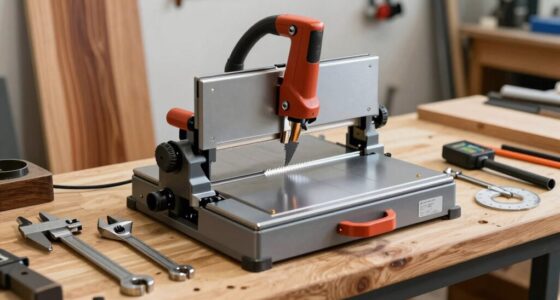

To stop snipe and ridges on your jointer, make sure your knives are installed and aligned correctly. Set the knives so they extend about 1/8 inch above the cutter head using a straightedge or dial indicator for accuracy. Tighten the locking bolts securely after adjustment. Regularly inspect and sharpen your blades to keep cuts smooth and even. Proper setup prevents uneven cuts and noise, and if you want to master this process, there’s more you can do to fine-tune your jointer.
Key Takeaways
- Ensure knives are properly sharpened and evenly protrude about 1/8 inch above the cutter head.
- Use a straightedge or dial indicator to align knives precisely for smooth cuts.
- Adjust knives so they are set at the same height to prevent ridges and snipe.
- Secure all locking bolts after height and alignment adjustments before operation.
- Regularly check and maintain knife sharpness and alignment for consistent, snipe-free results.

Setting up the jointer knives correctly is essential for achieving smooth, accurate cuts and ensuring your machine operates safely. Proper blade sharpening and precise alignment are the cornerstones of a successful setup. Dull knives not only produce rough cuts but can also cause dangerous kickbacks or uneven ridges on your wood. Before beginning, always prioritize safety precautions: unplug the machine, wear safety glasses, and work in a well-lit area. These steps protect you from injury and make the setup process smoother.
Proper jointer knife setup ensures smooth cuts and safe operation. Prioritize safety and precise alignment for best results.
Start by removing the cutter head cover to access the knives. Carefully loosen the knife locking bolts, and then gently lift the knives out. When handling the blades, be cautious to avoid cuts, especially since they’re sharp from blade sharpening. Inspect each knife carefully for nicks, dull spots, or any damage. If the blades are dull or show signs of wear, blade sharpening is necessary before reinstalling. Using a sharpening stone or a specialized tool, restore the cutting edge to ensure clean, smooth cuts. Dull blades tend to cause ridges and snipe, so keeping blades sharp is a crucial safety precaution that also improves cut quality.
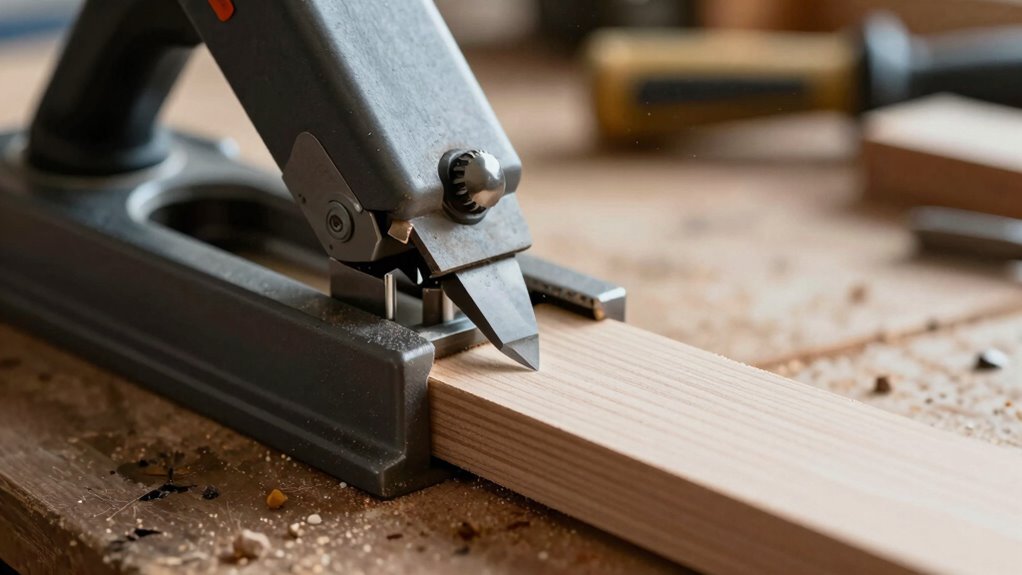
Once the blades are sharp, reinstall them into the cutter head, making sure they’re properly seated and aligned. Your goal is to make the knives perfectly level with the surface of the cutter head. Many jointers have adjustment screws or a jig to help you set this height. Use a straightedge or a dial indicator to verify that each knife extends just slightly above the cutter head, typically about 1/8 inch. Precise blade sharpening and alignment prevent uneven cuts, ridges, and snipe. Keep checking the height after tightening the locking bolts to prevent shifts that could cause dangerous operation or poor results. Regular maintenance of the knife alignment ensures consistent performance and safety.
Safety precautions also include double-checking that everything is secure before plugging the machine back in. Never rush this step. Once you’re confident that the knives are sharp, properly aligned, and securely locked, plug in the jointer and run it at no load for a few seconds. Listen for unusual vibrations or noises, which could indicate improper setup. Regularly maintaining your blades through blade sharpening and alignment not only extends the life of your knives but also ensures a safer, smoother operation. Proper setup is the key to avoiding ridges and snipe and producing consistently professional results.

BLSGBUIDING Jointer Planer Blade Sharpening Stone (4-sided, Removable) Coarse, Fine, and Ultra-fine Grits Fully Equiped, Sand Strips Grit 300 & 600, Diamond Flakes Grit 400 & 1000
- Application: Sharpen woodworking knives and planer blades
- Design: 4-sided removable sharpening stone
- Grits Included: 300, 600, 400, 1000 grit
As an affiliate, we earn on qualifying purchases.
As an affiliate, we earn on qualifying purchases.
Frequently Asked Questions
How Often Should I Replace My Jointer Knives?
You should replace your jointer knives when they become dull or chipped, typically every 6 to 12 months, depending on usage. Regular blade sharpening can extend their life, but if sharpening no longer restores a clean cut, it’s time for knife replacement. Follow a consistent knife replacement schedule and inspect the blades often to make certain of smooth, accurate cuts and avoid snipe and ridges.
Can I Sharpen Jointer Knives Myself?
Did you know that DIY maintenance can save you up to 50% compared to professional services? You can sharpen jointer knives yourself if you have the right tools and skills. Just make certain you use proper knife sharpening techniques to avoid damaging the blades. Keep in mind, consistent sharpening helps maintain cutting performance, but if you’re unsure or uncomfortable, it’s best to consult a professional to prevent costly mistakes.
What Safety Precautions Are Necessary During Setup?
When setting up the jointer knives, you should always wear personal protective equipment like safety glasses and gloves to protect yourself from sharp blades. Before starting, carefully calibrate the blades to guarantee proper alignment, which minimizes risks and improves results. Turn off and unplug the machine during adjustments, and double-check all bolts and screws. Staying cautious and precise helps prevent injuries and ensures a safe, effective setup.
How Do Temperature Changes Affect Knife Alignment?
Did you know that metal can expand or contract by about 0.000012 inches per degree Fahrenheit? Temperature changes greatly affect knife alignment due to thermal expansion and material contraction. When it gets hot, knives may shift, causing uneven cuts. You should check and re-align your knives after temperature fluctuations, especially in the workshop, to guarantee precise cuts and avoid snipe or ridges.
Is There a Difference Between Carbide and Steel Knives?
Carbide knives are more durable and retain their sharpness longer than steel knives, making them ideal for heavy-duty or frequent use. Steel knives are cheaper initially and easier to sharpen, but they wear out faster. When comparing material options, consider your workload and budget. If you want longevity and less maintenance, carbide is worth the extra cost. For occasional projects, steel knives may suffice and save you money upfront.
Conclusion
Mastering your jointer knife setup is like tuning a fine instrument—you’ll notice the difference in every cut. When you take the time to align your knives properly, snipe and ridges become distant memories, smoothing your workflow like a gentle breeze. Think of it as opening a secret passage to flawless craftsmanship. With patience and precision, you turn your tools into trusted allies, transforming rough lumber into polished perfection with elegance and ease.