Pin nailers and brad nailers tackle different challenges because they use different nail gauges. If you need clean, invisible fastenings for lightweight materials or delicate trim work, a pin nailer’s 23 gauge nails are perfect. On the other hand, for projects requiring more strength and support, like furniture assembly, an 18 gauge brad nailer is your best bet. Choosing the right tool impacts your project’s outcome considerably, and there’s more to discover about their applications.

Get tools and workshop supplies delivered free — and shop member deals
- Fast, free delivery on millions of items
- Access to Prime Big Deal Days deals on October 6–7
- Prime Video, Amazon Music and more included
Key Takeaways
- Pin nailers use 23 gauge nails for lightweight materials, ideal for delicate trim work and minimizing wood splitting.
- Brad nailers utilize 18 gauge nails, providing more fastening strength suitable for assembling heavier furniture and ensuring secure joints.
- Aesthetic considerations favor pin nailers as they create virtually invisible fastenings, enhancing the visual appeal of intricate designs.
- Pin nailers excel in non-structural applications, while brad nailers are essential for projects requiring structural integrity in high-traffic areas.
- Selecting the appropriate tool based on nail gauge and project needs directly impacts the effectiveness and outcome of woodworking tasks.
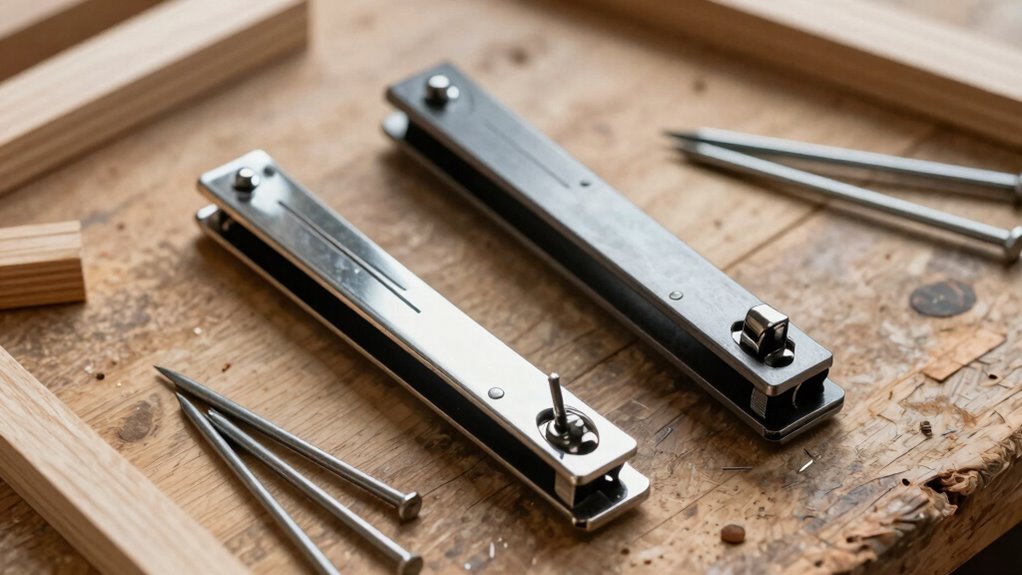
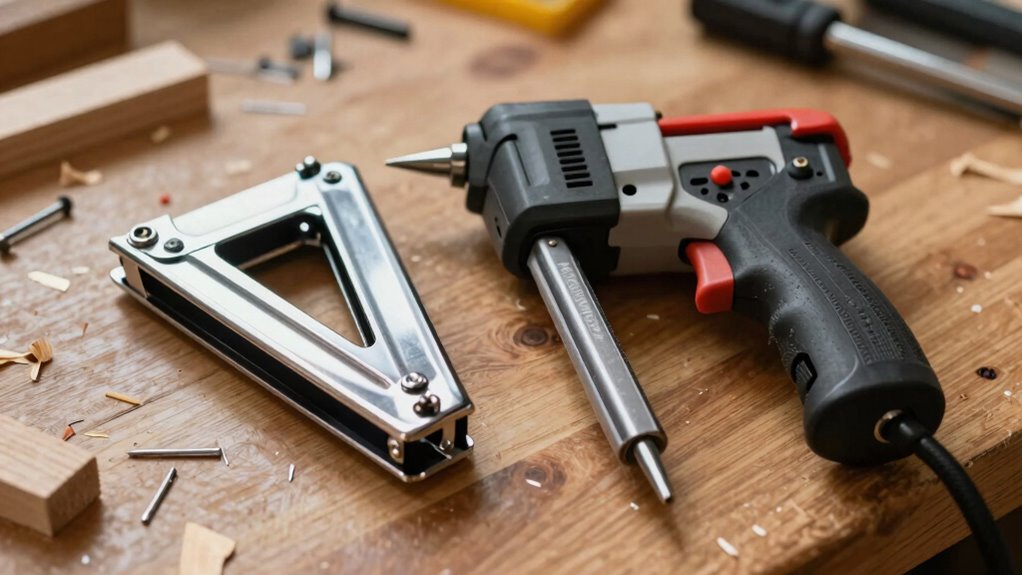
When you’re tackling woodworking projects, choosing between a pin nailer and a brad nailer can make a big difference. These tools serve distinct purposes, and understanding their differences helps you choose the right one for your task. Pin nailers use very thin nails, typically around 23 gauge, which are great for delicate applications. On the other hand, brad nailers use slightly thicker nails, usually 18 gauge. This variation in nail size affects not only the types of materials you can work with but also the fastening strength you can achieve.
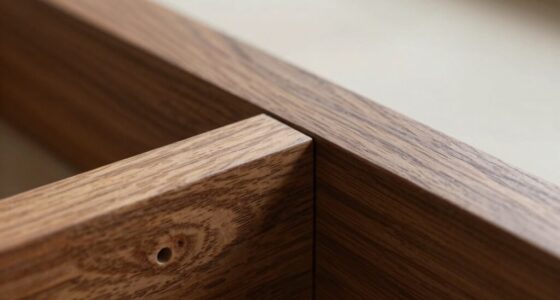
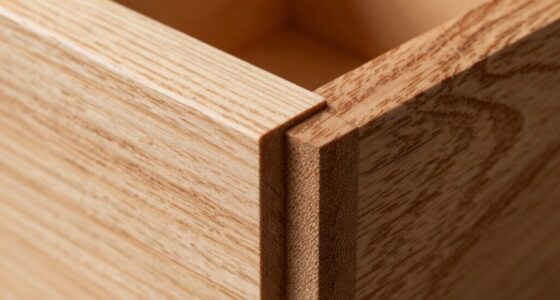
If you’re working with lightweight materials or need to attach thin moldings without splitting the wood, a pin nailer is your best bet. The small nail size minimizes damage, allowing you to create clean and virtually invisible fastenings. Imagine putting together intricate projects where aesthetics matter. With a pin nailer, you maintain a tidy finish, which is vital for trim work and fine furniture. Additionally, understanding the different nail gauges can help you select the appropriate tool for your specific project. Recognizing the types of nails used in each tool can further enhance your project outcomes.
Conversely, when you need more fastening strength for heavier pieces, a brad nailer shines. The slightly larger nail size provides better holding power, making it perfect for attaching thicker materials or when you need that extra grip. If you’re assembling furniture or working on larger cabinetry, a brad nailer can guarantee that your joints hold securely over time. This added strength can be particularly beneficial in high-traffic areas where durability is key.
Both tools have their advantages, but it’s important to match the tool to your project’s needs. If you’re assembling something that doesn’t require significant strength, using a pin nailer is efficient and effective. However, if you’re concerned about structural integrity and need to join heavier materials, reach for that brad nailer.
best pin nailer for delicate trim
As an affiliate, we earn on qualifying purchases.
As an affiliate, we earn on qualifying purchases.
Frequently Asked Questions
Can I Use Pin Nailers for Outdoor Projects?
You can use pin nailers for outdoor projects, but you need to take into account weather resistance and material compatibility. Pin nails are often too thin for heavy-duty outdoor applications, and they may not hold up against moisture or wind. If you’re working with materials that require stronger fasteners, you might want to opt for a brad nailer instead. Always check the specifications of your project to guarantee durability and effectiveness in outdoor conditions.
What Safety Gear Should I Wear When Using Nailers?
As you step into your workshop, the smell of fresh wood fills the air, but don’t forget your safety gear. Slip on those safety goggles to shield your eyes from flying debris, and secure your hearing protection to muffle the loud blasts of the nailer. These simple precautions can make all the difference, keeping you safe while you tackle your projects. Remember, safety first guarantees you can enjoy your craft without worry!
How Do I Maintain My Nailers for Longevity?
To guarantee your nailers last, follow some essential nailer maintenance tips. Regularly clean the tool to prevent dust buildup, and lubricate moving parts to avoid common issues like jamming. Check the air filter frequently and replace it if it’s dirty. Store your nailers in a dry place to prevent rust. Finally, inspect the hoses and fittings for leaks; replacing them promptly will keep your nailers running smoothly for years.
Are Pin Nailers and Brad Nailers Easy to Operate?
Using a pin nailer or brad nailer feels like wielding a magic wand for your projects! Both tools are easy to operate, but their operational differences shape your user experience. Pin nailers deliver finer, less visible fasteners, making them ideal for delicate work, while brad nailers handle heavier materials with more substantial nails. Whichever you choose, you’ll find that mastering these tools boosts your confidence and enhances your craftsmanship.
What Is the Best Brand for Nailers on the Market?
When you’re looking for the best brand for nailers, consider top nailer brands like BOSTITCH, DEWALT, and Makita. These brands offer a range of models with impressive nailer features, such as adjustable depth control and lightweight designs that make them easy to handle. You’ll find that they provide durability and reliability for your projects, ensuring you get the job done right every time.
Conclusion
In the world of woodworking, choosing between a pin nailer and a brad nailer is like picking the right tool for a masterpiece. Pin nailers excel in delicate tasks, leaving minimal marks, while brad nailers handle heavier jobs with ease. By understanding their unique strengths, you can tackle any project with confidence. So, whether you’re crafting intricate trim or building sturdy furniture, knowing when to use each will make all the difference in your final creation.
Fall Picks
fall essentials
As an affiliate, we earn on qualifying purchases.