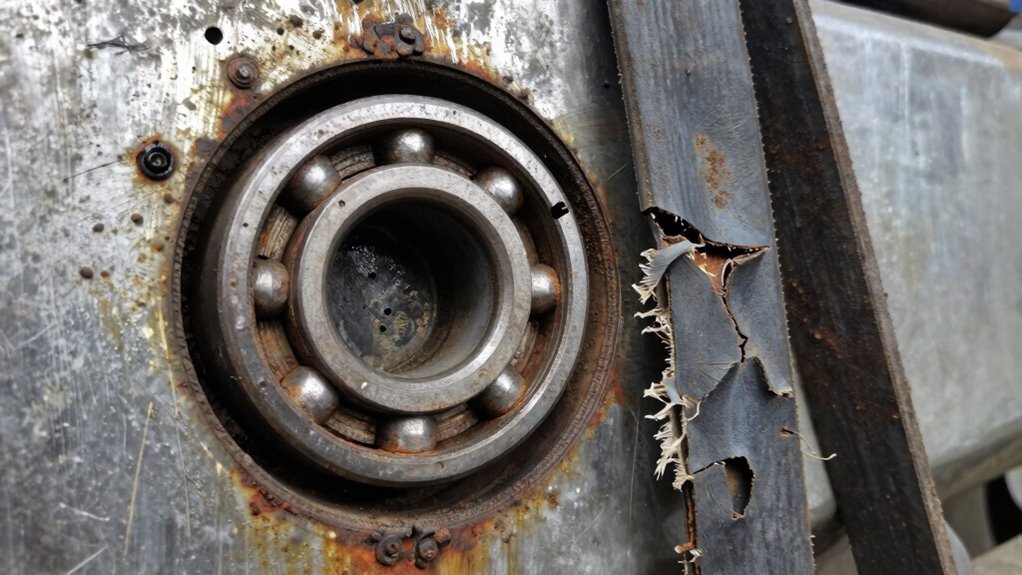

Neglecting bearings and belts causes subtle misalignments and uneven wear, which quietly reduce your equipment’s accuracy over time. Friction and heat from poor maintenance can lead to seized bearings and slipping belts, resulting in vibrations, imbalance, and measurement errors. These issues often go unnoticed until they cause costly breakdowns or significant performance drops. By staying on top of maintenance, you can prevent these problems from sneaking up on you—keep going to discover how to protect your equipment effectively.
Key Takeaways
- Neglected bearings develop misalignments, causing vibrations that impair measurement accuracy.
- Worn belts slip or stretch, leading to inconsistent power transmission and error accumulation.
- Lack of lubrication increases friction and heat, accelerating component wear and reducing precision.
- Misaligned belts and bearings cause pulley wobble, resulting in inaccurate readings over time.
- Cumulative neglect leads to gradual performance decline, compromising overall equipment accuracy.
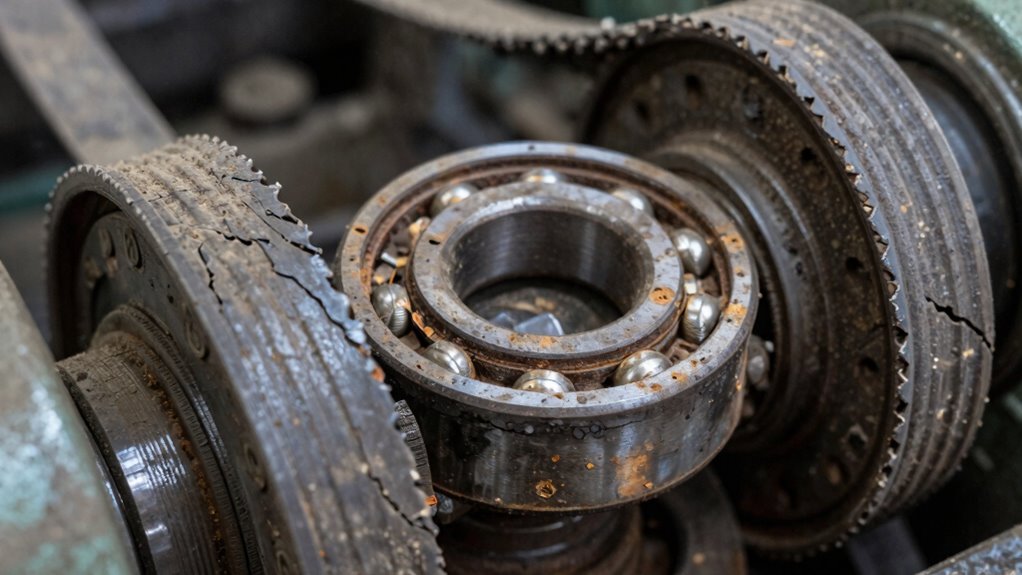
Neglected bearings and belts can substantially impact the accuracy of your machinery over time, often going unnoticed until performance declines. When you ignore routine maintenance, tiny misalignments and increased friction gradually diminish your equipment’s precision. Proper lubrication maintenance becomes essential here; without it, bearings can seize or wear unevenly, causing vibrations and subtle shifts that throw off your measurements. Regularly checking and applying the right lubricants ensures smooth operation, reducing wear and keeping your equipment running accurately. Preventive maintenance is crucial to catch issues early before they escalate.
Neglected bearings and belts cause subtle misalignments, increased friction, and measurement inaccuracies over time. Regular maintenance is essential for precision.
Belt tension and alignment are equally important. Over time, belts stretch or slip, which can lead to inconsistent power transmission. If you neglect alignment checks, the belts may drift from their ideal position, causing uneven wear and potential misalignment of connected components. These small deviations might seem insignificant at first but can compound, resulting in errors in your machinery’s output. Making sure belts are properly tensioned and aligned not only prolongs their lifespan but also maintains the precision needed for your operations. Regular inspection of belt tension helps prevent these issues from developing, especially as environmental factors can influence belt behavior.
When you overlook these maintenance aspects, the effects are often cumulative. For example, a misaligned belt can cause the pulley to wobble slightly, leading to inaccurate readings or flawed product quality. Similarly, a bearing that’s not properly lubricated will generate excess heat and friction, accelerating wear and potentially causing unexpected breakdowns. These issues tend to escalate gradually, making it easy to dismiss them as minor inconveniences until the overall performance is noticeably compromised. Regular inspections help detect wear patterns early, preventing costly repairs down the line. Incorporating vibration analysis into your routine can also help identify early signs of uneven wear or imbalance before they become critical.
By incorporating regular lubrication maintenance and alignment checks into your routine, you address potential problems before they develop into costly repairs or significant inaccuracies. Don’t wait until you notice a decline in performance — proactive care keeps your machinery operating within its designed tolerances. When you routinely inspect bearings and belts, you catch early signs of wear or misalignment and correct them promptly. This vigilance preserves measurement accuracy and maximizes equipment lifespan.
In the end, neglecting bearings and belts isn’t just about avoiding breakdowns; it’s about safeguarding the precision your operations depend on. Maintenance routines focused on lubrication and alignment aren’t time-consuming; they’re investments in reliability. When you stay on top of these essentials, you ensure your machinery continues to deliver accurate results over time, reducing downtime and improving overall efficiency. Keep your equipment aligned and well-lubricated, and you’ll maintain the high standards your work demands.
As an affiliate, we earn on qualifying purchases.
Frequently Asked Questions
How Often Should Bearings and Belts Be Inspected for Optimal Accuracy?
You should inspect bearings and belts at least every three to six months, depending on usage and environment. Regular checks guarantee lubrication schedules are maintained and alignment adjustments are made promptly. Neglecting these inspections can lead to increased wear, reduced accuracy, and potential equipment failure. Staying proactive with routine inspections helps maintain peak performance, prevents costly downtime, and extends the lifespan of your machinery.
What Are the Signs of Bearing and Belt Wear That Affect Precision?
Like a watch losing its rhythm, worn bearings and belts send subtle signals. You’ll notice increased vibration during operation, akin to a humming engine, and irregularities in movement. If lubrication schedules slip, friction rises, accelerating wear. Regular vibration analysis reveals these signs early, helping you catch issues before accuracy diminishes. Pay attention to unusual noises and movement inconsistencies—they’re the whispers of bearings and belts begging for your focus.
Can Neglected Bearings and Belts Cause Long-Term Damage to Machinery?
Neglected bearings and belts can cause long-term damage to your machinery by increasing wear and risking failure. Without proper lubrication, friction and heat build up, accelerating deterioration. Additionally, overlooked issues often lead to abnormal vibrations, which vibration analysis can detect early. Ignoring these maintenance needs can result in costly repairs or replacements down the line, so regular checks and timely lubrication are essential for maintaining your equipment’s longevity and performance.
Are There Specific Environments That Accelerate Bearing and Belt Degradation?
You might not realize it, but over 60% of bearing failures happen in corrosive environments or high-temperature conditions. These environments accelerate degradation by causing corrosion, drying out lubricants, and weakening materials. If you work in such settings, you’re risking increased downtime and costly repairs. Regular maintenance and choosing suitable materials can help mitigate these effects, ensuring your machinery stays accurate and reliable longer.
What Maintenance Practices Best Prevent Accuracy Loss Over Time?
You can best prevent accuracy loss by adhering to regular lubrication schedules, ensuring bearings and belts stay well-maintained and reduce wear. Additionally, perform vibration analysis routinely to detect early signs of misalignment or imbalance. These practices allow you to catch issues early, maintaining precision and extending equipment lifespan. Consistent maintenance helps keep your machinery running smoothly, minimizing inaccuracies caused by neglected bearings and belts over time.
Conclusion
Neglected bearings and belts are like forgotten anchors, slowly pulling accuracy away from your precision. Over time, they wear silently, threatening to drift your measurements off course. Don’t let these quiet saboteurs be the shadows that undermine your work. Regular maintenance is your lighthouse, guiding you safely through the fog of deterioration. Stay vigilant, and keep your tools shining bright—because in the dance of precision, every detail counts.