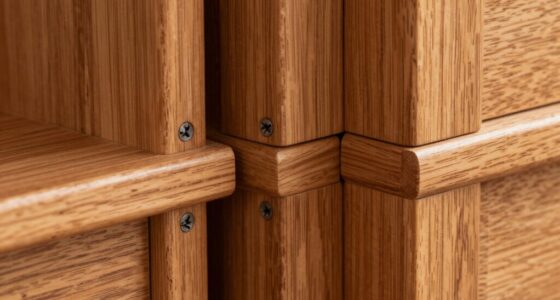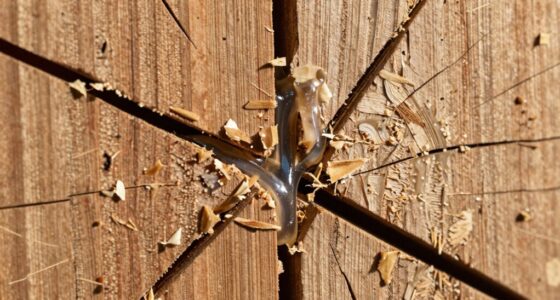
To choose a joint based on stress instead of tradition, assess the forces acting on your structure, like tension, compression, shear, or torsion. Focus on the actual stresses joints will experience rather than traditional preferences. Guarantee the joint type can handle dynamic loads and maintain stability over time. By prioritizing stress analysis, you’ll improve durability and performance. Continuing this approach will give you strategies to select joints that truly meet your project’s demands.

Get business pricing on tools and workshop supplies
- Business-only prices and quantity discounts
- Tax-exempt purchasing
- Multiple users, one account, clear invoices
Key Takeaways
- Assess expected load types and magnitudes to determine joints that can withstand specific stresses.
- Evaluate joint stability under compression, tension, shear, and torsion for optimal performance.
- Prioritize joints that distribute stress evenly to prevent localized failure.
- Analyze dynamic and long-term stress conditions to select durable, adaptive joints.
- Move beyond traditional choices by integrating scientific stress analysis into joint selection processes.

Have you ever wondered how to select the right joint for your project based on stress? It’s a essential question because the choice of joint can greatly impact the durability and performance of your construction or design. Instead of relying solely on traditional methods or pre-set standards, focusing on the actual stress your joint will endure helps you make smarter decisions. When considering stress, you need to assess how the joint handles different forces, especially in terms of muscle tension and joint stability. These factors determine how well the joint will perform under load and how it might respond to ongoing stresses. Understanding the forces acting on joints is crucial for making informed choices.
Muscle tension plays a key role in joint stability, even in mechanical systems. Although muscle tension is a biological concept, you can think of it as analogous to the forces acting on mechanical joints. If a joint experiences high tension, it must be designed to withstand that load without failing. For example, in a mechanical context, you might select a joint that distributes stress evenly or incorporates flexible elements to absorb shock. This approach minimizes the risk of joint failure due to excessive tension, making sure your project can handle dynamic or unpredictable forces. Additionally, evaluating dynamic loading helps anticipate how joints will perform during movement or shifting loads, further enhancing durability. Recognizing the load distribution across joints can also inform better design choices to improve overall stability.
Joint stability is equally important. When choosing a joint based on stress, you want to make certain that it maintains stability under varying loads. A stable joint resists unwanted movement or deformation that could compromise your structure’s integrity. To achieve this, consider the types of stress your joint will face—whether compression, tension, shear, or torsion—and select a joint that can resist those forces effectively. For instance, a bolted joint might excel in shear resistance, while a pinned joint might be better for allowing rotation but with less stability under tension. Your choice should be driven by how well the joint maintains its position and function when subjected to real-world stresses.
Instead of sticking to tradition, you should analyze the specific demands of your project. Measure the expected stress levels and understand how different joints perform under those conditions. Prioritize joint designs that optimize joint stability and manage muscle tension efficiently. This means choosing joints that not only fit your aesthetic or design preferences but also serve the structural needs dictated by the stresses involved. By doing so, you’ll create a more resilient and reliable structure that can adapt to stress over time rather than failing prematurely because of overlooked forces. Ultimately, selecting joints based on stress ensures longevity and performance, moving beyond outdated conventions toward a more scientific, effective approach.
structural joint stress analysis tools
As an affiliate, we earn on qualifying purchases.
As an affiliate, we earn on qualifying purchases.
Frequently Asked Questions
How Do I Assess Stress Levels in Different Joints Accurately?
You can assess stress levels in joints by paying attention to muscle tension and bone alignment. Feel for tightness or discomfort around the joint, noting areas of increased muscle tension. Observe how bones align during movement or when at rest; misalignment can indicate high stress. Using gentle palpation and visual cues, you can identify joints under more stress, helping you select the right joint based on actual stress rather than tradition.
Are There Specific Tools to Measure Joint Stress?
Yes, there are specialized tools like strain gauges and pressure sensors that measure joint stress precisely. These tools analyze material properties and joint biomechanics, giving you real-time data on stress levels. Think of them as superhero gadgets for biomechanics, revealing stress points you can’t see with the naked eye. By using these devices, you can make informed decisions about joint health and optimize performance based on accurate, scientific data.
How Does Joint Stress Impact Long-Term Health?
Joint stress directly affects your long-term health by influencing joint mobility and stability. When stress exceeds the joint’s thresholds, it can cause wear and tear, leading to chronic pain or injury. By understanding and managing stress levels, you help sustain joint function and prevent long-term damage. Monitoring stress thresholds ensures you maintain healthy joint mobility, reducing the risk of degenerative conditions and supporting overall joint health over time.
Can Stress-Based Joint Selection Improve Overall Performance?
Yes, stress-based joint selection can improve your overall performance by promoting better biomechanical adaptation and reducing material fatigue. When you choose joints based on stress, your body adapts more efficiently, enhancing stability and reducing injury risk. This approach guarantees your joints handle loads effectively, leading to improved durability and function. Over time, this strategic choice helps you perform better, stay resilient, and maintain long-term joint health.
What Are Common Mistakes When Choosing a Joint by Stress?
You might overlook joint stability, risking material fatigue and failure. A common mistake is focusing solely on stress levels, ignoring how joint design impacts long-term durability. Rushing the selection process can lead to mismatched joints that crack under pressure or wear out quickly. Always consider how stress distribution affects both stability and fatigue, ensuring your choice balances immediate strength with the joint’s ability to withstand repeated stress.
Conclusion
So, next time you’re selecting a joint, why not consider the stress it’ll bear instead of just tradition? By understanding the specific demands your project places on each joint, you can make smarter, more durable choices. Isn’t it better to build with purpose rather than just habit? When you factor in stress, you’re not just choosing a joint—you’re ensuring the longevity and safety of your work. Ready to rethink your approach?
Halloween Picks
halloween
As an affiliate, we earn on qualifying purchases.