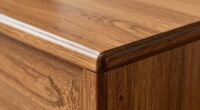
To make your thickness planer feel smooth instead of harsh, focus on optimizing the feed rate and keeping your cutters sharp. A moderate feed rate helps achieve a cleaner finish, while dull blades can tear wood fibers. Additionally, guarantee your machine is properly set up and aligned to prevent snipe. By balancing these factors, you’ll enhance performance and result in a professional finish. There’s plenty more to explore on achieving perfect results!

Get business pricing on tools and workshop supplies
- Business-only prices and quantity discounts
- Tax-exempt purchasing
- Multiple users, one account, clear invoices
Key Takeaways
- Optimal Feed Rate: A moderate feed rate ensures blades cut effectively, resulting in smoother finishes rather than rough surfaces.
- Sharp Cutters: Maintaining sharp blades reduces tearing of wood fibers, leading to cleaner cuts and a smoother feel.
- Wood Species Consideration: Understanding the characteristics of the wood helps adjust techniques for smoother planing, especially with dense hardwoods.
- Machine Alignment: Proper alignment of infeed and outfeed tables prevents snipe, which can negatively affect the finish quality.
- Regular Maintenance: Consistent machine upkeep and inspection of blades contribute significantly to achieving a professional, smooth finish.
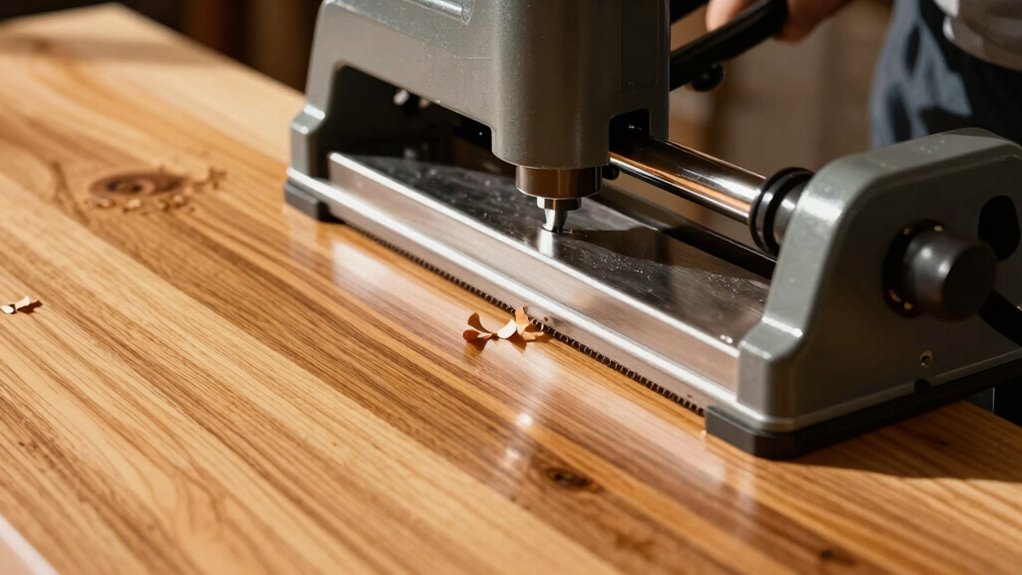
When you’re working with rough lumber, a thickness planer can be a game changer. It transforms uneven, rough surfaces into smooth, flat boards ready for your projects. But how can you guarantee that your thickness planer delivers a smooth finish instead of a harsh one? A couple of key factors come into play: feed rate and cutter quality.
First, let’s talk about feed rate. The feed rate is how quickly you send the wood through the planer, and it noticeably impacts the finish. If you feed the lumber too fast, the blades might not have enough time to cut effectively. This can leave you with a surface that feels rough or uneven. On the other hand, if you take it slow, the blades can work their magic, resulting in a smoother finish. It’s all about finding that sweet spot. You might need to experiment a bit, but generally, a moderate feed rate will help you achieve a nice, smooth surface.
Finding the right feed rate is essential; too fast can lead to rough surfaces, while a moderate pace ensures a smooth finish.
Next, let’s focus on cutter quality. The blades on your thickness planer play a vital role in how smooth your finished boards are. Dull or damaged cutters can tear the wood fibers rather than slice through them cleanly, leading to a harsh finish. Regularly inspecting and maintaining your blades is essential. When they’re sharp, they’ll glide through the wood, producing a clean cut. You might even take into account upgrading to high-quality carbide blades if you’re looking for an extra edge. These blades tend to stay sharper longer and provide a smoother finish.
Another factor to reflect on is the type of wood you’re working with. Some species are naturally softer and easier to plane, while others are harder and require more care. If you’re working with a dense hardwood, you may need to adjust your feed rate and verify your cutters are in peak condition. Additionally, understanding wood characteristics can help you choose the right settings for a smoother finish. Being aware of grain direction can also significantly influence the smoothness of the final surface, reducing tear-out and roughness.
Finally, understanding the importance of proper machine setup can significantly influence the smoothness of your finished boards. Always keep an eye on the machine’s setup, including ensuring the infeed and outfeed tables are aligned properly. If they’re off, you could end up with snipe—a common issue where the ends of the boards are cut lower than the middle. This can ruin the smoothness you’re aiming for.
thickness planer blades replacement
As an affiliate, we earn on qualifying purchases.
As an affiliate, we earn on qualifying purchases.
Frequently Asked Questions
How Do I Choose the Right Thickness Planer for My Needs?
To choose the right thickness planer for your needs, start by considering the planer features. Look for motor power, cutting width, and the type of knives it uses. Check user reviews to see how others rate performance and durability. If you’re working with hardwoods or thicker materials, opt for a more robust model. Finally, think about your budget; investing in quality can save you time and frustration in the long run.
What Maintenance Tasks Help Keep My Planer Running Smoothly?
Think of your planer as a well-tuned orchestra; every part must harmonize for smooth performance. To keep it running smoothly, prioritize blade replacement when they dull, and don’t neglect feed roller maintenance to guarantee consistent material feeding. Effective dust collection prevents buildup that can hinder performance, while proper lubrication techniques keep moving parts gliding effortlessly. By staying on top of these tasks, you’ll guarantee your planer sings a smooth tune every time you use it.
Can I Use a Thickness Planer on Hardwoods?
Yes, you can definitely use a thickness planer on hardwoods. Just make certain to adjust your planer settings based on the hardwood types you’re working with. Softer hardwoods like poplar require different settings than denser options like oak or maple. Take your time, and don’t rush the process. Proper adjustments will help prevent tear-out and guarantee a smooth finish. Keep your blades sharp for the best results!
What Safety Gear Should I Wear While Using a Thickness Planer?
Did you know that nearly 30% of woodworking injuries involve eye damage? So, when you use a thickness planer, you should definitely wear safety glasses to protect your eyes from flying debris. Don’t forget ear protection, either; planers can produce noise levels above 90 decibels, which can harm your hearing over time. By wearing the right gear, you’ll keep yourself safe and guarantee a smoother, more enjoyable woodworking experience.
How Do I Deal With Snipe When Planing?
To deal with snipe when planing, try using snipe prevention techniques like adjusting feed rates. Start by feeding your wood steadily and evenly through the planer. If you notice snipe, raise the infeed and outfeed tables slightly to support the workpiece better. You can also try using longer boards or adding a roller stand to help keep everything level. These adjustments can greatly reduce snipe and improve your results.
Conclusion
In the world of woodworking, a smooth thickness planer feels like gliding over silk. As you feed your lumber through, envision the even shavings cascading like delicate autumn leaves, leaving behind a flawless surface that beckons for touch. The soft hum of the motor harmonizes with the crisp scent of freshly cut wood, creating an atmosphere of creativity and inspiration. When your planer operates seamlessly, it transforms raw timber into a masterpiece, inviting you to explore your craft further.
Halloween Picks
halloween
As an affiliate, we earn on qualifying purchases.