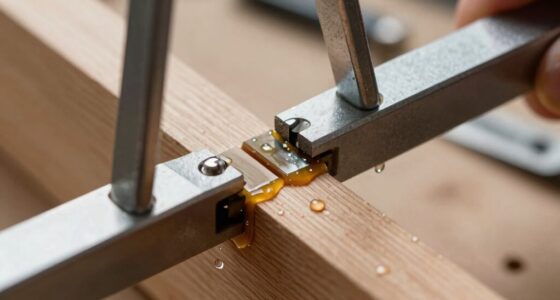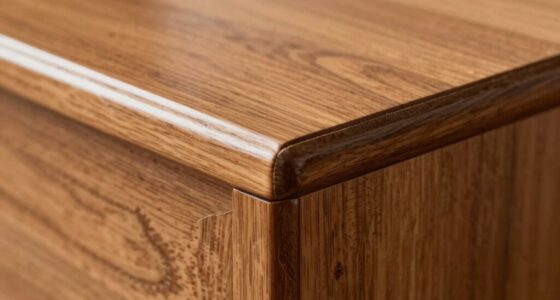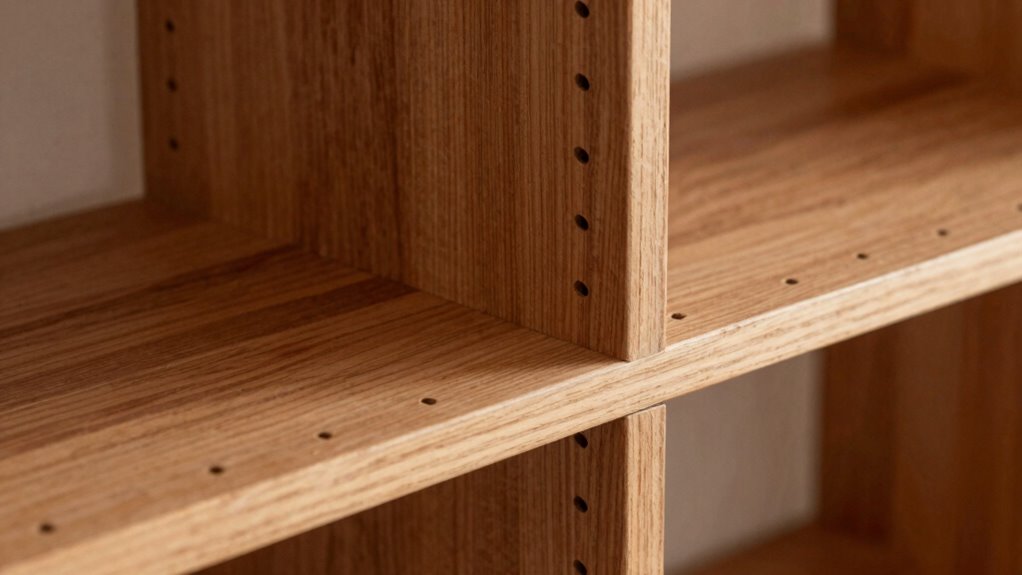

Pocket holes earn their place in real projects because they allow you to quickly create strong, clean joints without complex tools or precise cuts. They’re ideal for assembling frames, cabinets, and panels, offering durability and a professional look. Their simplicity makes them accessible even for beginners, while experienced woodworkers appreciate the secure, hidden fasteners. If you keep exploring, you’ll discover how mastering this technique can elevate your woodworking projects to the next level.

Get business pricing on tools and workshop supplies
- Business-only prices and quantity discounts
- Tax-exempt purchasing
- Multiple users, one account, clear invoices
Key Takeaways
- They provide quick, strong, and concealed joints, saving time while ensuring durability in real-world woodworking projects.
- Pocket holes enable easy assembly for both amateurs and professionals, making complex projects more accessible.
- The method creates flush, aesthetically pleasing surfaces without visible fasteners or complicated joinery techniques.
- Properly executed pocket hole joinery enhances structural integrity and long-term stability of furniture and fixtures.
- Their versatility allows seamless joining of panels, frames, and braces, expanding design options in practical applications.

Pocket holes are a popular woodworking technique that allows you to join pieces of wood quickly and securely. You’ll find this method especially useful when working on projects that demand clean, strong joints without the need for complicated tools or excessive assembly time. Its popularity stems from its simplicity and the effectiveness of the joint strength it provides, making it a go-to choice among both amateur and professional woodworkers. When you use pocket holes, you’re applying a tried-and-true woodworking technique that streamlines your process while maintaining durability and stability in your finished piece.
One of the main reasons pocket holes earn their place in real projects is because they enhance joint strength without sacrificing speed or ease. Unlike traditional joinery methods that require precise cuts, dowels, or mortises, pocket holes can be drilled quickly with a pocket hole jig. This allows you to create tight, concealed joints that resist pulling apart under load, which is crucial for furniture like cabinets, frames, or tables. The angled screw placement pulls the two pieces together, creating a strong bond that holds up over time. As a result, your projects benefit from increased durability, especially when you need to assemble large panels or frame components. Additionally, the accessibility of pocket hole jigs makes this technique suitable for a wide range of skill levels, encouraging more DIY enthusiasts to incorporate it into their projects.
Incorporating pocket holes into your woodworking techniques also opens up new possibilities for design and construction. You can join panels edge-to-edge, attach braces, or even assemble frames without visible fasteners cluttering the finished surface. Because the screws are driven at an angle, the joint remains flush, and you can hide the holes with wood filler or plugs, giving your project a clean, professional look. This method is particularly advantageous when working on projects where appearance matters, but you still want to rely on a joint that’s robust enough to handle daily use. Additionally, the simplicity of drilling makes pocket holes accessible for a wide range of skill levels, encouraging more people to explore woodworking projects. Using pocket holes can also help ensure that your projects are structurally sound, especially when combined with proper technique and materials. Moreover, understanding the proper techniques and tools involved can significantly improve the quality and longevity of your finished work.
As an affiliate, we earn on qualifying purchases.
Frequently Asked Questions
What Tools Are Essential for Creating Pocket Holes?
To create pocket holes, you need a pocket hole jig, a drill, and a driver bit designed for pocket screws. These tools are essential for precision joinery techniques. Make certain to maintain your tools regularly, checking for wear and cleaning debris to guarantee smooth operation. Proper tool maintenance guarantees cleaner cuts and stronger joints, making your pocket hole projects more durable and professional-looking.
Can Pocket Holes Be Used Outdoors?
Yes, you can use pocket holes outdoors, but you need to take into account weather resistance and material compatibility. Choose weather-resistant wood like cedar or treated lumber to prevent rot and warping. Also, use outdoor-grade pocket hole screws to withstand the elements. Proper sealing and sealing of joints further enhance durability. By selecting the right materials and protective measures, your outdoor project will stay sturdy and look great over time.
How Long Do Pocket Hole Joints Last?
Pocket hole joints can last many years if you consider joint durability and material longevity. Properly made, these joints resist loosening and wear over time, especially when using quality wood and appropriate finishes. Regular maintenance, like tightening screws and applying protective coatings, helps extend their lifespan. While outdoor conditions can impact durability, using weather-resistant materials and sealants guarantees your pocket hole joints remain strong and reliable for the long haul.
Are Pocket Holes Suitable for Heavy-Duty Furniture?
Think of pocket holes as the backbone of woodworking—are they suited for heavy-duty furniture? While they offer excellent joint strength for many projects, their furniture weight capacity might fall short for ultra-heavy pieces. Compared to traditional joinery, pocket hole joints often have a lower joint strength comparison, making them less ideal for load-bearing applications. For heavy furniture, consider reinforced joints or traditional methods to guarantee durability and safety.
What Types of Wood Are Best for Pocket Hole Projects?
You should choose hardwoods like oak, maple, or cherry for pocket hole projects because their tight wood grain provides excellent joint strength. Softwoods such as pine or cedar work well too, but they may be less durable over time. Avoid woods with irregular grain patterns or high resin content, as these can weaken the joint. Picking the right wood guarantees your pocket hole projects stay strong and durable.
Conclusion
Now that you see how pocket holes seamlessly blend strength and efficiency, isn’t it clear why they’ve earned their spot in real projects? They simplify assembly, reduce clamping time, and deliver clean, professional results. Imagine building a sturdy piece of furniture that looks flawless and holds up over years—doesn’t that make pocket holes an indispensable tool? Next time you’re planning a project, consider how these hidden fasteners can elevate your craftsmanship. Ready to give them a try?
Fall yard work Picks
leaf blowers
As an affiliate, we earn on qualifying purchases.