
Drawers expose weak joinery faster than tables because you open and close them repeatedly, putting concentrated stress on the joints. This constant movement accelerates wear, especially if the materials or joints aren’t high quality. Unlike static tables, drawers face ongoing stress that loosens weak connections quickly. Proper construction and materials can help, but if you keep using your drawers, you’ll discover the key reasons behind their faster deterioration.
Key Takeaways
- Drawers undergo frequent opening and closing, repeatedly stressing their joints more than static table frames.
- Localized stress on drawer joints accelerates deterioration compared to distributed stress in tables.
- Lower-quality materials and poor joinery techniques weaken drawer joints under repeated use.
- Drawer slides and runners add additional load, increasing joint wear over time.
- Regular use exposes weak or poorly constructed joints faster than in stationary table structures.
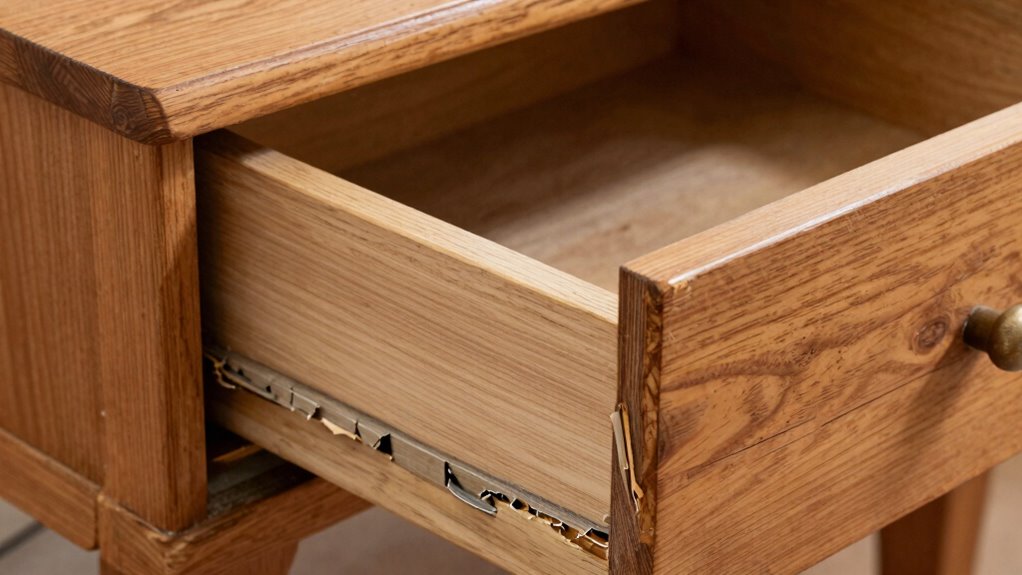
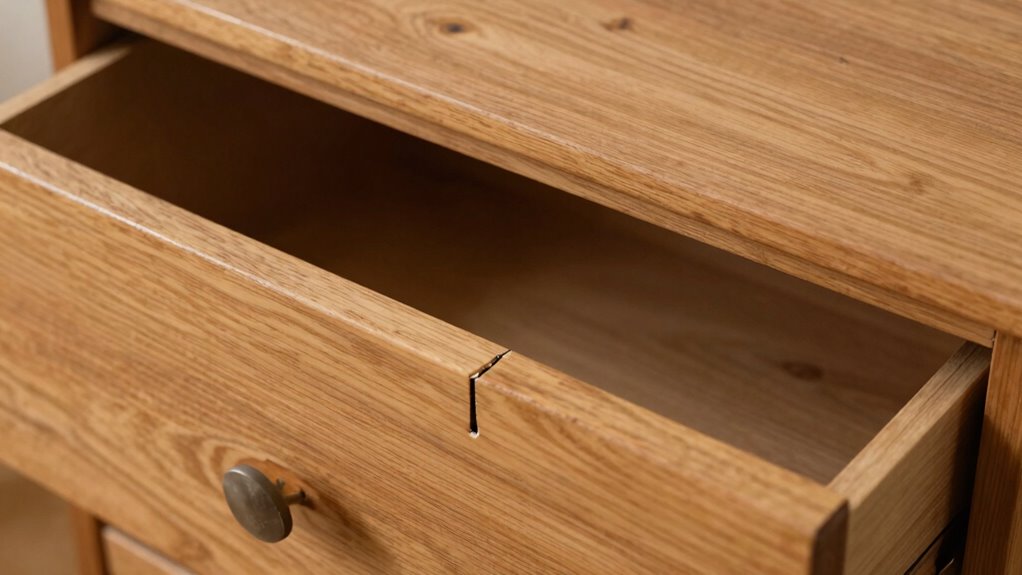
Drawers are a common feature in furniture, but when the joinery is weak, they can quickly become problematic. Unlike tables, which often rely on sturdy frames and surface supports, drawers are designed for frequent opening and closing, putting consistent stress on their joints. This repeated motion exposes weaknesses in the joinery more rapidly, especially if the materials and techniques used aren’t up to par. When you consider drawer materials, you’ll notice that the quality of the wood or engineered materials directly impacts how well the joints hold up over time. Cheaper particleboard or low-grade plywood may seem affordable initially, but they tend to degrade faster under stress, leading to loose joints and sagging drawers. On the other hand, solid hardwoods or high-quality plywood can withstand the rigors of daily use, but only if they’re joined properly. Proper joinery techniques are essential to ensure durability and resist wear over time. Techniques like dovetail joints, mortise and tenon, or reinforced dowels provide a tighter, more resilient connection between the drawer sides, front, and back. When these joinery methods are executed correctly, they distribute stress evenly and resist pulling apart. However, if the joints are poorly made—say, with inadequate gluing, loose fitting, or weak fasteners—the entire drawer becomes vulnerable. Over time, the stress of pulling in and out causes the joints to loosen, making the drawer wobble or even fall apart. This is why drawers with inferior joinery tend to fail faster than the structural elements of a table, which don’t experience such repetitive, localized stress. You’ll also notice that the construction of drawer slides and runners influences how quickly weak joinery manifests. Heavy-duty slides reduce lateral movement and support the weight of the contents, lessening the strain on the joints. Conversely, flimsy or improperly installed slides shift more load onto the joinery itself, accelerating wear. Proper material quality and construction techniques can significantly extend the lifespan of drawers and prevent early deterioration. Additionally, proper maintenance can help prolong the lifespan of drawer joinery, but only if the initial construction is sound. Inadequate design or substandard materials can compromise the overall furniture durability, making even well-constructed joints less effective over time.

VITERLYNX Thickened 200Lbs Heavy Duty Drawer Slides 1 Pair 10 12 14 16 18 20 22 24 32 40 Full Extension Ball Bearing Sliding Rails Cabinet Tool Box Runners Tracks Glides (14" L)
- Heavy Duty Capacity: Supports up to 200 lbs
- High-Strength Steel Construction: Made of thick Q235 steel
- Smooth Ball Bearing Operation: Solid steel ball bearings for smoothness
As an affiliate, we earn on qualifying purchases.
As an affiliate, we earn on qualifying purchases.
Frequently Asked Questions
How Can I Reinforce Weak Drawer Joints Effectively?
To reinforce weak drawer joints, start by checking the drawer alignment and adjusting it for smooth operation. Strengthen the joints with wood glue and small nails or screws, focusing on the corners. Confirm hinge stability by tightening or replacing loose hinges. You can also add corner blocks or metal brackets inside the drawer for extra support. Regular maintenance and proper alignment keep your drawers sturdy and prevent weak joinery from exposing themselves quickly.
What Materials Are Best for Durable Drawer Joinery?
You’ll want to prioritize hardwoods like oak, maple, or cherry for durable drawer joinery because they resist wear and swelling. When choosing materials, consider the drawer slide quality, as sturdy slides reduce stress on joints. Proper material selection, combined with strong joinery techniques, guarantees your drawers last longer. Keep in mind, hardwoods paired with high-quality slides create a reliable foundation that withstands daily use and minimizes joint failure.
How Does Drawer Weight Distribution Affect Joint Longevity?
Your drawer’s weight distribution greatly impacts joint longevity by affecting drawer balance and load distribution. If heavy items are unevenly loaded, the joints experience uneven stress, causing wear and weakening over time. Properly balancing the load ensures even distribution of force, reducing strain on the joinery. This careful load distribution helps maintain joint strength longer, preventing early failure and ensuring your drawers stay sturdy and functional through frequent use.
Are Certain Drawer Designs More Prone to Joint Failure?
Certain drawer designs are more prone to joint failure because of how they handle stress. For example, drawers with weak or overly complex joints, like glued or nailed joints, tend to fail faster. You should look for designs with reinforced joints, such as dovetail or dado joints, which distribute weight better and resist wear. Choosing robust drawer designs helps prevent joint failure and extends the furniture’s lifespan.
What Tools Are Recommended for Repairing Weak Drawer Joints?
For drawer repair and joint reinforcement, you should use wood glue, clamps, and possibly pocket hole screws. Wood glue strengthens weak joints, while clamps hold everything securely during drying. Pocket hole screws provide extra stability, especially for loose joints. A screwdriver or drill is essential to insert screws properly. These tools help restore the strength of your drawer joints, preventing future failure and extending the life of your furniture.
Conclusion
As you pull open a drawer, you can almost feel the strain on its delicate joints, like a whisper of weakness waiting to give way. Over time, this gentle tugging, combined with constant use, wears down the fragile connections faster than the sturdy frame of a table. Think of it as tugging on a chain — each pull tests the links’ strength. So, next time you open that drawer, remember: it’s the relentless motion that exposes its vulnerability first.