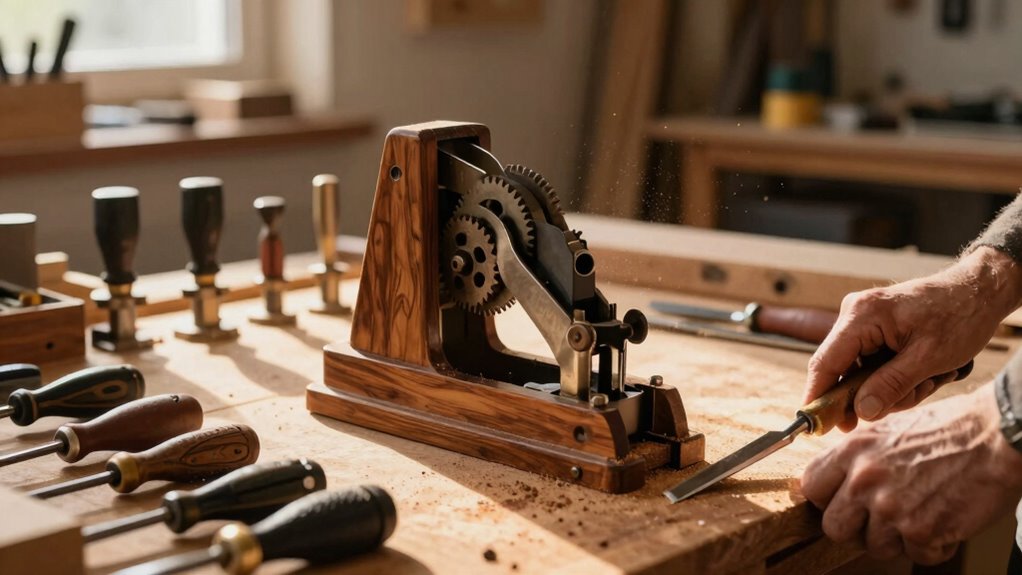

In a router-centered world, mortisers still matter because they offer unmatched precision for creating strong joints. While routers are versatile, mortisers excel in achieving consistent depth and width in mortises, reducing guesswork in your projects. Their specialized design makes them faster and more efficient for repetitive tasks. When you’re aiming for high craftsmanship, a mortiser connects you to traditional woodworking techniques. Discover why this tool can elevate your woodworking skills even further.

Get business pricing on tools and workshop supplies
- Business-only prices and quantity discounts
- Tax-exempt purchasing
- Multiple users, one account, clear invoices
Key Takeaways
- Mortisers provide unmatched precision, ensuring clean mortises crucial for strong furniture and cabinetry joints.
- They maintain consistent depth and width, reducing the guesswork often associated with routers.
- Mortisers are more efficient for repetitive tasks, enhancing workflow in woodworking projects.
- Their specialized design reflects traditional techniques, connecting modern woodworkers to historical craftsmanship.
- Understanding when to use mortisers over routers is essential for achieving high-quality results in joinery.

As you navigate the world of woodworking, you might wonder why mortisers still hold their ground in a router-centered landscape. In an age where routers dominate, it’s easy to overlook the value of traditional mortising machines. Yet, these tools have stood the test of time for good reasons. They excel at creating precise, clean mortises, important for strong joints in furniture and cabinetry. While routers are versatile, they often can’t match the accuracy of a dedicated mortiser when it comes to making those essential joints.
Tool comparisons reveal that mortisers are specifically designed for one main task: to create mortises. This specialization allows them to deliver superior results regarding precision joinery. You’ll find that when using a mortiser, the depth and width of your mortises remain consistent, something that can sometimes be a challenge with a router. If you’ve ever struggled with maintaining the right depth while routing, you know how frustrating that can be. Mortisers eliminate that guesswork, allowing you to focus on your craftsmanship instead. Additionally, their dedicated design often results in faster and more efficient workflow for repetitive mortising tasks. This focus on a single purpose enhances their accuracy and reliability, making them a preferred choice for many woodworking professionals.
Mortisers excel at creating consistently precise mortises, freeing you from the frustrations of depth variations often encountered with routers.
Moreover, traditional techniques still play a key role in woodworking evolution. While modern tools have introduced efficiencies, the age-old practices of using mortisers have been refined over generations. This deep-rooted knowledge can enhance your skills and help you appreciate the craft more fully. Using a mortiser connects you with the history of woodworking, grounding your work in techniques that have proven effective through the ages. Additionally, mortisers are often considered specialized tools that offer more consistent results compared to general-purpose routers. Recognizing the precision offered by mortisers can help you decide when to prioritize accuracy over versatility in your projects. Furthermore, understanding the evolution of these tools can deepen your appreciation for the craftsmanship involved in traditional woodworking methods.
electric mortiser for woodworking
As an affiliate, we earn on qualifying purchases.
As an affiliate, we earn on qualifying purchases.
Frequently Asked Questions
What Types of Joints Are Best Suited for Mortisers?
Mortisers excel at creating strong, precise joints. For your projects, consider using them for mortise joints and tenon joints, which provide excellent strength and stability. Dovetail joints are also a great choice, especially for drawers and cabinets, as they resist pulling apart. Box joints are another option, offering a clean look and strong connection for boxes and frames. Each joint type has its own advantages, so choose based on your specific needs.
How Do I Maintain My Mortiser for Optimal Performance?
You think your mortiser’s gonna maintain itself? Think again! For best performance, keep the blades sharp and clean the chippings after each use. Lubricate the moving parts regularly; they love a good oil bath. Inspect the machine for wear and tear—don’t wait until it’s gasping for breath. With solid mortiser maintenance, you’ll guarantee tool longevity, making it the reliable workhorse you depend on for those beautiful joints.
Can Mortisers Be Used on Hardwoods Effectively?
Yes, mortisers can be used effectively on hardwoods. When you use proper mortising techniques, you’ll overcome hardwood challenges like density and grain direction. Always guarantee your mortiser is sharp and set correctly for clean cuts. Take your time, and consider using a chisel to refine the edges if necessary. With practice, you’ll find that mortisers can handle hardwoods beautifully, creating strong, precise joints for your projects.
What Safety Precautions Should I Take When Using a Mortiser?
When using a mortiser, prioritize mortiser safety by wearing safety goggles and ear protection. Always secure your workpiece tightly to prevent movement during cuts. Keep your hands clear of the cutting area, and use push sticks or other tools for better control. Before operating, double-check that the tool’s components are functioning properly. Finally, avoid loose clothing and jewelry to prevent accidents while handling the tool. Stay focused and work carefully!
Are There Portable Mortisers for On-Site Woodworking?
Sure, you can find portable mortisers that’ll make you feel like a woodworking wizard on the job site—because who doesn’t want to haul around another tool? Options like the benchtop models or compact mortisers are perfect for on-site woodworking techniques. They’ll save you from lugging heavy equipment while still letting you create those perfect joints. Just remember, with all that portability, you might need to dedicate a whole truck just for your new favorite toy!
Conclusion
In a world buzzing with routers, mortisers remain steadfast sentinels of precision and craftsmanship. They carve out a niche where power meets artistry, transforming ordinary wood into extraordinary creations. While routers might whirl and whiz, the mortiser’s steady hand offers a timeless touch that echoes through generations. Embracing both tools can elevate your craft, blending speed with soul. So, don’t overlook the mortiser; it’s the heart that beats beneath the surface of your woodworking journey.
Fall yard work Picks
leaf blowers
As an affiliate, we earn on qualifying purchases.