When choosing fasteners for outdoor builds, consider their material, corrosion resistance, and coating to guarantee durability against environmental elements. Match fastener materials with your project materials to prevent issues like galvanic corrosion and address material expansion or contraction. Use the right size and type to hold structures securely over time, especially in heavy-duty applications. If you keep these factors in mind, you’ll be better equipped to select fasteners that keep your project safe and long-lasting.

Get business pricing on tools and workshop supplies
- Business-only prices and quantity discounts
- Tax-exempt purchasing
- Multiple users, one account, clear invoices
Key Takeaways
- Prioritize corrosion-resistant materials like stainless steel or galvanized fasteners for durability outdoors.
- Match fastener materials with the materials being joined to prevent galvanic corrosion.
- Choose fasteners with appropriate coatings and finishes suited for environmental exposure.
- Select the correct fastener types and sizes based on the specific application and load requirements.
- Consider material movement, expansion, and contraction to ensure long-term structural stability.
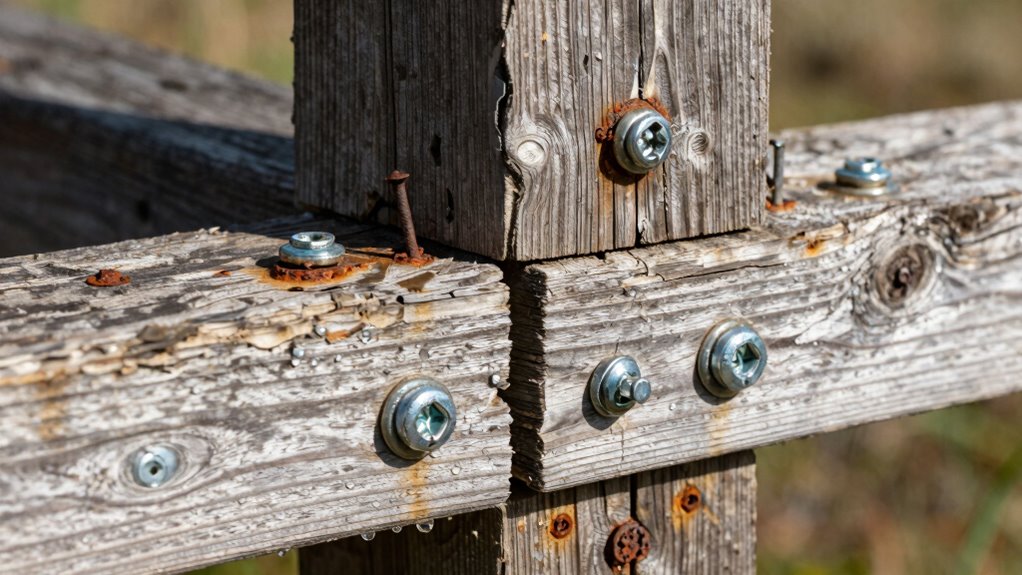
When planning outdoor builds, understanding the right fasteners can make or break your project’s durability. Fasteners are more than just hardware; they’re the unseen backbone that keeps your structure intact over time. The key considerations are corrosion resistance and material compatibility. If you overlook these factors, your project could suffer from rust, deterioration, or even failure, especially in exposed environments.
Corrosion resistance is critical because outdoor settings expose fasteners to moisture, humidity, and other elements that accelerate rusting. You want fasteners made from materials that stand up well against these conditions. Stainless steel is a popular choice because it offers excellent corrosion resistance. Galvanized fasteners, coated with a layer of zinc, also perform well in damp environments. However, if your project is near saltwater or in a highly corrosive environment, you might consider more specialized options like marine-grade stainless steel or coated fasteners designed specifically for such conditions. Choosing fasteners with good corrosion resistance prolongs your structure’s lifespan and reduces maintenance needs. Additionally, considering fastener coatings can further enhance durability in harsh conditions.
Corrosion-resistant fasteners like stainless steel or galvanized coatings extend outdoor structure lifespan and reduce maintenance needs.
Material compatibility is equally important. Fasteners need to match or complement the materials they’re fastening to prevent issues like galvanic corrosion. For instance, if you’re attaching wood to metal, ensure the fasteners are compatible with both materials. Some metals, like aluminum and steel, can react adversely when in direct contact, leading to corrosion. Using the right fastener material prevents this problem. Additionally, consider the expansion and contraction properties of your materials. Wood, for example, expands and contracts with weather changes, so your fasteners should allow some flexibility or be designed to accommodate movement without loosening or causing damage. Understanding fastener material properties helps you select the best options for your outdoor project’s longevity. Being aware of corrosion-resistant finishes can also guide you in choosing coatings that enhance durability. Furthermore, selecting fasteners with appropriate fastener types and sizes ensures maximum hold in outdoor conditions, especially in heavy-duty applications.
stainless steel outdoor fasteners
As an affiliate, we earn on qualifying purchases.
As an affiliate, we earn on qualifying purchases.
Frequently Asked Questions
Are Stainless Steel Fasteners Suitable for All Outdoor Environments?
Yes, stainless steel fasteners are generally suitable for outdoor environments because they offer excellent corrosion resistance. However, you should consider material compatibility for specific conditions, like saltwater or humid areas, where some stainless steels may still corrode over time. Always choose the appropriate grade of stainless steel to match your environment, ensuring durability and avoiding issues caused by incompatible materials or exposure to corrosive elements.
How Do I Prevent Fasteners From Rusting Over Time?
You can prevent fasteners from rusting by using protective coatings like paint or sealants, which act as barriers against moisture. Additionally, opt for corrosion-resistant materials such as stainless steel or galvanized fasteners, as they are designed to withstand outdoor elements. It’s wise to regularly inspect and maintain fasteners, reapplying coatings when needed, and replacing any that show signs of rust to guarantee your outdoor build stays durable and rust-free.
What Fastener Types Are Best for Heavy Outdoor Loads?
For heavy outdoor loads, you should choose fasteners with high load capacity and corrosion resistance. Stainless steel fasteners are ideal because they handle substantial weight without rusting over time, thanks to their durability. Galvanized or coated fasteners also work well, providing excellent corrosion resistance, especially in harsh weather. Always select fasteners rated for the specific load to guarantee safety and longevity in outdoor builds.
How Often Should Outdoor Fasteners Be Inspected or Replaced?
Think of your outdoor fasteners as the backbone of your project, holding everything together through storms and sunshine. You should inspect them annually and replace any that show signs of corrosion or wear. Regular maintenance scheduling helps prevent unexpected failures. To keep corrosion at bay, apply corrosion prevention treatments, like coatings or galvanization. Staying vigilant guarantees your build remains sturdy, safe, and resilient over time.
Can I Use the Same Fasteners Indoors and Outdoors?
You can generally use the same fasteners indoors and outdoors if they have good corrosion resistance and are compatible with your materials. However, outdoor environments expose fasteners to moisture and weather, so choose stainless steel or coated fasteners for durability. Inside, standard steel may suffice. Always check for corrosion resistance and material compatibility to prevent rust or damage, ensuring your project stays secure and lasting longer.
Conclusion
So, when you’re choosing fasteners for outdoor builds, remember—they’re not just tiny screws or nails; they’re the backbone of your entire project! Use the right ones, and your structure might just defy the weather, time, and even the gods of decay. Skimp on quality, and your masterpiece could crumble faster than a cookie in a rainstorm. Treat fasteners with respect, and watch your outdoor creation stand tall, proud, and unbreakable for ages to come!
Fall yard work Picks
leaf blowers
As an affiliate, we earn on qualifying purchases.