
By adopting a reclaimed wood habit, you can easily reduce waste without creating chaos by organizing your Materials by size, type, and condition. Focus on quality and sustainable sourcing to quickly identify suitable pieces for simple projects like shelves or picture frames. This approach streamlines your workflow and minimizes clutter while turning discarded wood into beautiful, eco-friendly items. Keep exploring, and you’ll discover even more ways to incorporate mindful, waste-reducing habits into your projects.
Key Takeaways
- Organize reclaimed wood by size and type to streamline project planning and prevent workspace clutter.
- Regularly sort and store wood to quickly access suitable pieces, reducing waste and chaos.
- Prioritize quality and condition to avoid surprises and ensure safe, efficient upcycling projects.
- Implement a dedicated storage system to keep reclaimed materials orderly and easily accessible.
- Incorporate small, manageable projects to maintain an organized workflow and minimize workspace congestion.
Many people are discovering that incorporating reclaimed wood into their projects can considerably reduce waste and lessen environmental impact. This practice isn’t just about choosing eco-friendly materials; it’s about making smarter, more sustainable choices from the start. When you focus on sustainable sourcing, you guarantee that the wood you use comes from sources that prioritize environmental health and responsible harvesting. Instead of contributing to deforestation or landfills, you’re giving new life to wood that might otherwise be discarded. This approach supports a circular economy, where materials are reused and repurposed, rather than wasted.
Using reclaimed wood promotes sustainability, reduces waste, and supports responsible harvesting for a healthier environment.
Upcycling projects are a perfect way to incorporate reclaimed wood into your life without creating chaos. By transforming old wood into new furniture, décor, or building materials, you reduce demand for virgin timber. You don’t need to be a professional carpenter to get started—simple projects like coffee tables, shelves, or picture frames can be effective. These creations not only showcase your creativity but also serve as tangible proof that waste can be minimized through thoughtful reuse. The key is to plan your projects carefully, selecting wood that’s in good condition and suited for your purpose, so you avoid unnecessary frustration or structural issues later.
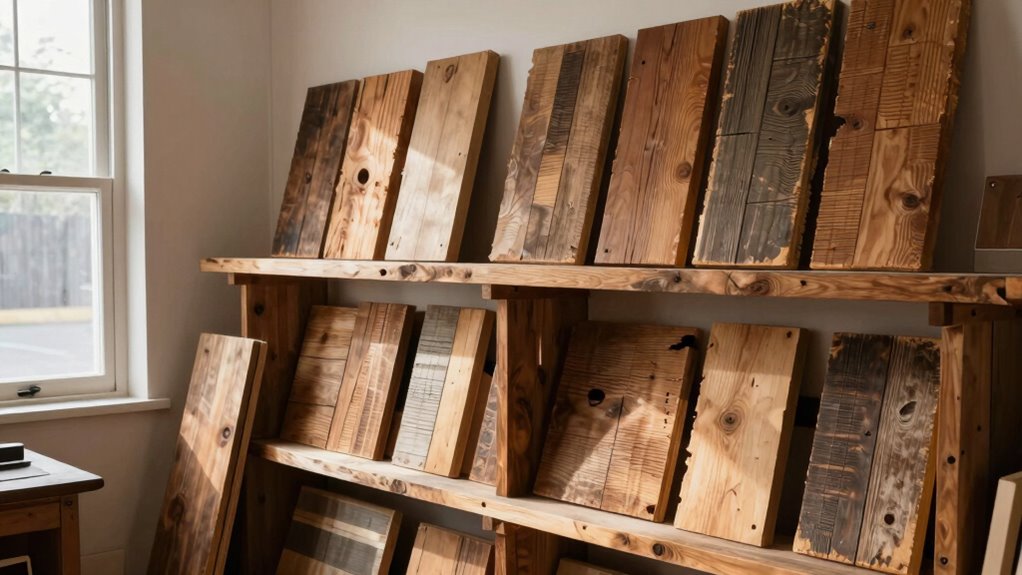
To maintain a clutter-free workflow, you might organize your reclaimed wood by size, type, and condition. This organization helps you quickly identify the right pieces for each project and prevents your workspace from becoming chaotic. As you gather scraps and larger planks, keep in mind that upcycling doesn’t mean you have to use every piece. Sometimes, the most valuable parts are the ones that inspire your design or add character. When selecting your reclaimed wood, always check for signs of rot, pests, or structural weakness—you want your projects to be both sustainable and safe. Incorporating sustainable sourcing ensures that your materials come from environmentally responsible sources, making your efforts even more impactful.
Integrating reclaimed wood into your projects also means you’re making conscious choices about waste. Instead of discarding old wood or letting it sit unused, you’re actively reducing landfill contributions. This habit encourages you to think creatively and resourcefully, finding new uses for materials others might overlook. Over time, you’ll develop an eye for identifying quality reclaimed wood and envisioning how it can fit into your upcycling projects. As a result, you’ll be contributing to a more sustainable future while enjoying the satisfaction of creating something unique and eco-friendly. This simple habit can truly transform your approach to building and decorating, turning waste into worthwhile, beautiful pieces.
As an affiliate, we earn on qualifying purchases.
Frequently Asked Questions
How Do I Identify High-Quality Reclaimed Wood?
To identify high-quality reclaimed wood, look for sustainable sourcing practices and wood certification labels like FSC or PEFC. Check for consistent color and grain, which indicate good quality. Avoid wood with large knots, cracks, or signs of rot. Feel its weight and texture—solid, dense wood is better. Trust reputable suppliers who provide detailed history and certification info, ensuring your reclaimed wood is both durable and eco-friendly.
What Tools Are Best for Working With Reclaimed Wood?
Imagine the texture of aged wood under your fingertips as you work; your tools shape its story. A good saw, like a circular or hand saw, helps cut reclaimed wood cleanly. For finer work, use chisels and a jigsaw. Sand with orbital sanders to smooth surfaces, and apply sealing methods to preserve its character. These tools guarantee you craft with precision, respecting the wood’s history while achieving a flawless finish.
How Do I Prevent Pests in Reclaimed Wood?
To prevent pests in reclaimed wood, start with thorough pest prevention measures like inspecting and cleaning the wood before use. Use a wood treatment, such as a borate-based solution, to eliminate existing pests and deter future infestations. Guarantee proper storage in dry, ventilated areas to avoid moisture buildup, which attracts pests. Regularly check your reclaimed wood for signs of pests and reapply treatments as needed to keep your projects pest-free.
Is Reclaimed Wood Suitable for Outdoor Projects?
Reclaimed wood is absolutely suitable for outdoor projects, thanks to its remarkable durability when properly treated. Its resilience can often rival new wood, making it an eco-friendly choice that dramatically reduces environmental impact. You can confidently craft decks or garden furniture with reclaimed wood, knowing it withstands weathering and aging gracefully. With the right sealant, reclaimed wood becomes a stunning, long-lasting feature that’s both sustainable and resilient.
How Do I Price Reclaimed Wood Projects?
To price your reclaimed wood projects, start by researching current market value for similar items. Use pricing strategies like cost-plus pricing, where you add a markup to cover expenses and profit, or value-based pricing, considering the uniqueness and craftsmanship of your work. Keep in mind, reclaimed wood often commands higher prices due to its sustainability and character, so factor that into your pricing to reflect its true value.
Conclusion
By embracing the reclaimed wood habit, you become part of a larger story—one where each piece tells a tale of renewal, much like the phoenix rising from ashes. You’re not just reducing waste; you’re crafting a legacy of sustainability amid the chaos of consumerism. Imagine your space echoing the wisdom of old forests reborn, reminding us all that even in clutter, there’s beauty and purpose waiting to be uncovered.